





Filipinos are natural-born yearners

Filipinos are romantics. It’s not just in the way we cry at weddings or memorize heartbreak songs, but in the way we’ve been taught, almost instinctively, how to yearn.
We grow up on stories that equate love with longing, where suffering is sacred, devotion is measured in how much you can withstand, and chasing someone is seen as braver than being chosen. So we learn to wait. To hope. To make spectacles of ourselves in the name of love. And somewhere along the way, we begin to believe that love is not something freely given—it is something to be earned.
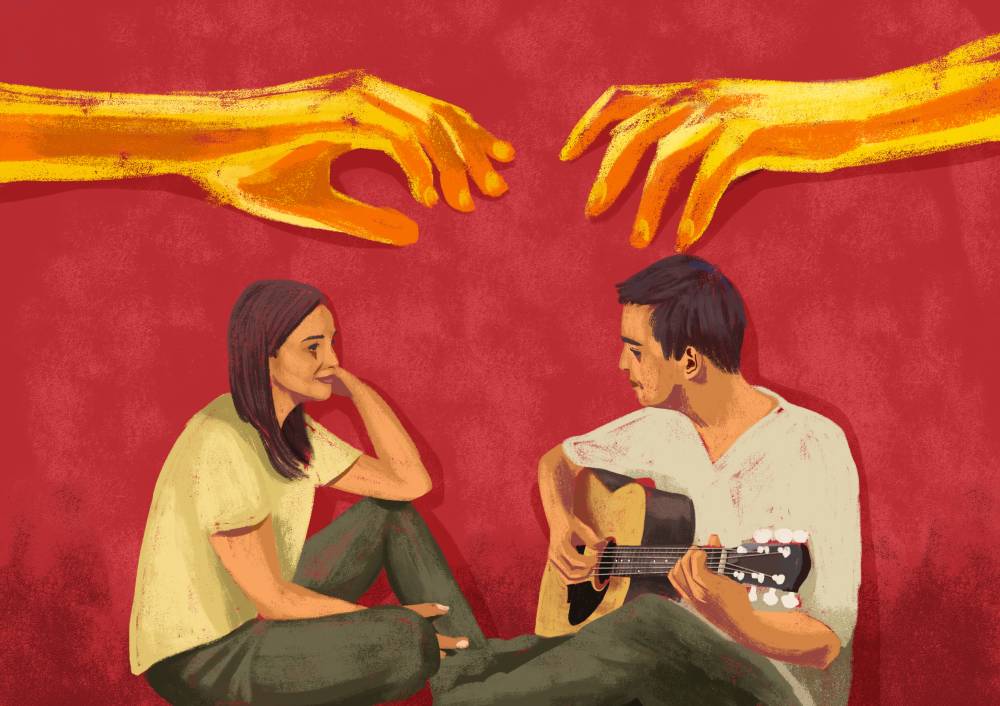
Take harana, for instance. Harana, the Filipino serenade, is a dating tradition practiced in Filipino culture, originally influenced by Spanish colonization. In this tradition, a man gathers a group of friends and goes to the window of the woman he admires. In this moment, the girl listens and watches as the boy earnestly sings a sweet love song. It’s romantic, yes—but it’s also raw. He puts himself on display, risking rejection in front of an audience. His vulnerability functions as evidence of devotion—a symbolic offering intended to make her feel chosen and cherished.
It is romantic. It is cinematic. It is brave. But it is also telling.
Because at its core, harana is about proving worth. Affection is preceded by proof—gestures made visible, tenderness amplified, pride set aside in front of witnesses. One stands below, offering devotion; the other listens from a distance, positioned as something to attain. We have inherited this script, even if we no longer sing under windows.
Today, our serenades happen in different forms: long text messages sent at 2 a.m., playlist links curated like confessionals, social media posts that toe the line between dignity and desperation. We consume media where characters beg for one last chance, wait in the rain, chase departing cars at airports, confess feelings only after years of silent suffering. We don’t just watch these stories; we internalize them. We are taught that yearning is noble.
The love stories that raised us
In Filipino teleseryes and romantic films, love rarely arrives easily. It is delayed, obstructed, tested. The protagonists endure misunderstandings, rival suitors, meddling families, and economic hardship before they are finally rewarded with each other. The longer the suffering, the sweeter the ending. And so we grow up believing that love must be difficult to be real.
Our music echoes the same sentiment. From classics like “Bakit Nga Ba Mahal Kita” by Roselle Nava and “Alipin” by Shamrock to newer anthems like “Multo” by Cup of Joe and “Pag-ibig ay Kanibalismo” by Fitterkarma, we are serenaded by devotion that borders on self-abandonment. The lyrics linger on unrequited love, emotional martyrdom, and the quiet pride of staying even when staying hurts.
We glorify the suitor who persists despite rejection. We admire the partner who waits years for someone emotionally unavailable. We call sacrifice “true love.” Even heartbreak becomes proof that what we felt was deep and meaningful.
This is where yearning becomes performance.
The vulnerability embedded in harana has evolved into something both intimate and public. Confessions are screenshotted. Anniversaries are captioned. Heartbreak is shared in cryptic posts and sad song lyrics. Social media amplifies longing, rewarding those who dramatize their emotions with sympathy and validation. Intensity becomes currency. If it doesn’t hurt, is it even love? If you didn’t cry, wait, chase, and endure—did it matter?
Somewhere along the way, we confuse chaos with chemistry. We interpret inconsistency as mystery. We tolerate breadcrumbs because we’ve been taught that pursuit itself is romantic.
But yearning, when constantly performed, can become self-erasure. We shrink our standards to keep the story alive. We hold on to potential rather than reality. We convince ourselves that if we just try harder, love harder, wait longer, and prove ourselves more, we will finally be chosen.
Where even loving has spectators
Filipino culture is deeply relational. Family is central. Community is everything. We grow up surrounded by titas asking about our crushes, cousins pairing off at reunions, and elders reminding us not to “be too choosy” but also not to “settle.” Romance is both celebrated and monitored. Love is not just personal, it is communal.
A relationship often feels like a milestone not only for you, but for your family. Weddings are grand affairs. Anniversaries are public celebrations. Being in love is something shared, displayed, and affirmed by those around you.
There is warmth in that. But there is also pressure.
When everyone around you seems to be pairing off, you begin to measure your worth by your relationship status. Singleness feels temporary, like a waiting room you’re expected to exit soon. Heartbreak feels like public failure. Moving on too quickly feels suspicious; moving on too slowly feels pathetic. And so we yearn harder.
We replay conversations. We romanticize mixed signals. We hold onto people who are halfway out the door because letting go feels like falling behind. We make ourselves smaller, more agreeable, more accommodating in hopes that love will stay if we are easy enough to keep.
In a culture where togetherness is prized, solitude can feel like deficiency. But maybe yearning is not the problem. Maybe it is what we attach it to. Yearning, at its purest, is simply the capacity to feel deeply. It is evidence that we are open. That we care. That we desire connection. The trouble begins when we direct all that depth outward and leave nothing for ourselves.

What if we reframed longing not as something to escape through a relationship, but as something that reveals our emotional capacity? What if the ability to yearn is not proof that we are incomplete, but proof that we are alive?
Filipinos are natural-born yearners because we are expressive, affectionate, and unafraid of emotion. We sing. We write long captions. We dedicate songs. We show up. We try. There is beauty in that.
But growth might look like this: no longer believing that love must be earned through humiliation or endurance. No longer mistaking persistence for compatibility. No longer performing desperation in hopes of applause.
Harana is beautiful because it is voluntary, because the singer chooses to show up, and the listener chooses to receive. It is not about convincing someone who does not want to listen.
Maybe the modern version of romance is not louder gestures or longer waiting. Maybe it is discernment. Maybe it is reciprocity. Maybe it is recognizing that mutual affection is far more romantic than dramatic pursuit. We can still be romantics. We can still feel intensely. We can still write the long message, send the risky text, admit that we care.
But we can also learn to pause when the effort is one-sided. We can learn that being chosen is not the ultimate validation—and that choosing someone who chooses you back is far sweeter than any serenade beneath a window.
Filipinos are natural-born yearners. That will likely never change. What we can change is this: believing that love must cost our dignity to be real. Yearning does not have to mean begging. Longing does not have to mean losing yourself. Sometimes the most romantic thing you can do, in a culture that glorifies the chase, is to stop running after someone who isn’t running toward you.
And trust that love, when it comes, will not require you to prove you deserve it.