











Converge launches P5-B data center

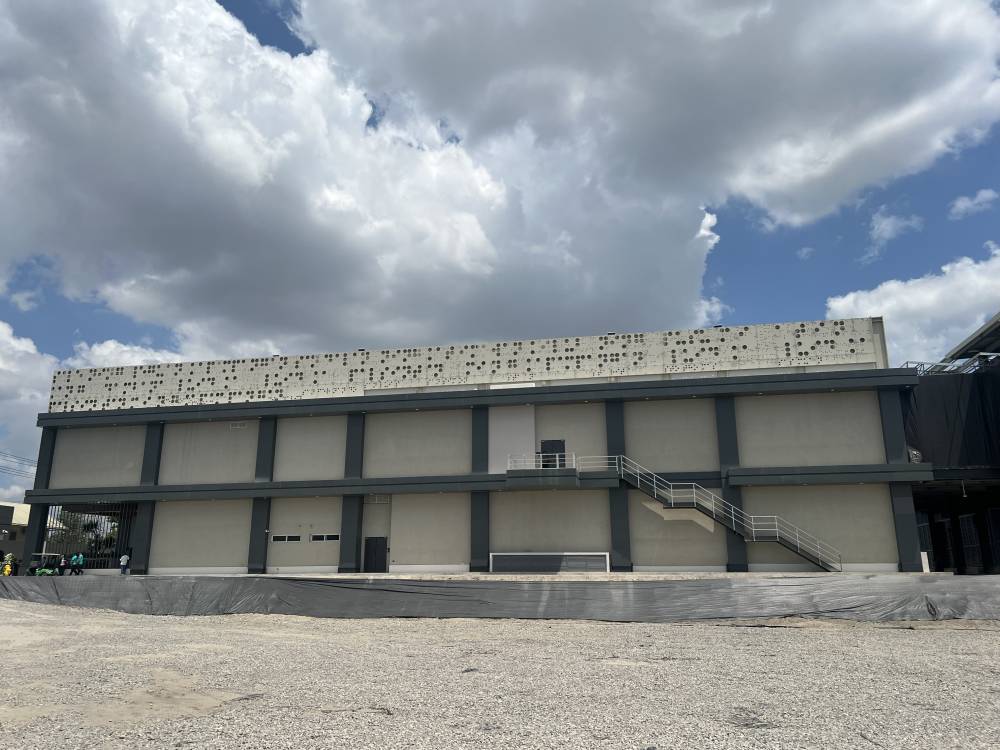
ANGELES CITY—Converge ICT Solutions, Inc., on Friday inaugurated its largest data center yet in Angeles City, a nearly P5-billion facility that underscores the firm’s push beyond telecommunications and deeper into digital infrastructure.
Built on a 5,000-square-meter property, the new site currently has a capacity of 12 megawatts (MWs).
This makes it the largest among Converge’s four data centers. Its other facilities are located in Caloocan City and Pasig City in Metro Manila and Clark in Pampanga.
Converge CEO Dennis Uy said the company’s expanding data center footprint is aimed at strengthening data sovereignty in the Philippines, particularly by keeping critical government data within the country.
“We don’t need to bring our data outside of the country and we need to protect our data in-country,” Uy said.
He urged lawmakers to pass legislation that would help attract global digital “hyperscalers” to locate in the Philippines.
The firm’s data center operations are managed by Converge Studios under its enterprise unit.
Converge Studios CEO James Mendoza said that the Angeles facility currently serves private-sector clients in industries, such as banking and logistics.
Local government units are also exploring their use for disaster recovery, while offices from the executive and judicial branches of government are already using the site.
Like Converge’s Caloocan facility, the Angeles data center is certified Tier III by global data center authority Uptime Institute.
The site has built-in redundancy to support resilient operations and is designed to meet the country’s data residency requirements.
Although the facility has a current operating load of 3 MW, Uy said the site has enough space to expand capacity to as much as 36 MW, depending on market demand.
Uy has expressed optimism over Converge’s growth prospects this year after raising the company’s capital expenditure budget to between P18 billion and P23 billion from P17.7 billion in 2025.
Despite its relatively smaller footprint compared to rivals such as PLDT, Inc. and Globe Telecom, Inc., Mendoza said Converge is prioritizing the full utilization of its existing facilities before pursuing further expansion.
“Our approach is, we will not fight yet on the megawatt race,” Mendoza said. “But we want to make sure that the data centers that we built are fully maximized and utilized.”

Mendoza said the committed capacity of the Angeles and Caloocan sites is around 30 to 40 percent.
Converge said its cloud and data center business forms part of its broader national digital infrastructure strategy, alongside its fiber backbone, satellite network, subsea cable systems and cable landing stations.
The group’s digital infrastructure includes nearly 900,000 kilometers of fiber network nationwide. This is supported by a growing low-earth orbit satellite network, as well as international cable assets such as the Bifrost Cable System and the Southeast Asia-Hainan-Hong Kong Express Cable System (SEA-H2X).
The firm also operates cable landing stations in Davao and La Union.
Converge said this network will be further strengthened once the transpacific Bifrost cable and the intra-Asia SEA-H2X system are integrated into its operations.
Bifrost spans 20,000 kilometres and connects Indonesia, the Philippines, Singapore, Guam and the United States, with a capacity of more than 260 terabits per second.
SEA-H2X links Hong Kong, Hainan, the Philippines, Thailand and Singapore. It has an initial design capacity of 160 terabits per second.


Leveraging the power of foresight