






Green groups insist on shift to renewables

LUCENA CITY—Environmental advocates on Friday warned that relying on imported coal to fuel power plants is not a sustainable response to the country’s energy supply challenges, even as global petroleum prices continue to rise due to the ongoing conflict in the Middle East.
Jay Lim, program director of the public interest law group Tanggol Kalikasan, said the government should prioritize long-term investments in renewable energy, particularly geothermal power, instead of depending on imported coal.
“Rather than reactive importation, the country needs aggressive investment in geothermal infrastructure and grid interconnection so that our natural resources become the backbone of our power supply—not volatile coal prices shaped by geopolitics, where we are often at a disadvantage,” Lim said in a statement sent to the Inquirer.
On Thursday, President Marcos Jr. said the government would resume coal importation to ensure sufficient fuel supply for power plants amid risks to global oil supply stemming from the Middle East crisis.
“We are trying to move away from coal, but because of this crisis we will reopen coal importation to prevent fuel shortages and ensure adequate power supply across the country,” he told reporters.
‘Pragmatic’
Lim acknowledged that importing coal may be a “pragmatic response” in the short term but said it highlights the country’s slow progress in developing geothermal and other renewable energy sources.
Situated along the Pacific Ring of Fire, the Philippines has vast geothermal potential that could reduce its vulnerability to external geopolitical shocks, he noted.
“The government should treat geothermal energy not merely as an alternative, but as a foundation of national security,” Lim said.
He also warned of a “lock-in effect,” where continued investments in coal infrastructure could divert resources away from renewable energy development.
“In simple terms, short-term fixes could undermine long-term solutions,” he added.
Fr. Warren Puno, lead convenor of Quezon for Environment (Queen), echoed the concern, saying the country appears to be moving against the global trend of phasing out coal.
“Continued reliance on coal imports is not an ideal path. Beyond pollution and its impacts on health and climate, it deepens our dependence on other countries,” Puno said in a separate statement.
He added: “The long-term solution lies in developing clean, locally sourced renewable energy that is just for both the environment and future generationss.”
Puno reiterated the Church’s position that fossil fuels must eventually be phased out due to their harmful effects—from extraction to combustion.
Quezon province currently hosts three coal-fired power plants in Mauban and Pagbilao, with a proposed 1,200-megawatt facility in Atimonan that would become the fourth.
Transition
According to Lim, addressing the oil crisis requires more than conservation measures, calling for a “just and green transition framework” that reduces emissions while protecting vulnerable sectors.
He urged the government to expand the country’s net-metering system under the Renewable Energy Act of 2008, which allows households and businesses generating their own electricity, such as through solar panels, to sell excess power back to the grid.
Lim said net metering empowers consumers to become “prosumers,” helping lower electricity costs while reducing dependence on coal-fired power.

Joey Papa, president of the Bangon Kalikasan Movement, in another statement, said using coal to address the shortage “would further add to our problem because it is a major pollutant like crude oil.”
“Burning coal will release very harmful pollutants: carbon dioxide, which is a major driver of global warming and climate change; sulfur dioxide, which contributes to acid rain; nitrogen oxide, which causes smog and respiratory issues,” he said.
Papa said the government and private sector should instead pursue long-term alternatives through ecological and renewable energy sources, which are abundant in the Philippines as an archipelago.
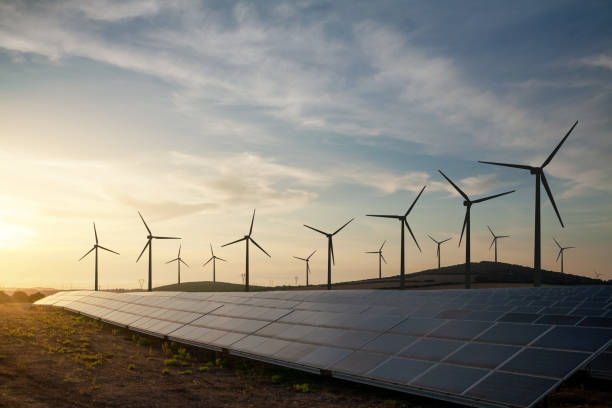
“Solar energy could address our daytime needs. Wind, hydro, and geothermal power could address our nighttime needs,” he suggested.
He said natural gas could serve as a short-term source while renewable capacity is being developed.
“The question lies in how determined is our government in pursuing these without fear or favor from the US-controlled oil refineries,” he said.
Papa added that unless the Philippines stops depending on superpowers controlling oil supply—linked to current tensions in oil-producing regions—the energy crisis will persist.
“Let us go for ecological, renewable alternative sources of energy with strong determination,” he said.