







Critical need to combat bullying

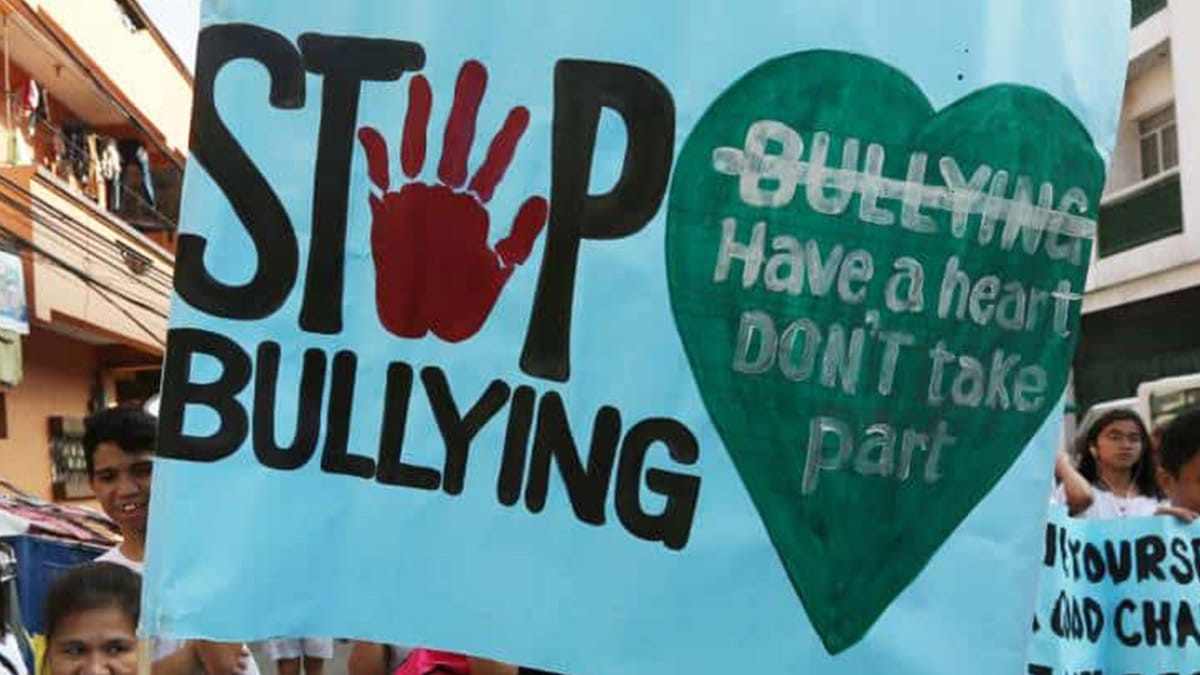
The recent death of a first-year high school student in Quezon City earlier this month underscores the critical need to address the pervasive culture of bullying that remains a daily threat to learners.
This is only one of the recent suicide cases that have been linked to bullying, and some are likely not to make it to news headlines. Many incidents of bullying also take place in online spaces and eventually spill into classrooms and campuses. Per the 2023 report of the Programme for International Student Assessment, 43 percent of girls and 53 percent of boys reported being bullied at least a few times each month. This gives the Philippines one of the highest reported rates of bullying globally and the ignominy of being called the bullying capital in Asia.
The final report of the Second Congressional Commission on Education (Edcom 2), released in January, cited several studies on how violence and bullying “remain widespread among Filipino learners.”
“The implication of bullying for schools is twofold. First, creating safe and supportive environments is as vital as instruction itself. Second, these patterns of violence raise a deeper question about the society that tolerates them. They point to the emotional tensions of a generation that must learn, care, and survive all at once. Schools must become spaces of protection as well as progression,” Edcom 2 said.
Guidance counselors
Education officials have pointed out that bullying affects learning and is a direct driver of the country’s learning crisis, with its impact seen in the significant decline in test scores. For example, in the 2019 Trends in International Mathematics and Science Study, learners who were bullied weekly scored 41 points lower in math and 52 points lower in science compared to those who were bullied monthly.
The Department of Education, given the scale of the problem, has acknowledged the need for guidance counselors in schools and not merely shifting the responsibility for mental health to teachers without formal training.
During a budget hearing in the House of Representatives last year, Education Secretary Sonny Angara reported that there were only 4,069 licensed guidance counselors in the country as of 2022. This was only a fraction of the more than 50,000 needed to meet the ideal global ratio of one counselor for every 250 students.
Angara also pointed out the hard truth: implementing a long-term mental health plan will cost over a trillion pesos.
Performance evaluations
In addition, there is a supply problem: only 32,000 psychometricians—those who apply statistical methods to develop, validate, and analyze psychological tests, assessments, and surveys—are in the country. The government has allocated over 4,000 counselor vacancies last year, but given the shortage of professionals and the near-zero enrollees in guidance counseling courses at universities and colleges, these positions are unlikely to be filled in the next five years. Or worse, schools will be forced to hire those who lack training to handle sensitive mental health issues. In the case of the Quezon City student, his mother complained about the lack of explanation from the school administrators on what happened to her son, indicating the absence of an established school protocol in handling cases like this.
Edcom 2 has previously pointed out the lack of clear student handbooks in some public schools and faculty training to handle student conflicts and bullying cases. Some schools also underreport bullying incidents because this could affect performance evaluations. This prevents schools from swiftly acting on bullying cases, taking weeks or even months to respond to incidents—and by then, the intervention would have been too late.

It takes a village
Lawmakers need to revisit Republic Act No. 10627 or the Anti-Bullying Act of 2013, which is seen as no longer sufficient to protect Filipino learners under the current landscape. Among the proposals that have been put forward are stiffer penalties, such as suspension or expulsion for repeat or severe offenses, and expanding bullying to include those committed by teachers or school employees against students. Senators, like Sen. Bam Aquino, have also raised the possibility of imposing penalties on parents of bullies to ensure that discipline starts at home.
As the African proverb states, “It takes a village to raise a child.” This shared responsibility is on parents, extended family, teachers, and the community to provide a safe environment for children to thrive and where they are not bullied and are taught not to bully others, to ensure that a tragedy like the Quezon City case does not happen again.
—————-
If you or someone you know is in need of assistance, please reach out to the National Center for Mental Health (NCMH). Its crisis hotlines are available at 1553 (Luzon-wide landline toll-free), 0917-899-USAP (8727), 0966-351-4518, and 0908-639-2672. For more information, visit: mentalhealthph.org/directory/listing/national-center-for-mental-health-ncmh/