









Agri chief sees ‘slight’ food price hike due to transport cost


Despite sufficient supply, retail food prices may slightly rise as the escalating conflict in the Middle East drives up freight and transport costs, the Department of Agriculture (DA) said.
In a statement on Saturday, Agriculture Secretary Francisco Tiu Laurel Jr. noted heightened concerns over costs due to rising oil prices linked to the tensions in the Middle East.
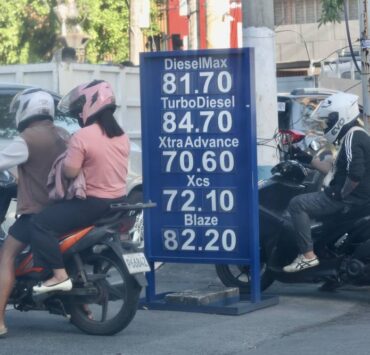
Delivery truck drivers have seen the price of diesel—the main fuel used for passenger and cargo transport which has been traditionally cheaper than gasoline—rise sharply after the Feb. 28 attack on Iran by the United States and Israel. (See related story on this page)
“In general, prices should be stable although there might be some slight increases due to higher freight and transport costs,” Tiu Laurel said in a statement.
“Definitely, there is no issue on supply. I can safely say that through June, even July, there is no issue on supply of almost everything,” he added.
Rice, veggies, pork
President Marcos on Friday announced that local producers and retailers of processed food had committed to freeze prices of their products for up to two months to help mitigate the effects of the Iran war.
The DA said the country has a stable supply of rice, with its inventory of the staple rising by 5.3 percent to 2.11 million metric tons as of Feb. 1, according to data from the Philippine Statistics Authority.
Households accounted for 42.6 percent of the inventory while 37.5 percent was from the commercial sector and 20 percent from the depositories of the National Food Authority (NFA).
The NFA currently holds 400,000 MT of buffer stock, which can cover 10 days’ worth of national consumption. The peak harvest season and incoming imports will further enhance availability.
“Supply of vegetables is also sufficient since this is the harvest and planting period,” Tiu Laurel said.
According to the agriculture chief, cold storage facilities are filled with imported pork, while the local swine population continues to increase.
Tiu Laurel also said corn, sugar and onion are currently in season, which can help boost overall supply.
Price monitoring
As of March 19, local regular milled rice priced at P35 to P47 per kilogram compares with P33 to P48 per kilo in the same period a year ago, according to the price monitoring by the DA.
Local well-milled rice retailed at P40 to P57 a kilo, higher than P38 to P54 per kilo last year.
Imported regular milled rice ranged from P42 to P45 per kilo, with the floor price also higher than P33 to P45 per kilo.
Imported well-milled rice was priced at P45 to P49 per kilo, also an increase from last year’s P44 to P46 per kilo.
Markets sell frozen “kasim” (pork shoulder) for P210 to P280 per kilo, lower than P230 to P280 per kilo. Whole chicken was sold at P150 to P240 per kilo, slightly lower than P160 to P240 per kilo.
The price of local “galunggong” (round scad) ranged from P240 to P400 per kilo, dropping from P260 to P400 per kilo.
Imported galunggong was priced at P200 to P320 per kilo, compared with the flat rate of P300 per kgilopreviously.
The Bureau of Fisheries and Aquatic Resources (BFAR) said it was continuing the distribution of fuel subsidies to fisherfolk to help alleviate the impact of the Middle East conflict on their livelihood.
BFAR said it was awaiting the signing of a supplemental agreement by the Development Bank of the Philippines to provide an additional P50 million in cash aid to 15,000 more municipal fisherfolk, particularly in fifth-class municipalities.
So far, the agency has provided fuel assistance to more than 10,000 fisherfolk nationwide, mostly in Central Visayas and Bicol.
The agency provides a one-time financial aid of P3,000 each to qualified fishers through its fuel assistance program, which is released via cash cards for those with access to fuel stations or vouchers to those located in remote areas.
Long-term fix needed
Reacting to the administration’s moves to cope with the fuel crisis, a public policy think tank urged the government to consider what it called “long-term” solutions to resolve chronic problems caused by spikes in petroleum products—the repeal of the oil deregulation law and the serious implementation of the Renewable Energy Act.

Roland Simbulan, chair of the Center for People Empowerment in Governance (CenPeg), repeated calls to revoke Republic Act No. 8479 (The Downstream Oil Industry Deregulation Act of 1998), which allowed oil companies to set prices of petroleum products based on global market volatility and supply.
Since its enactment, oil companies passed on to consumers any possible profit margins they had lost, a burden imposed on transport drivers and consumers, according to Simbulan.
“It’s almost automatic under the unregulated oil price structure under that law,” Simbulan told the Inquirer in a phone interview.
The second long-term solution Simbulan suggested is to fully explore other energy sources by “increasing the use” of RA 9513 (Renewable Energy Act of 2008), which was intended to reduce dependence on fossil fuels.
Under the law, the government is mandated to accelerate exploration and development of renewable energy resources including biomass, solar, wind, hydro, geothermal and ocean energy sources.
Simbulan said three administrations have not fully implemented the law in securing other renewable energy sources.
He said that scientific studies have long showed that the country could harness solar and wind energies. I
The arguments that support the use of solar and wind energy have helped the campaign against reviving the Bataan Nuclear Power Plant, or relying on nuclear energy, considering the need for expensive imported uranium to drive such power generators, Simbulan said.
“As a long term solution, we should take [the law] seriously. We already have the law in place but we’re not touching it and our dependence on renewable energy has not moved much since the law was passed,” he said.
Simbulan said the approval by Congress of the bill that allows suspension of the fuel excise was one of the immediate measures that the administration should enact.
Another “immediate” solution is to tax multibillionaires in the country and the President’s family could “set the example” by paying their P203-billion estate tax, Simbulan said.
Simbulan said that billionaires, including owners of oil companies, had already racked up large profits.