





Filipinos are still averse to rallies, even when the protests are fighting for them

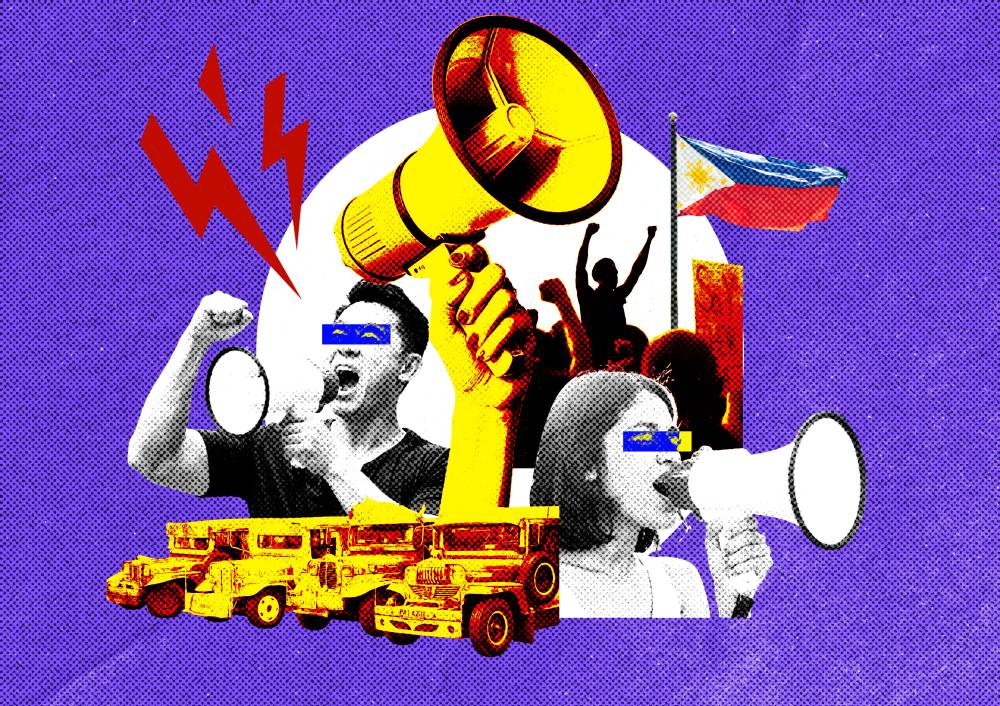
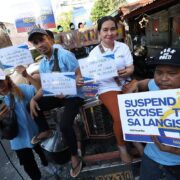
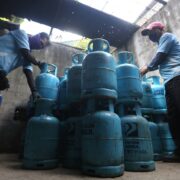
It’s tough to miss, especially with the worrying news of fuel prices skyrocketing like crazy. Transport groups are protesting against the greed of fuel companies, and a particular demonstration over the past couple of weeks has even targeted a branch of one of the country’s biggest gas corporations.
How could they not? The war in Iran is putting a major strain on the Philippines’ fuel supply, and as a result, the oligopoly is punishing us by ridiculously raising prices. One can argue the basic economics of supply and demand—but those who actually have to live the harsh realities of not being rich in this country can also argue that, because prices by the liter are insane, public transport drivers are suddenly no longer taking home any money after they have to fuel up.
This goes all the way out to fishermen on the coasts who also need gasoline to power their boats, too.
What else is there left to do but to express frustration and anger, instead of quietly taking it and praying to whatever deity that things would suddenly change?
The Filipino allergy to protesting
But this isn’t an article about economics—instead, this is an exploration of what seems to be a collective Filipino distaste for protest action.
Every time a news outlet posts on Facebook, not just about transport groups demonstrating against fuel companies because of the current oil crisis but also about protest actions in general, there’s a great chance that the dominant reaction is the dreaded and stupid “haha” emoji. You know, that one: the laughing smiley, meant to mock and undermine the subject of the news directly. To show that one fundamentally disagrees with what is being said. (Many have already decried it as Facebook’s worst-ever invention.)
And Filipinos love to speak their mind on these things because we’re bold keyboard warriors. Whenever someone is protesting—often fighting for everyone’s rights—there’s always a top comment of disgust at the mere idea of the demonstration and protest action. “Get a job,” they’ll say. “What you’re doing is useless.”
Or they’ll start red-tagging and accuse students and protesters of being communist NPA rebels. That’s even the nicer version of what I’ll usually see; the real scummiest of scum will invoke the military and police and the violence they’re generally known for.
And this is all while protesters are demanding what’s good for the people.
When the flood control issue hit critical mass late last year, I always thought the peaceful protests were never going to work the way everyone wanted them to because of their very nature: Filipinos love romanticizing the idea of peaceful protesting, all because the EDSA Revolution of 1986 worked. People wanted Indonesia-like results without being willing to put in the Indonesia-like effort of channeling their very real rage over flood control corruption into physical action that would’ve really threatened corrupt government officials.
The Red Scare, generations later
So, it’s been established that Filipinos will only deem protesting respectable when the calls to do so hit the dignified and respectable middle-class mainstream, the way the Trillion Peso March did. But when it’s time for actual poor people to fight—not only for their livelihood, but for everyone’s rights to, I don’t know, not have to pay through the nose just for fuel, most will turn their noses up.
Thanks to pro-USA propaganda and neocolonial influences through generations of Filipinos, we’ve still got the Red Scare today, where any protest action that hasn’t been blessed by either the middle class or the Church is likened to communism that’s somehow been commissioned by the aforementioned NPA.
I know that when I told people I was going to UP Diliman for college, the advice I heard the most was not to turn into an activist—which I really internalized for a long time until I felt the pain of the real world, ironically (but not really) after graduating and building my own life in Manila.
It pisses me off now that most people would rather avoid the optics of looking like a rebel than do the work that earned so many of us a better life. The “peaceful” revolution of 1986, after all, was earned by the blood shed and lives given by activists that today’s Filipinos completely fail to appreciate. All because they disobeyed and weren’t submissive.
“Voting should only be the beginning of any citizen’s democratic participation. Activism in all its forms allows people to participate in the shaping of the country between elections,” says UP Diliman history lecturer Diego Magallona in his 2019 article for the Democratic Erosion Consortium, writing in the context of the Duterte-era administration going after critics.
“This is especially important in ‘oligarchic’ democracies like the Philippines, where an entrenched wealthy political elite dominates competition in elections. Here, there is a much greater need for organized action to pressure the government.”
Magallona recommends better approaches to inclusivity in unions and demonstrations, but his article was written way before Filipinos’ disinformation and online rage metastasized into the ugly monster it is today, following the 2022 presidential elections.
If social media truly is the pulse of the masses, then it seems that even when the proverbial boot is firmly pressed to their necks, threatening to choke and take their lives, many Filipinos would much rather be submissive, as though the government is still doing them a favor, and complain only on the internet about how life is hard. All while blaming protesters for even daring to protest and telling them to get jobs instead—to try and pay for things the typical salary can now hardly afford.