









Biz groups back new presidential power on fuel excise


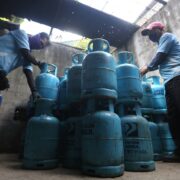
Several business groups on Thursday backed the new law allowing President Marcos to suspend or reduce the excise on petroleum products, with one calling it a “much-needed” measure to cushion the impact of surging oil prices.
In a statement, the Financial Executives Institute of the Philippines (Finex) said it supports the government’s move to address risks to fuel supply and rising global oil prices, but stressed that emergency measures must be “timely, disciplined, and targeted.”
Port users and exporters likewise welcomed the measure, saying any move to ease fuel costs would help cushion the impact of rising oil prices on already strained industries.
In a separate statement, the Philippine Exporters Confederation Inc. (Philexport) said the measure comes at a critical time, as escalating geopolitical tensions and supply uncertainties push up fuel prices and ripple across supply chains.
“For exporters, especially MSMEs, transport and logistics costs are a major component of overall expenses,” Philexport president Sergio Ortiz-Luis Jr. said. “Any relief on fuel costs will help preserve competitiveness in already volatile global markets.”
Ortiz-Luis added that the measure provides a “timely and much-needed policy tool” to temper the impact of double-digit fuel price increases on exporters, manufacturers and consumers.
Nat’l energy emergency
Oil prices have surged in recent weeks following the Feb. 28 strikes by the United States and Israel on Iran, triggering retaliatory attacks that have since escalated into a broader conflict nearing its one-month mark.
Amid the surge in fuel prices, Marcos on Tuesday declared a state of national energy emergency—the first in the world in response to the Iran war.
A day later, he signed Republic Act No. 12316, which authorizes the President to suspend or reduce the excise on petroleum products. (See related story on page A3)
Contrary view
Not all groups, however, support suspending fuel taxes.
The independent, reform-oriented policy group Action for Economic Reforms (AER), argued in a position paper that such a move could result in significant revenue losses and disproportionately benefit higher-income households that consume more fuel.
What the government should prioritize instead, according to AER, are targeted subsidies, particularly for public utility vehicle drivers and other vulnerable sectors, arguing that broad tax cuts are a “blunt instrument” that do little to address supply-driven price increases.
“In short, the response to rising oil prices should focus on targeted assistance and fiscally responsible revenue measures, not broad tax suspensions that primarily benefit the wealthy while eroding government revenues,” it said.
Other economists and financial analysts also urged caution in any immediate suspension of the excise.
Jonathan Ravelas, senior adviser at the due diligence, tax, advisory and audit firm Reyes Tacandong & Co., told the Inquirer that there was no need to rush into suspending the excise as there was still time to watch developments.
He also said that the law was a “blunt tool,” sharing the views expressed by AER.
“It benefits everyone, including those who don’t need help, and it weakens fiscal credibility,” he said.
“What makes more sense is using the windfall gains now on the spending side-targeted, temporary support where fuel costs really hurt: transport operators, farmers, and food supply chains,” he added, noting that it would be smarter to “target the pain, not the tax.”
Logistics concern
The United Portusers Confederation of the Philippines Inc. (UPC) said in a statement that fuel remained as the top concern for port and logistics players, thus any price volatility would ripple across the supply chain.
“When oil prices spike, the impact cascades immediately—from trucking and shipping lines to warehousing and last-mile delivery,” said UPC president Ma. Flordeliza Leong.

Ortiz-Luis said exporters were already feeling the strain, with some companies considering cutting work hours due to higher input costs.
“The ability of the President to suspend or reduce excise taxes on fuel can help cut operating costs, prevent further price pass-through, and ultimately protect jobs and livelihoods,” he added.
However, Philexport pointed out that the effectiveness of the measure will depend on how quickly and clearly it is implemented.
“We hope that clear guidelines will soon be issued. Predictability is important so businesses can plan accordingly and pass on the benefits efficiently to consumers,” Ortiz-Luis said.
Finex warned that measures to soften the impact of rising oil prices should not come at the expense of economic activity.
“We stress that conservation and price-mitigation measures must be designed to avoid dampening economic activity or shifting the burden disproportionately to businesses, workers, and consumers,” the group said.
“Policy responses must protect energy security without weakening the productive sectors that sustain employment, household income, and economic momentum,” it added. —WITH A REPORT FROM NYAH GENELLE C. DE LEON
******
Get real-time news updates: inqnews.net/inqviber