









How budots broke the gates of Berghain


The queue for Berghain is less of a line and more of a silent, secular pilgrimage toward a concrete altar. To the uninitiated, Berghain is the undisputed “Cathedral of Techno”—a repurposed East German power plant so notoriously difficult to enter that its head bouncer, Sven Marquardt, has become a global icon of rejection.
It is a space defined by a rigorous, almost liturgical exclusion, where the air itself feels heavy with the collective anxiety of the unchosen. Imagine the most gatekept, VVIP-only club in Manila, then strip away the bottle service, the sparklers, and selfies, and replace them with a terrifyingly disciplined devotion to industrial shadows.
To my friends, my presence here was a glitch in the cultural matrix. I have always been a creature of the “softer” Germany, drawn to the alpine clarity of Munich, and the maritime quiet of Hamburg. I am, by my own admission, too “basic” for the industrial grit of the capital. I had originally planned to wear a simple black dress before my companions vetoed it with horizontal horror.
But I had flown in from Spain for Berlin Fashion Week, and the city’s gravity was pulling me toward a singular, improbable event: the arrival of Sherwin Tuna.
The prophet of the province
Better known to the internet and the Philippine archipelago as DJ Love, Tuna is the undisputed pioneer of budots, a genre that represents the rawest, most unrefined edge of Filipino electronic music.
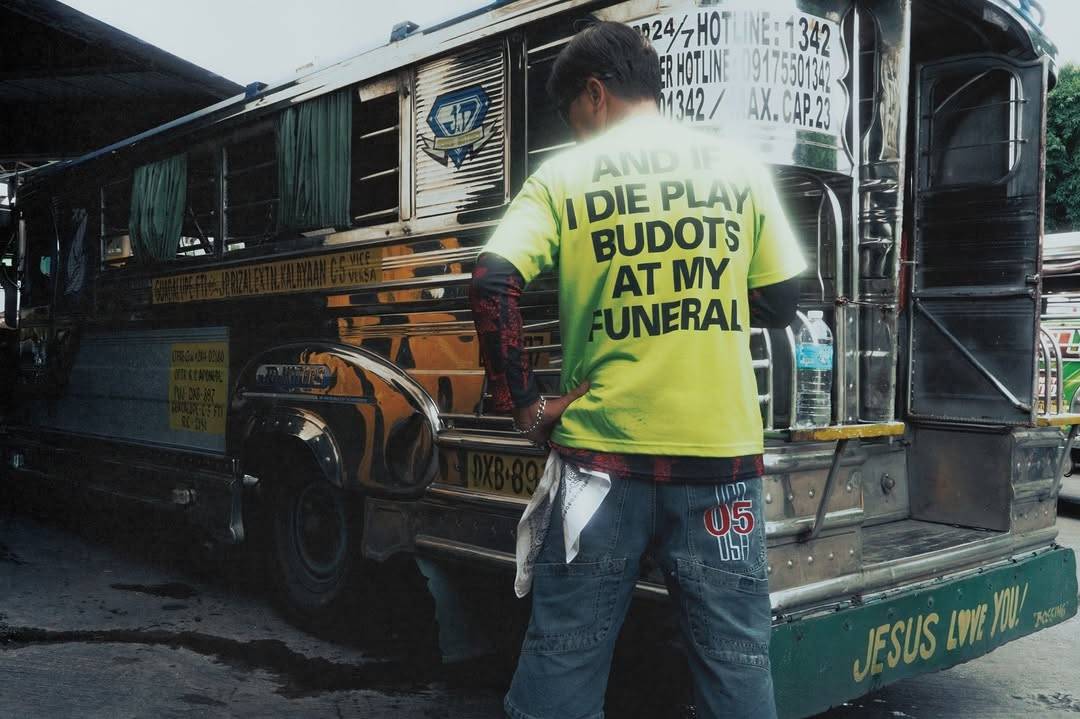
Budots didn’t emerge from the slick, air-conditioned studios of Makati; it was forged in the humid, makeshift barangays of Davao City. It is a sonic language of survival and hyper-local joy, built on a foundation of “ti-ti-ti” high-hats, frantic whistles, and the unmistakable, low-frequency honks of a jeepney backing into a crowded Mindanao intersection.
For years, the Manila elite dismissed Tuna’s work as jejemon, a derogatory shorthand for anything perceived as aesthetically “low-brow.” In the rigid class hierarchy of the Philippines, taste is the ultimate gatekeeper. To be jejemon is to be outside the gates of “proper” culture; it is the music of the tricycle drivers, the street vendors, and the urban poor.
Yet, as Tuna arrived in Europe for a string of dates across Germany and the Netherlands, he wasn’t just performing; he was staging a radical reclamation of cultural capital.
After a final (very fake) flippant laugh and minutes of maintaining the mandatory somber expressions of the queue, the gatekeepers of the world’s most exclusive dance floor finally nodded. I was in. It is a humbling thought, really: In the grand taxonomy of the Berghain bounce, a trillion-dollar tech mogul like Elon Musk can be deemed “not the vibe” yet Zara’s number one patron was ushered in with a stony-faced blessing.
Apparently, the algorithm of the Berlin bouncer values a shivering journalist in borrowed leather more than the man trying to colonize Mars.
Into the void
Inside, Berghain is a three-story cathedral of brutalism. The layout is a sensory gauntlet: the top floor serves a relentless diet of techno and strobe lights; the middle level on this night hosted a screamo-esque band that rattled the marrow (which, in all honesty, scared me a little); and the bottom floor—the cavernous Halle—was reserved for guest DJs from around the world.
The lack of performative vanity creates a vacuum of genuine freedom. You could dance centimeters away from a stranger or share a shot and a kiss simply because there was mutual, unforced willingness. There is no need for the “performative hunt” found in more traditional nightlife; when everything is available, nothing needs to be taken by force.
It was within this environment of safety and raw grit that the air began to change. As I moved toward the bottom floor, the sound didn’t just vibrate; it rattled. This wasn’t the curated, minimalist thud of the Berlin establishment. It was something faster, sharper, and deeply, almost painfully, familiar.
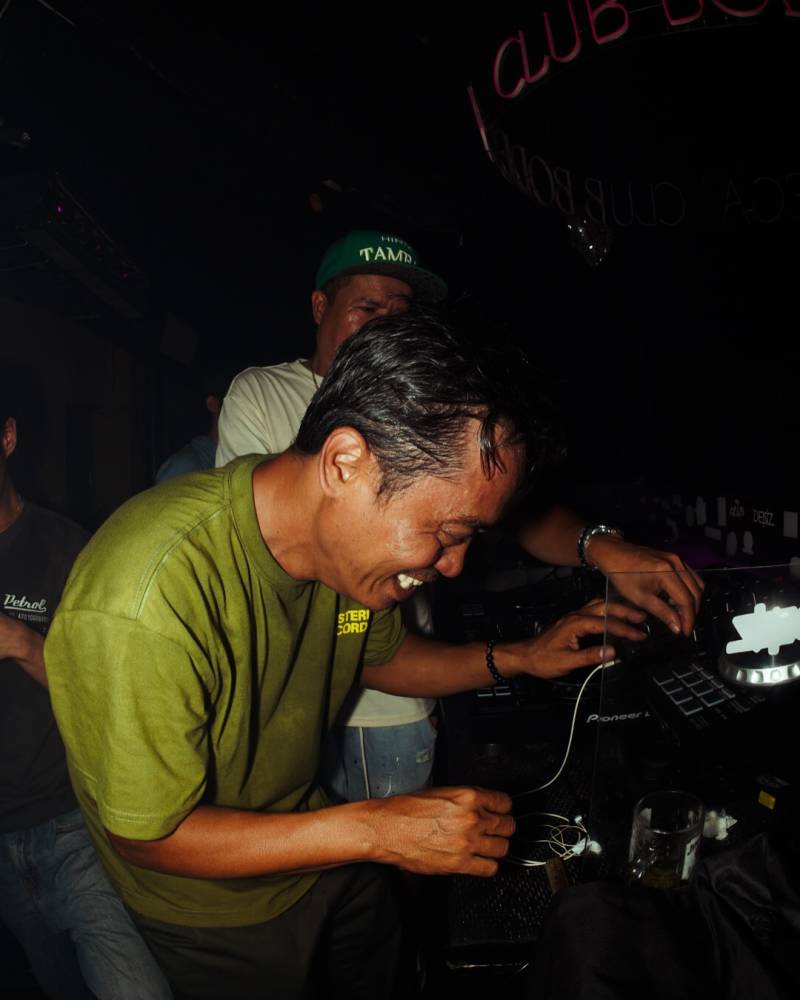
At the altar was DJ Love. Under the soaring ceilings of Friedrichshain, Tuna was playing the “noise” of the Davao streets to a crowd of international techno pilgrims who treat sonic experimentation with the solemnity of a high mass.
The irony was delicious, bordering on the sublime. Berghain is a place Manila’s elite are dying to enter—the ultimate stamp of global “cool” that even Macklemore famously failed to secure. Yet, these same socialites would likely turn up their noses at the very music being celebrated inside.
The sanctification of street
In the Philippines, class isn’t just about what you own; it’s about what you distance yourself from. The Manila elite perceive themselves as “too good” for jejemon culture, classifying budots as low-brow noise. They chase the industrial aesthetic of Berlin while rejecting the industrial reality of their own backyard.
But inside the hallowed concrete of Berghain, the hierarchy was inverted. The “noise” of the masses was being celebrated as the most avant-garde ticket in town.

In the anthropology of sound, there is a recurring phenomenon where the “noise” of the subaltern is only transcribed into “art” once it is filtered through a Western, industrial lens. In the Philippines, the social hierarchy is as much auditory as it is economic.
To the Manila elite, jejemon culture—and the budots beat that serves as its pulse—is a sonic intrusion, a reminder of a sprawling, unmanicured reality that exists just outside the gated communities of Makati. It is the sound of the street corner and the crowded jeepney, perceived by the local upper class as a failure of “refinement.”
Budots taking over Berghain is a testament to the way global cultural capital operates: the elite of the Global South often look toward the West for validation, while the avant-garde of the West looks toward the “raw” grassroots of the Global South for its next infusion of energy.
Redrawing the geography of cool
In that strobe-lit suspension of reality, the power dynamic did not just shift; it dissolved. There was a quiet, jagged triumph in the realization that the very people who might have been denied entry to the exclusive enclaves of Makati were now the pulse of the world’s most gatekept sanctuary.
For a few hours in the Berlin dark, the geography of “cool” had been forcibly redrawn.
The sounds of the Philippine streets hadn’t just survived the flight to Europe; they had conquered the altar. They proved that the “chaos” so often dismissed as a lack of refinement is, in fact, the most vibrant and resilient structure we have.
******
Get real-time news updates: inqnews.net/inqviber