

53 years later, the same lesson

President Marcos has signed Executive Order No. 110 declaring a state of national energy emergency. Before anything else is said about it, I want to say something plainly: We have been here before.
In 1973, a conflict in the Gulf triggered a fourfold spike in oil prices. The Philippines felt it immediately. Interest rates climbed to 22 percent, import costs surged and ordinary Filipinos paid the difference.
Gerardo Sicat, in his biography of former Finance Secretary Cesar Virata, documented how that crisis forced a reckoning.
The conclusion then was clear: The Philippines had no choice but to invest in nontraditional energy: hydroelectric, geothermal, solar, biomass. Energy independence, Sicat wrote, was a must.
That was 53 years ago.
Now, a conflict in the Middle East has disrupted gas exports through the Strait of Hormuz. LNG prices have doubled. Electricity rates are projected to rise by up to 16 percent. And once again, the cause is the same, we generate a significant share of our power from fuel we do not produce and cannot control.
The numbers explain the exposure.
Coal, which accounts for more than 60 percent of our power generation, is over 80 percent imported. Natural gas, which powers a significant share of our Luzon grid, is now subject to severe price volatility as LNG supply routes are disrupted.
Every time a shipping lane closes or a producing country limits exports, it shows up in the electricity bills of Filipino households and businesses. That is the problem renewable energy (RE) was always meant to solve.
The lesson from 1973 is the same one we are living through now. The difference is that this time, we have the tools to do something about it.
When the government introduced the Feed-in-Tariff for solar energy in 2012, the guaranteed rate was P9.68 per kilowatt-hour, equivalent to roughly P15 in present-day prices.
At that time, critics questioned whether it was worth it.

Under the Green Energy Auction Program (GEAP), solar ceiling price was at P3.6799 per kilowatt-hour in GEA-1 in 2022 and P4.4832 in GEA-4 in 2025.
That is about 70-percent reduction in 13 years. Not because solar became fashionable, but because we started early enough to ride the price curve down.
This logic should govern how we approach every clean energy technology.
Offshore wind ceiling price for GEA-5 this year is P11 per kilowatt-hour. Countries that committed early, like the United Kingdom, China and Denmark, are now generating it at a fraction of what they paid to build the industry.
We expect the same for the Philippines, just as what we experienced with solar energy.
As of December 2025, the Department of Energy (DOE) has awarded more than 1,300 RE service contracts with a potential capacity of 139.8 gigawatts.
Through competitive auctions, we have awarded 16 gigawatts for delivery from 2026 to 2035. In 2025 alone, the country installed a record of more than 800 megawatts of new RE capacity.
The country has 10.5 gigawatts of installed RE capacity. The gap between what has been contracted and what is injected into the grid is real, and this is where our vulnerability lies.
That gap is not a failure of policy or investment. Philippine energy policies have been recognized by BloombergNEF as among the top 4 in the world.
RE now attracts more than 80 percent of all approved investments in the country. The gap is a delivery problem.

I want to cite a specific case, a GEA winner with 270 megawatts of committed capacity that can only inject 50 megawatts into the grid. The reason is two transmission towers stalled by a right of way dispute for two years. Two towers. 220 megawatts sitting idle.
This is not a DOE problem alone. It involves local governments, landowners, transmission operators and regulators. No single agency can resolve it. But the cost of not resolving it is borne by every Filipino who opens their electricity bill.
This is why the single most important action in the next 12 months is to build transmission infrastructure ahead of RE capacity, not behind it. What we need now is for every agency involved to move at the same pace, National Grid Corporation of the Philippines, Energy Regulatory Commission, Department of Environment and Natural Resources, local government units and permitting, consenting, and licensing agencies of the government.
EO 110 is necessary. But it buys us time.
What changes the equation is building enough RE capacity such that the next conflict in a distant region does not automatically become a predicament in Filipino households.
That is what we have been working toward, a power system running on indigenous resources. Sun. Wind. Geothermal heat. Hydropower. Biomass. None of these can be embargoed. None require a shipping lane.
Some 53 years ago, this country drew the right lesson from an oil shock and did not move fast enough on it. We are closer now than we have ever been to the energy system that lesson pointed toward.
The question is whether we will use this moment, when the cost of dependence is visible on every electricity bill, to close the distance.
I think we will. But it will take a whole-of-nation approach to do so.
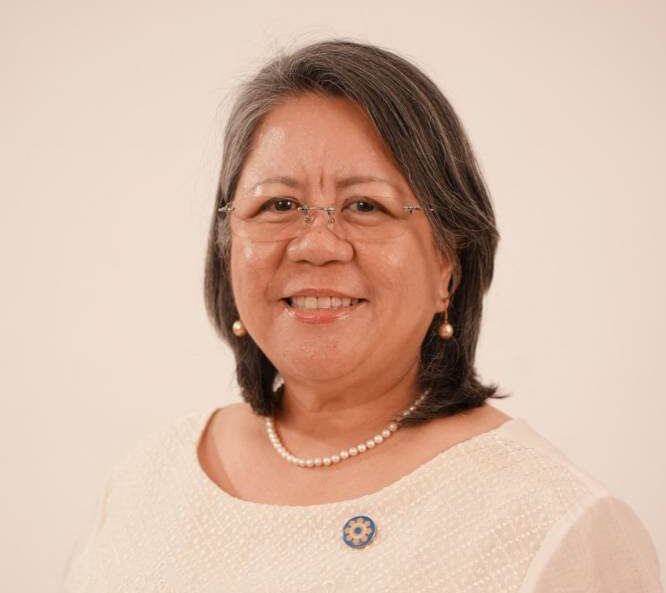
Dr. Rowena Cristina L. Guevara is Undersecretary of the Department of Energy, supervising the Renewable Energy Management Bureau and Electric Power Industry Management Bureau.