





PH, China ‘reset’ talks on sea tensions, oil

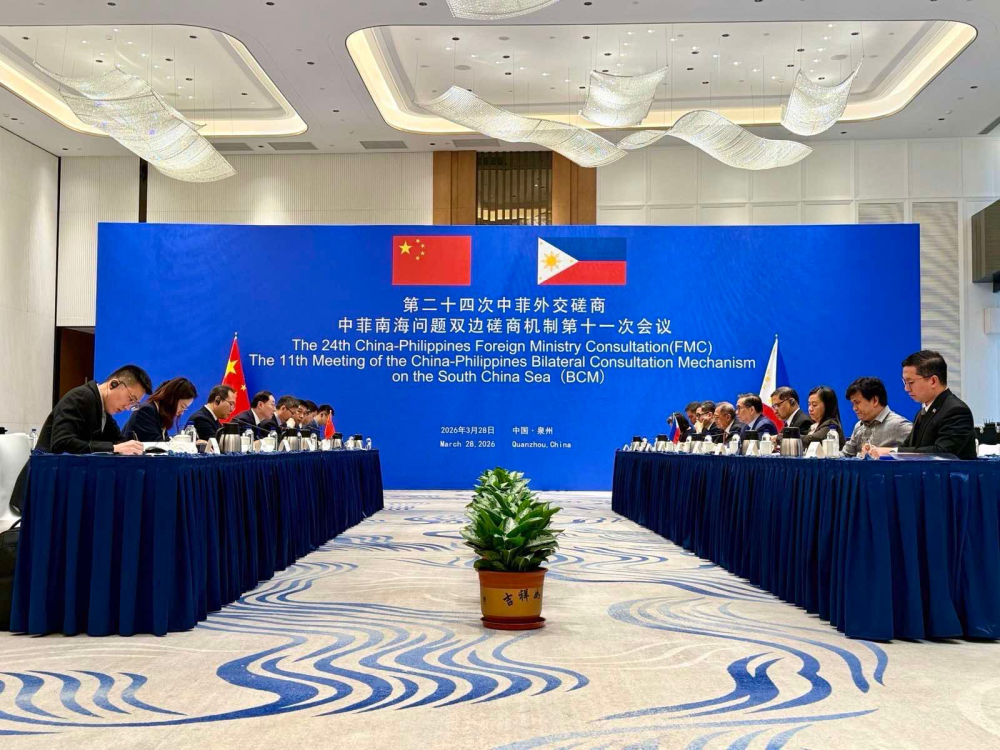
The Philippines and China began to “reset” bilateral talks over the weekend, discussing maritime tensions as well as possible oil and gas exploration deals in the South China Sea, the Department of Foreign Affairs (DFA) said on Saturday.
Foreign Undersecretary Leo Herrera-Lim led the Philippine delegation, while Chinese Vice Foreign Minister Sun Weidong headed Beijing’s side during the meetings in Quanzhou, China, from Friday to Saturday.
“Both sides held a candid and productive exchange on bilateral concerns, including strategic, political, security and law enforcement issues,” the DFA said, referring to the 24th Foreign Ministry Consultations (FMC) and the 11th meeting of the Bilateral Consultation Mechanism (BCM) on the South China Sea.
The FMC was last held in Manila in March 2023, while the BCM last met in Xiamen in January 2025.
During the talks, Manila raised concerns over recent incidents that disrupted the “lawful activities” of Filipino fishermen and posed risks at sea, particularly in the West Philippine Sea.
Despite the tensions, both sides agreed to continue pursuing confidence-building measures, including cooperation in coast guard communication, ocean meteorology and possible oil and gas exploration.
Gas, oil fields
The talks did not specify details of the oil and gas talks, but President Marcos announced last week the successful drilling and testing conducted at the Camago-3 well, a deepwater natural gas reserve within the Malampaya-Camago field off Palawan, Philippines.
The well, part of the $893-million Malampaya project, is believed to be able to produce up to 60 million cubic feet of gas per day and holds an estimated 2.5 times more recoverable gas than the earlier Malampaya East-1 discovery.
It was the first time potential oil and gas exploration in the South China Sea was discussed since previous talks were terminated in 2022.
The DFA also underscored the need to uphold international law, including the 1982 United Nations Convention on the Law of the Sea and the 2016 arbitral ruling, as well as the Philippines’ role as chair of the Association of Southeast Asian Nations (Asean).

Role in Asean
Manila emphasized that it would play a “responsible and professional role” as Asean chair this year, especially on managing regional talks and reinforcing a rules-based order.
The DFA said both identified reconvening appropriate and necessary bilateral mechanisms as they took up global uncertainties, including developments in the Middle East, and the need to ensure stable access to energy and fertilizers.
The meetings followed earlier rounds of dialogue held this year in Cebu and Beijing and are expected to lead to further meetings between the two countries’ foreign ministers later in the year.
The talks also highlighted improving two-way tourism, visa-free arrangements, enhanced connectivity and prospective new direct air routes.