







Pasig-Marikina river project rolls out new tech to boost Metro flood control

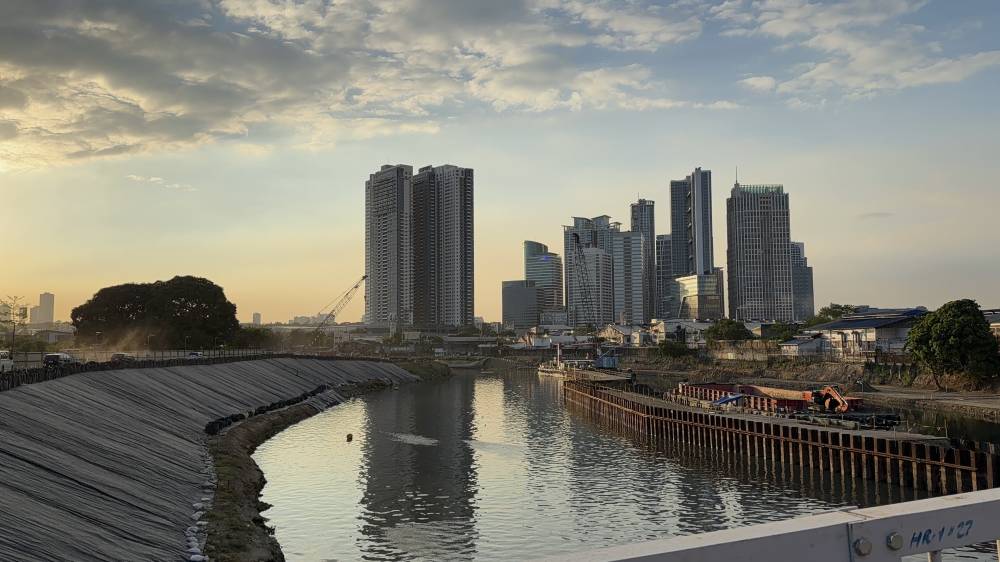
Amid the still unresolved scandal over the government’s flood control projects, a project by the Department of Public Works and Highways (DPWH)—the agency in the center of that controversy—is introducing new technology to bolster the flood defense of Metro Manila.
The department’s Pasig-Marikina River Channel Improvement Project (PMRCIP), which had been ongoing for two decades and is now on Phase 4, stretches from the Sierra Madre mountains through lower Marikina to the Pasig River and Manila Bay, covering one of the country’s most flood-prone urban corridors.
A crucial component of the project is the Alloy Saving Duplex Stainless Steel (ASDS) used in floodgates, a first in the Philippines.
The material is lightweight, corrosion-resistant and requires less maintenance than traditional steel, according to engineer Grecile Christopher Damo, Project Manager 3 of PMRCIP-Phase 4 under the Unified Project Management Office–Flood Control Management Cluster of the DPWH.
“We are following all necessary requirements before, during, and after project implementation,” Damo told the Inquirer. “We coordinate closely with local and national agencies, conduct public awareness campaigns, and ensure that all construction materials undergo proper testing.”
Lessons from past projects
He added that the project’s design was reviewed and approved by the DPWH Bureau of Design, and a consultant supervises construction “to guarantee quality and compliance.”
Simulations by consultants and the Japan International Cooperation Agency (Jica), the leading funding entity in this project, show that without those improvements, a major flood event could cause up to $1.3 billion in damage and affect around 1 million people.
But the estimated damage could be reduced by about 85 percent with the measures in place, according to the Japanese Embassy.
Damo said Phase 4 could serve as a model for future flood control efforts nationwide.
He made that assertion even amid the still unresolved flood works mess, as he cited such favorable factors as updated engineering, long-term planning and international cooperation.
Experts have noted that past flood control projects in Metro Manila had often failed due to outdated methods, poor oversight and lack of political will.
According to an Inquirer report by Krixia Subingsubing published in October 2024, many projects lacked integration as well as social and environmental measures such as watershed management, solid waste control and community participation.
Upgraded system
Damo said Phase 4 addresses these shortcomings through stricter adherence to a master plan, updated designs that account for climate change and closer monitoring during construction.
The PMRCIP has been implemented in multiple phases since the early 2000s.
Phase 1, which covered detailed engineering design, was completed in 2002.
Phase 2 ran from 2007 to 2013, and Phase 3, which focused on the lower Marikina River, was completed in 2020.
Phase 4, the current stage, was approved in 2019, with implementation beginning in 2021.
Floodgates will be installed at key structures downstream of the Manggahan Floodway Control Gate in Pasig City, the Cainta floodgate and Taytay sluice gate. Damo said the gates form a critical part of the river’s upgraded flood control system.
“Although ASDS costs more upfront than black iron, its durability and lower maintenance justify the investment for long-term flood control,” he said.
‘Ondoy-type rain’
Phase 4 also includes widening the river by about 100 to 110 meters and installing composite piles—a combination of hat-shaped sheet piles and H-beams, which Damo said are stiffer, more stable, and more economical than conventional U-shaped steel sheet piles.
While composite piles have been used in the second phase, ASDS represents a new approach for floodgate structures in the country.
He said the Pasig-Marikina River system follows a 100-year return period design, but existing works under Phases 3, 4, and locally funded Phase 5 can currently handle about 2,900 cubic meters per second, roughly equivalent to a 30-year flood event.

“With projected rainfall increases of up to 10 percent, retarding basins and flow-through dams upstream are necessary to stabilize midstream discharge and prepare for Ondoy-type rains,” Damo said.
A retarding basin temporarily stores excess floodwater and releases it slowly to reduce peak flow, while a flow-through dam regulates the volume of water moving downstream.
Japanese support
Through its Official Development Assistance (ODA) program, Japan has been a long-standing partner of the Philippines and its capital region, especially in vital public works such as flood control.
Phase 4 is funded by as much as ¥83.664 billion (P31.6 billion) in loans from Jica, which implements Japan’s ODA to support developing nations.
According to the Department of Economy, Planning and Development, Phase 4 carries a total cost of about P57.7 billion, following an expanded scope and extended timeline.
Infrastructure attaché Akito Kinoshita of the embassy said the project builds on decades of cooperation between the two countries in disaster risk reduction.
“Improving the river is crucial to protecting the political, economic and cultural centers of Metro Manila,” Kinoshita told reporters during a site visit organized by the embassy.
“These structural measures significantly reduce damages and protect residents along the river,” he said.
******
Get real-time news updates: inqnews.net/inqviber