







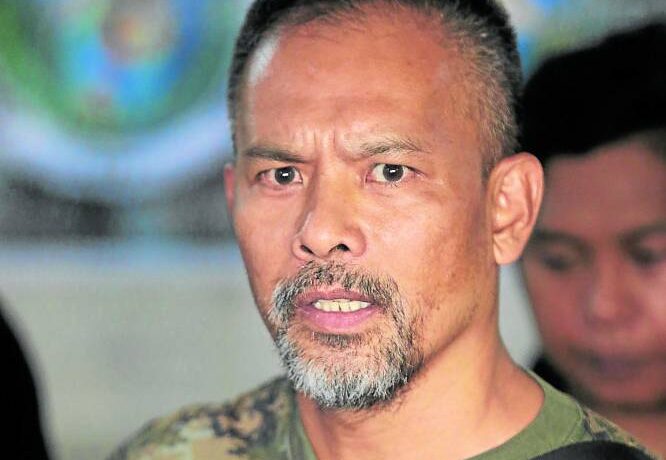
Where is Bantag?

That question must be asked after another journalist was killed less than two weeks ago, adding another name to a string of still unsolved cases that continue to make the Philippines one of the most dangerous countries for journalists.
Julito “Jaz” Diamante Calo, a radio reporter for DNN News FM based in Himamaylan City, Negros Occidental, was gunned down outside his house on March 20 by assailants riding a white sport utility vehicle.
The Presidential Task Force on Media Security (PTFoMS), an interagency group under the Office of the President formed to deal with threats to the media, made the requisite noises: it immediately condemned Calo’s murder as “a significant threat to press freedom” and vowed to ensure that justice is served for the slain journalist.
“His death serves as a reminder of the dangers that media practitioners face in the line of duty,” PTFoMS said in a statement. The interagency task force said it is coordinating with provincial authorities to expedite the resolution of Calo’s killing.
Calo’s family will certainly hold the Palace to those promises, and hopefully they won’t have to wait for years to get justice, just like the other murdered journalists.
A ‘deadly place’
According to press freedom advocates, more than 200 journalists have been killed in the Philippines since the restoration of democracy in 1986. Thus, the Philippines continues to be a “deadly place” for the profession, as per the 2026 Human Rights Watch World Report. Ten of these killings happened in the past four years since President Marcos took office in June 2022:
• Renato “Rey” Blanco, stabbed to death in Mabinay, Negros Oriental, September 2022
• Percival “Percy Lapid” Mabasa, killed in Las Piñas City, October 2022
• Cresciano “Cris” Bundoquin, gunned down in Calapan City, Oriental Mindoro, May 2023
• Juan “Johnny Walker” Jumalon, shot dead while broadcasting live in Calamba, Misamis Occidental, November 2023
• Maria Vilma Rodriguez, killed in Zamboanga City, October 2024
• Juan “Johnny” Dayang, shot and killed in his home in Kalibo, Aklan, April 2025
• Erwin Labitad Segovia, gunned down in Bislig City, Surigao del Sur, July 2025
• Noel Bellen Samar, shot and killed while driving on Maharlika Highway in Guinobatan, Albay, October 2025
• Federico “Ding” Gempesaw, shot at close range outside his home in Cagayan de Oro on June 29, 2022
• Julito “Jaz” Diamante Calo, gunned down outside his house in La Castellana town, Negros Occidental, March 20, 2026

P2 million reward
The most prominent of these killings was that of the hard-hitting Mabasa, more popularly known as Percy Lapid, which grabbed headlines because of the web of personalities charged and eventually convicted for the crime.
Then Bureau of Corrections director Gerald Bantag, his deputy Ricardo Zulueta, and 15 New Bilibid Prison (NBP) inmates and gang members were charged with the murders of Lapid and inmate Jun Villamor, the alleged middleman in the assassination who died mysteriously in prison. Five inmates were convicted for Lapid’s killing by the Las Piñas Regional Trial Court (RTC) in 2023 and 2024, while eight other inmates were convicted for the killing of Villamor by the Muntinlupa RTC. This court then archived the case against fugitive Bantag and Zulueta, who died of a heart attack on March 15, 2024.
That Bantag has continued to elude arrest despite a P2 million reward for his capture has been a big slap in the face of the Philippine National Police and the Department of the Interior and Local Government (DILG).
Back in January last year, DILG Secretary Jonvic Remulla gave assurances that Bantag would be arrested soon. “We know where he is, but we have not found him yet. But we will find him soon, pretty soon,” Remulla said. One year later, Remulla and company are nowhere near fulfilling that promise.
‘No fear of being punished’
This failure validates the perceived influence and clout gained by Bantag, a graduate of the Philippine National Police Academy, during his reign at the NBP, which was marred by irregularities. Even President Marcos said that Bantag had built a fiefdom in Bilibid and seemed to operate with “no fear of being punished.”
It is this kind of impunity that emboldens killings and hinders the search for justice by victims, least of all vulnerable journalists whose job includes exposing the very same ills perpetuated by those in power.
That is why all the paeans for press freedom and protecting journalists coming from the PTFoMS, Malacañang, the DILG, or the PNP fall flat, considering the slow pace of investigations and arrests of suspects.
For sure, even the haughty Bantag is no match to the powers and resources of the DILG and the PNP if they put their minds to the task. These agencies must prove themselves worthy of their mandate to enforce the laws and maintain peace and order. Anything less only gives power to those who deem themselves beyond the reach of the law.