


Carpooling eyed in Metro under strict guidelines

The Land Transportation Franchising and Regulatory Board (LTFRB) will soon release special permits to individuals or companies seeking to enroll in the government’s carpooling program, as a way to provide alternative transportation to commuters.
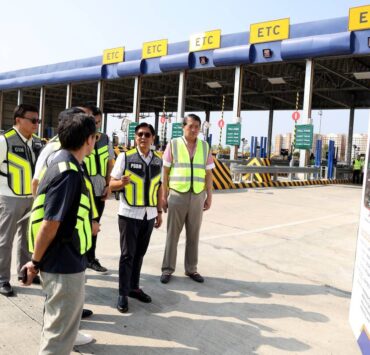
At a briefing on Monday, officials of the LTFRB, Metropolitan Manila Development Authority (MMDA) and Land Transportation Office presented the proposed guidelines for carpooling within Metro Manila, with the implementation eyed to begin after Holy Week.
But for private vehicle drivers like Jay Casal, 42, who drives to his workplace in Makati City every day, some of the requirements being proposed only discourage him from enrolling in the program, like having to register or apply for permits.
“For me, a feasible benefit to encourage us would be an exemption from coding. So if you are carpooling, you can be exempted from that. Like the public utility vehicles, they are exempted from coding,” he told the Inquirer.
Special permit needed
“Or if we can get a gas discount,” he added, noting how jeepney drivers are receiving fuel subsidies from the government. “If there is something like that, I think many would be encouraged.”
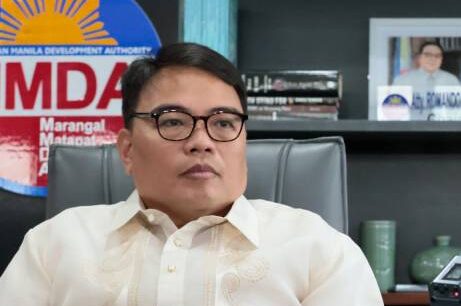
According to MMDA Chair Romando Artes, individuals or companies who wish to enroll their vehicles for the carpooling initiative will have to apply for a special permit at the LTFRB and submit the following requirements: a proposed route plan, fleet list and vehicle details, proof of ownership or transport contract, and passengers’ eligibility list or company certification.
The carpooling will also act as a point-to-point service, with drivers prohibited from picking up or dropping off passengers along the route. Each vehicle will also be limited to two trips per day—one in the morning and another in the evening.
“It cannot function like a regular transport service, because we also don’t want to take away passengers from legitimate services with franchises like jeepneys, buses, and UV Express,” Artes explained.
As for payment, the carpooling initiative shall operate on a “nonprofit or cost-recovery basis,” with the collection of fare for each trip or per passenger strictly prohibited.
The MMDA chief acknowledged that drivers who would carpool also need to recover their fuel expenses, car maintenance costs, or parking payment. However, he appealed to drivers not to abuse the program and make a profit out of carpooling.
Ship reduction
Meanwhile, Transportation Secretary Giovanni Lopez has confirmed that fewer inter-province ships were sailing across the country due to fuel supply problems caused by the conflict in the Middle East.
Lopez told reporters in Parañaque City on Monday that he ordered the Philippine Coast Guard (PCG) to deploy ships to ferry stranded passengers, especially during the Holy Week break when people are expected to visit their hometowns.
“Even before the global crisis of petroleum supply, we were already facing shortages of our passenger ferries. Now, we are projecting a bigger shortage,” he said.

Citing studies and reports submitted to the Department of Transportation (DOTr), Lopez said they monitored a 10-percent reduction in the number of active passenger ferries.
“For cost efficiency and savings, some shipping lines have reduced or suspended some of their trips,” he noted.
Lopez said he directed the PCG to deploy ships and personnel at strategic ports, including those in Marinduque, Batangas, and Calapan in Oriental Mindoro, to help stranded commuters.
As of Monday, the PCG said it had monitored 53,139 outbound passengers and 45,129 inbound passengers in all ports nationwide.
******
Get real-time news updates: inqnews.net/inqviber