










Elevated gatherings

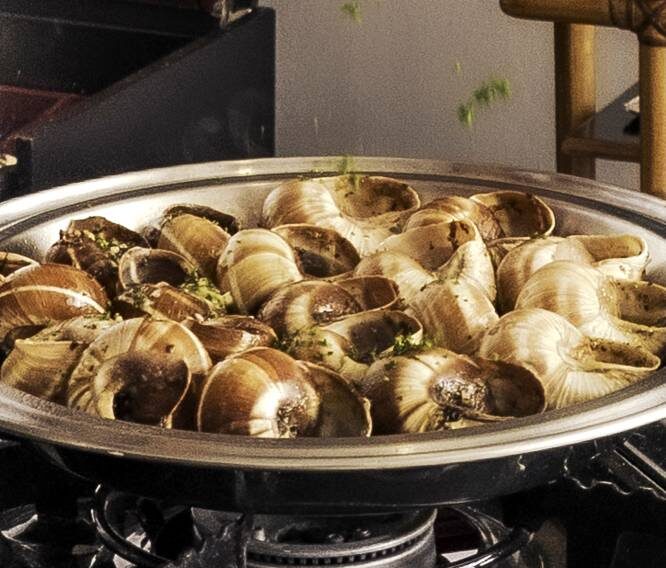
Long before escargot—or what we know simply as snails—became a symbol of French refinement, it appeared on tables in ancient Rome. Gathered, prepared, and appreciated for its nourishment rather than its prestige, what we now consider indulgent and sophisticated began as something grounded and practical.
Over time, this humble ingredient found its way into the hands of Marie-Antoine Carême, often called the “Father of French Gastronomy,” who elevated it into escargots à la bourguignonne—snails baked in butter, garlic, and parsley. At a lavish gathering, he served the dish to Czar Alexander I, transforming it into a moment of culinary theater.
It is a story of transformation and, in many ways, it mirrors the philosophy of “The Thoughtful Table.” Even a single elevated dish can turn a simple gathering into an experience. Escargot is a perfect example.
Thoughtful table, thoughtful offerings
This piece begins a series on “The Thoughtful Table,” an approach to hosting that feels especially relevant today. We live in uncertain times: conflicts ripple across the globe, fuel costs rise, and with them, the price of everyday living.
That said, it would be understandable to retreat from hosting altogether, to wait for a more stable moment. But perhaps this is precisely when we need to gather most. Not extravagantly, but meaningfully.
To host today is not about abundance. It is about intention: creating a space where people feel connected, seen, and quietly cared for. The table becomes less about display and more about presence. You begin, as always, with what you already have.
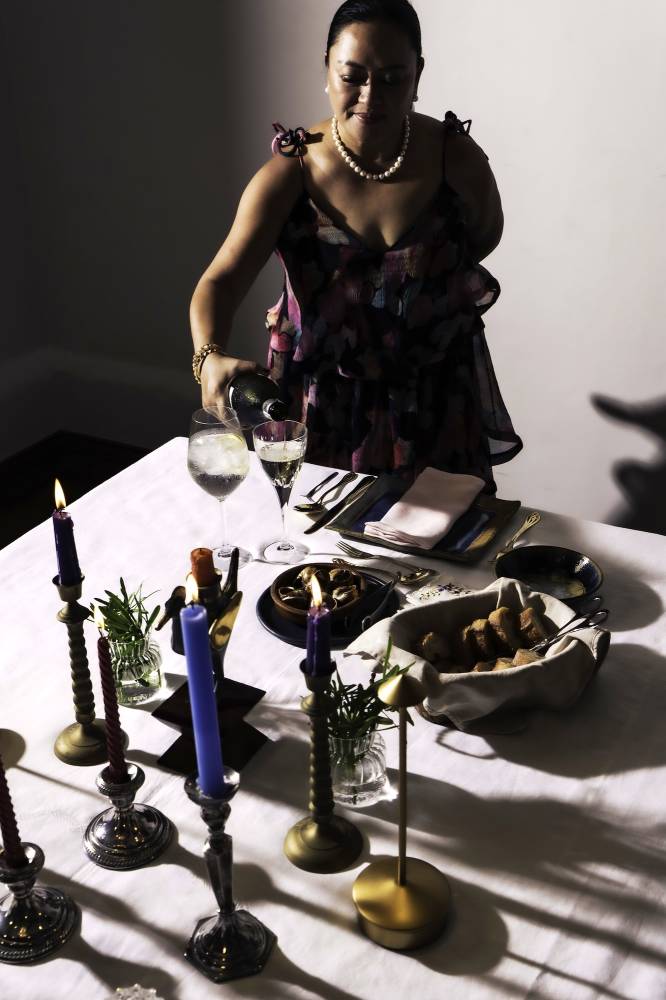
A clean, well-chosen tablecloth sets the foundation, softening the setting and quietly bringing everything together. A mix of ceramic plates, collected over time, tells a richer story than anything perfectly matched.
Candles—some tall, some nearly spent—cast a flattering glow, while a small portable lamp anchors the table, adding warmth that feels both modern and intimate. Lighting, after all, transforms a meal into an experience: It slows the evening, softens conversation, and invites people to linger.
From there, small gestures elevate the ordinary. Even water feels elevated with a slice of citrus. Cloth napkins are simple, reusable, and quietly elegant. Greenery gathered from the garden finds its place in a vase you already own. A curated playlist hums softly in the background, shaping the mood without overwhelming it.
Nothing elaborate, nothing excessive—just considered.
An unexpected introduction
And then, the detail that changes everything: escargot. In Manila, it is not a dish we encounter often. Few restaurants serve it regularly, and even fewer homes attempt it—which is precisely why it becomes compelling.
Remember that charming scene in the movie “Pretty Woman,” where the escargot slipped and flew into the waiter’s hand? To serve escargot is to introduce something unexpected, to gently expand the table without overwhelming it. It is not about impressing guests but about being ready, so when the opportunity arises, you know exactly what to do.
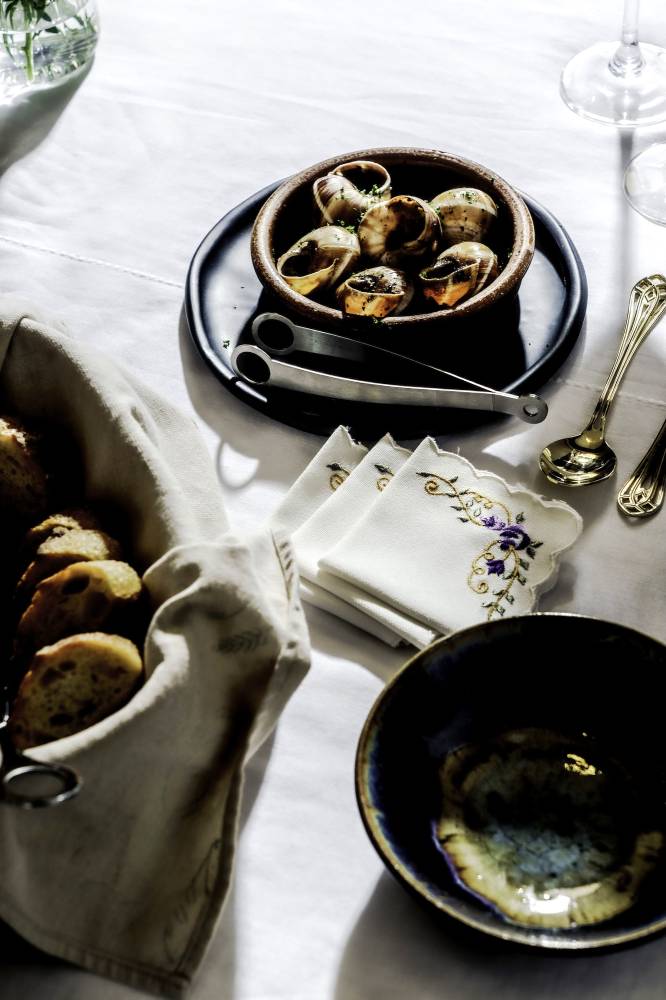
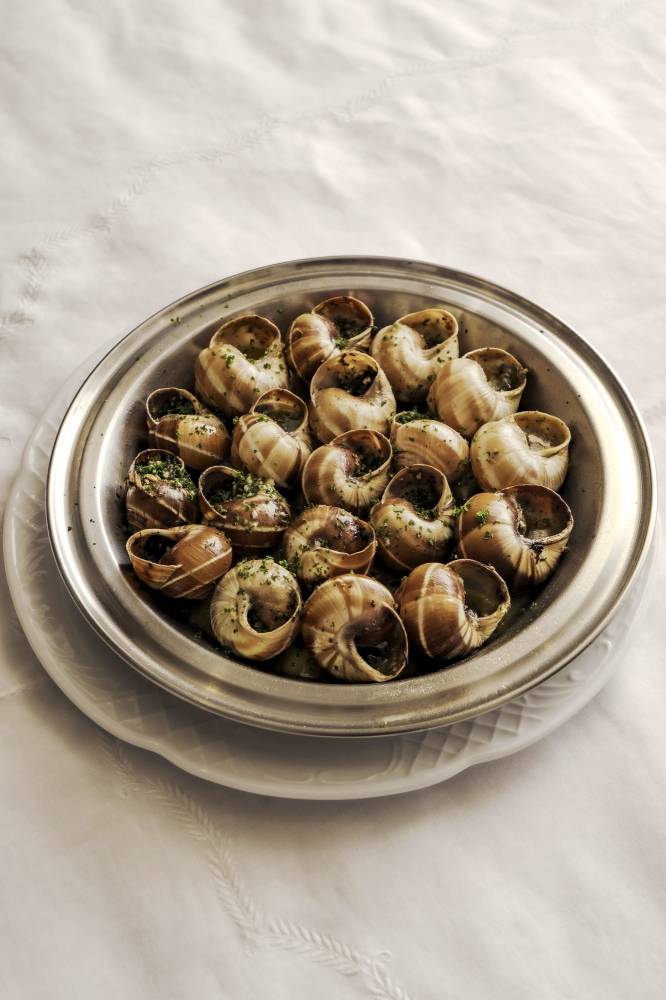
Escargots à la bourguignonne arrive warm, fragrant with garlic and parsley, the butter gently bubbling in their shells. Traditionally, they are presented in an escargot plate with small indentations, designed to hold each shell—or the snail itself—securely in place. If such a plate is unavailable, a shallow oven-safe dish works just as well.
Practical, unfussy, and entirely in keeping with the spirit of a thoughtful table. They may be served individually, one portion per guest, or placed at the center for sharing. One feels intimate, the other communal. The choice depends on the kind of evening you wish to create.
A crusty French baguette is essential, not merely as accompaniment, but as part of the ritual. It gathers the butter, ensuring nothing is left behind. A glass of Chardonnay also complements the dish beautifully, its brightness balancing the richness.
For those looking to source these elements with ease, Santis Delicatessen is your one-stop shop for thoughtful ingredients, making it possible to recreate the experience at home without complication.
The art of eating escargot
And then, there is the matter of how to eat it. Traditionally, escargot is served with a small two-prong fork and escargot tongs to hold the shell, designed to keep each shell—or the snail itself—securely in place. If tongs are unavailable, a cloth cocktail napkin or small serving tongs work just as well, especially since the shells are hot and the butter is still bubbling.
A separate dish for discarded shells should be placed within easy reach, ideally on the upper left side of the place setting, while bread plates sit to the left, ready for tearing and dipping.
When eating, use the tongs to hold each shell and the small fork to lift the snail. Transfer some garlic-parsley butter to your plate using a small spoon—never dip bread directly into the shared dish. You may also pour the butter from the shell onto your plate, then tear a piece of bread and dip it there.
Remember, the only fork placed on the right side of the table is the snail (or oyster) fork; all others remain on the left, keeping the setting functional and visually harmonious. With these touches, the table is safe, elegant, and inviting, each detail quietly enhancing the experience.

We are here, together, for this moment
In the end, the thoughtful table is not about rules—it is about rhythm. There is something quietly reassuring about gathering people, especially now. When so much feels uncertain, the act of setting a table, however simple, becomes a gesture of steadiness. A way of saying: We are here, together, for this moment.
Elevating hosting does not require more. It simply asks that we see what is already in front of us differently. A lamp becomes atmosphere. A bowl becomes a centerpiece. A humble dish, once served in ancient Rome, becomes the highlight of an evening.
I invite you to explore how small, deliberate touches can quietly transform everyday moments into something extraordinary. For now, it begins here. With a table set not in excess, but in care. With a dish that invites curiosity. With the simple, enduring decision to gather. And with a quiet moment to count our blessings for the people around us, for the shared laughter, for work that matters, and for the comfort of being together.
Escargot hosting essentials
Plates: Escargot plate with divots, or a shallow oven-safe dish on a trivet
Utensils: Two-prong snail (or oyster) fork and escargot tongs, small serving tongs, or a cloth napkin for hot shells
Bread: Crusty French baguette for garlicky butter
Serving: Individual portions or shared dish; small plate for discarded shells
Safety: Shells are hot; protect your hands
Beverages: Chardonnay or sparkling water with citrus refreshes the palate
Ambience: Candles, portable lamps, and greenery
Shell or no shell: A matter of choice