
PH to negotiate safe Hormuz passage with Iran

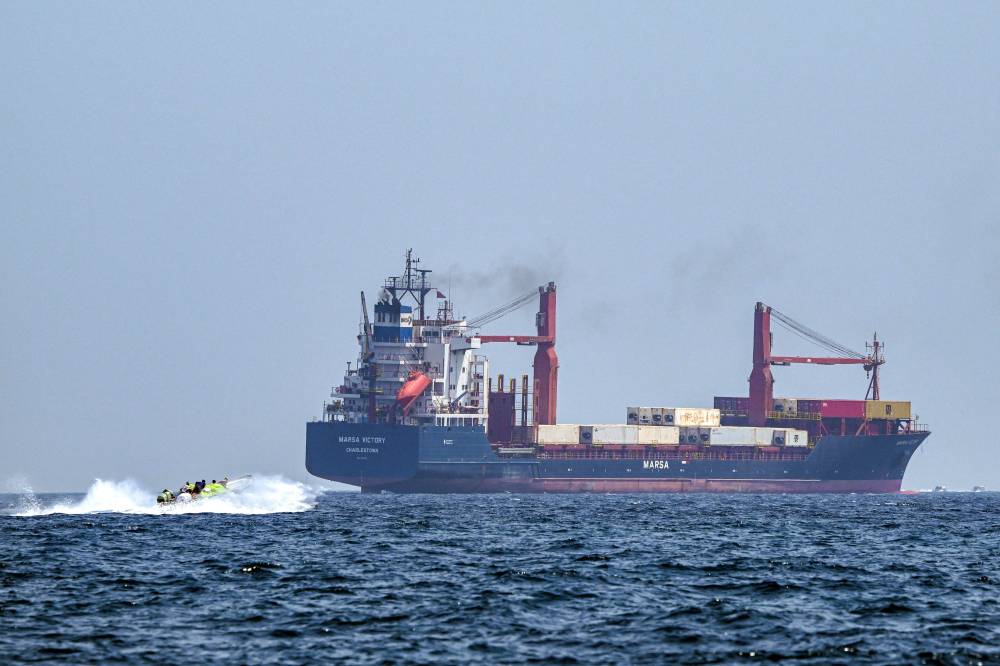
President Marcos has ordered officials to negotiate with Iran for the safe passage of Philippine-bound oil tankers through the Strait of Hormuz as the conflict in the Middle East showed no signs of ending soon, Malacañang said on Tuesday.
Palace press officer Claire Castro said the talks with Iran were suggested during a meeting on Monday of the Unified Package for Livelihoods, Industry, Food, and Transport (Uplift) committee called by Mr. Marcos.
The committee is headed by the President and was created under an executive order declaring a national energy emergency.
Castro said Mr. Marcos ordered Foreign Secretary Theresa Lazaro to set a meeting with Iranian Ambassador Yousef Esmaeil Zadeh.
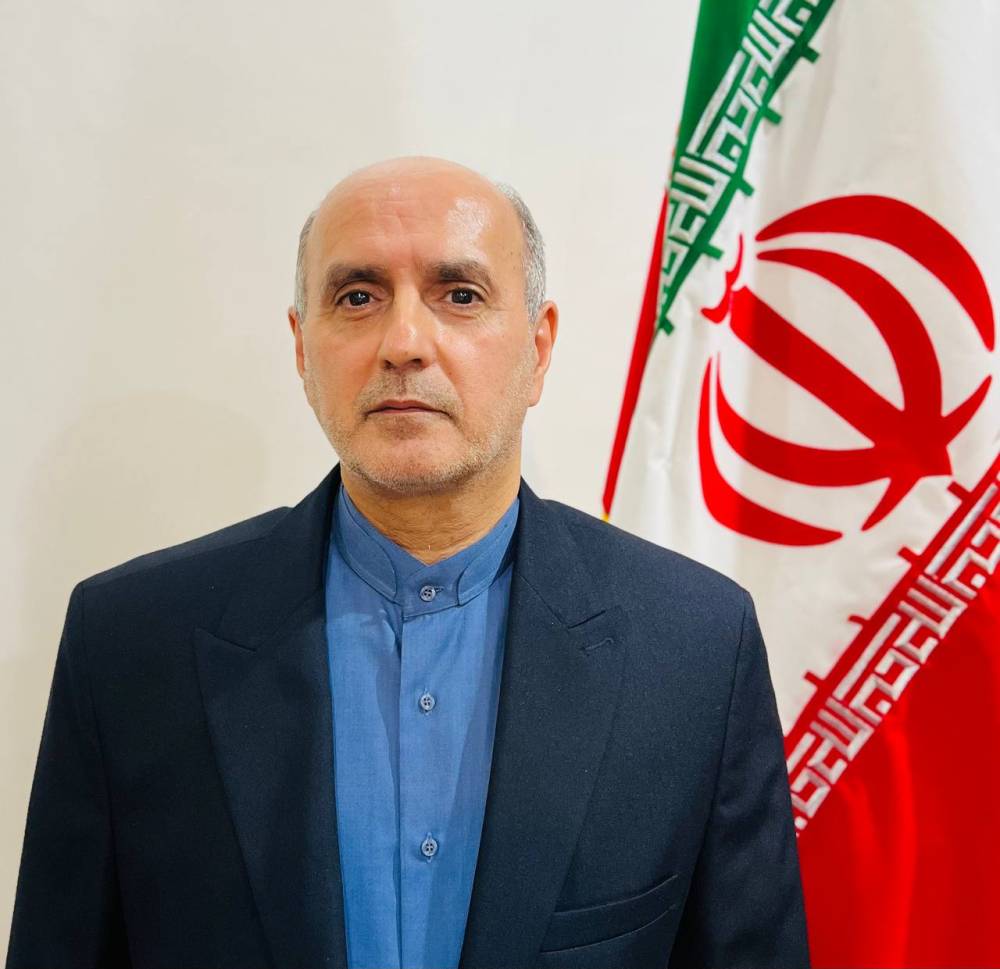
“[Secretary Lazaro] will discuss the matter with the ambassador of Iran most probably by tomorrow (Wednesday), or if their schedules do not align, by next week,” Castro said.
Gatchalian proposal
The Philippines imports 98 percent of its crude oil from the Middle East, which is now engulfed in one of the world’s most serious conflicts, causing global economic instability with sharp oil price increases.
On Saturday, Sen. Sherwin Gatchalian called on the administration to open “high-level” talks with Iran to secure safe passage of oil tankers bound for the Philippines and ensure that they are recognized as neutral entities.
“The government must stay ahead of the curve,” the lawmaker said. “Strategic coordination and swift diplomatic action will go a long way in protecting our energy security and shielding our people from further economic strain.”
The Philippines will be negotiating with Iran to catch up with its Asian neighbors that have already made arrangements with Tehran for their oil shipments.
On March 26, Iran’s Foreign Minister Abbas Araghchi announced that vessels from China, Russia, India, Iraq and Pakistan would be permitted to transit the strait.
Malaysia and Thailand struck their own deals shortly after, earning spots on Tehran’s list of “friendly” nations alongside Bangladesh.
Thailand secured access after one of its flagged bulk carriers, the Mayuree Naree, was attacked and ran aground near Iran on March 11.
Iran said it considered Japan and South Korea, which are close allies of the United States, to be “non-hostile” countries, and would be ready to facilitate the safe passage of tankers bound for the two countries.
Iran has repeatedly said the Strait of Hormuz remains open—but not unconditionally.
Its officials said non-hostile vessels may transit, provided they coordinate with Iranian authorities. Tehran’s foreign ministry conveyed this position in a letter to the United Nations Security Council and the International Maritime Organization.
Manila-Tehran ties
The Philippines is a close defense ally of the United States but is not involved in the war against Iran.
Manila and Tehran established diplomatic relations in January 1964. The Philippines opened its embassy in Iran in 1974 and Iran opened its own in Manila in 1977, maintaining it even after the Islamic Republic was established two years later.
The close economic ties between Manila and Tehran were based on the energy requirements of the Philippines and Iran’s status as the first destination of overseas Filipino workers in the Middle East.
According to government data, there were 1,181 Filipinos in Iran in 2023, most of whom are permanent residents married to Iranians.
Bargaining chip
Malacañang has not provided the exact number of Philippine-bound tankers that would need assurance of safe passage through the strait where 20 percent of the world’s oil supply passes.
According to Petron Corp., the sole oil refiner in the Philippines, its shipment of 2 million barrels of crude oil failed to make it through the strait on Feb. 28, the start of the US-Israeli war on Iran. A second shipment on March 7 was canceled due to the war. This prompted Petron to acquire 2.48 million barrels of crude oil from Russia to boost its stockpile until June of this year.
Iran has used its control over the narrow waterway as a bargaining chip in the war, demanding international recognition of its right to exercise authority over the strait as one of its conditions for ending the war.
Iranian lawmakers are considering a bill that would require countries using the strait for shipping fuel and goods to pay tolls.
This new system would allow Tehran to impose maritime restrictions on adversaries and effectively tie access to one of the world’s most critical shipping lanes.

The Philippines is holding government-to-government negotiations to secure fuel supply from other countries, including potential fuel providers from as far as Canada, the United States and Russia.
Deliveries in April
On Tuesday, the Department of Energy (DOE) announced that 1.042 million barrels of diesel—equivalent to 165,678,000 liters—have been secured for delivery through April.
The first shipment, consisting of 142,000 barrels or 22,578,000 liters from Japan, arrived in the Philippines on March 26.
The remaining deliveries are set to arrive as follows: 300,000 barrels (47,700,000 liters) from Malaysia/Singapore (early April); 300,000 barrels from North Asia/India (mid-April); and 300,000 barrels from Oman/Singapore (end April).
In a Monday online press conference, Energy Secretary Sharon Garin said the Philippines has fuel supplies enough to last about 51 days, or until May 16.
Earlier, the President said the country had a crude stockpile good until June 30.
More than 1 million barrels of diesel procured by the government will be arriving next week, according to Executive Secretary Ralph Recto.
This volume is equivalent to 165.67 million liters—enough for five days. The shipment forms part of the current administration’s target purchase of 2 million barrels of diesel, with P20-billion funding under the DOE’s Emergency Energy Security Program.
According to the Bureau of Customs, 9,157,667 liters of diesel procured by the government and consigned to the state-owned Philippine National Oil Co. entered the Port of San Fernando in La Union.
Additionally, 100,402.776 barrels of crude consigned to Petron Corp. were delivered by MT Sara Sky. A foreign wire report last week said that Sara Sky carried 700,000 barrels of crude. —WITH REPORTS FROM LISBET K. ESMAEL AND INQUIRER RESEARCH
******
Get real-time news updates: inqnews.net/inqviber