










The limitless fighting spirit of Mark “Mugen” Striegl

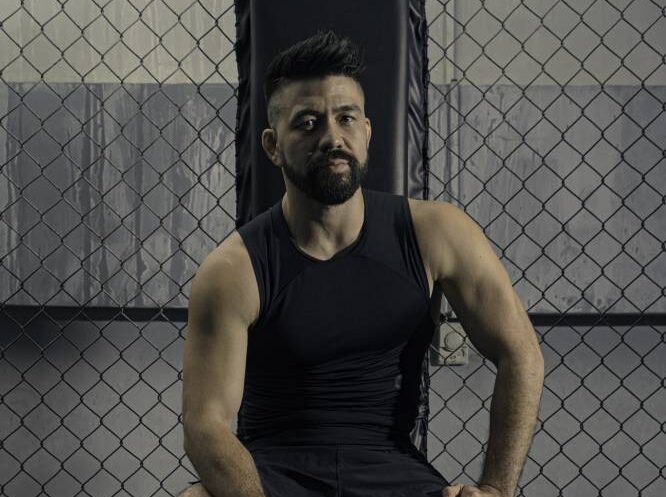
A name that needs no introduction in the martial arts world—and soon, the world at large—Mark “Mugen” Striegl, despite his easygoing nature and cheery personality, commands respect. His career as a fighter is decorated with accolades that span mixed martial arts (MMA), combat sambo, and Brazilian jiu-jitsu, in which he holds a black belt. In fact, to this day, he proudly represents the Philippines in the national sambo team.
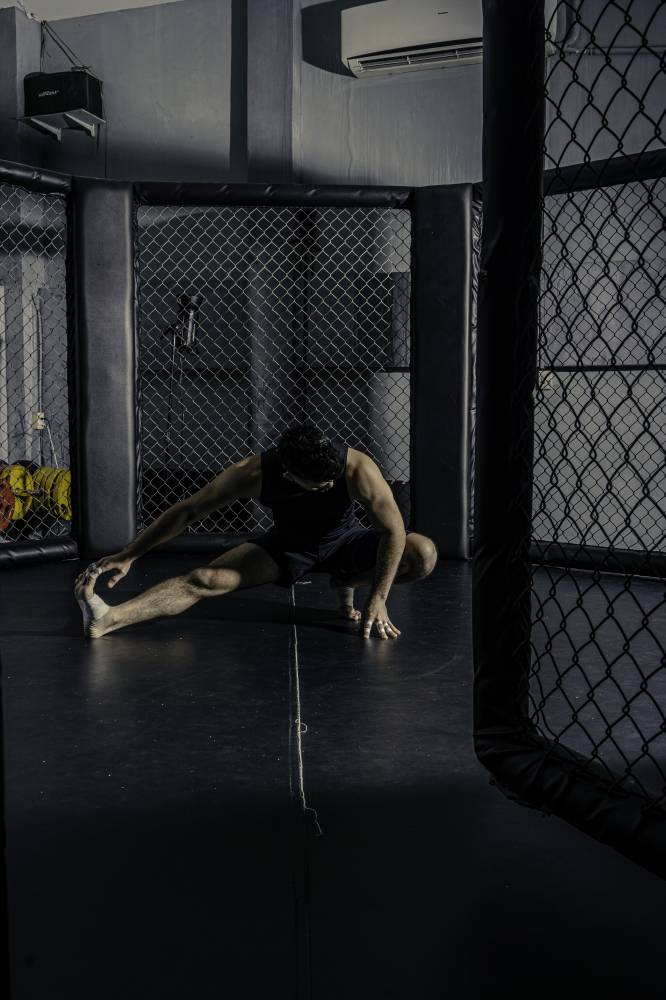
But behind it all is a journey that’s paved by his heritage, curiosity, and the early passion that led him to the mat. “I grew up in Tokyo, Japan, to Filipino American parents who were international school teachers,” Striegl says, doing a few warmup stretches while the team sets up their equipment and lights around the octagon ring. “I started wrestling at St. Mary’s International School when I was eight years old. We had a very good sports program at my school, and I did all sorts of sports, but I naturally gravitated toward wrestling.”
Which goes to show why Striegl’s foundation was rooted in wrestling, given that MMA fighters often favor their base discipline—with some leaning more toward boxing, Muay Thai, or even taekwondo. It later on defined his style once he immersed himself deeper in the sport.
Back in the 1990s to 2000s, MMA was very popular in Japan, which only served to amplify Striegl’s passion for it. In fact, the biggest show in the world then was the Pride Fighting Championship, which was held at Saitama Super Arena. “I would regularly see the fighters on TV and sometimes even bump into them in Roppongi,” he recalls fondly. “Some of them became my heroes, which definitely influenced me to pursue a martial arts career.”
As a self-confessed adrenaline junkie, Striegl recounts a time when he was 17, when one of his friends “convinced me to go with him to an MMA gym near our house in Tokyo.”
And from there, the rest is history. “I was hooked after the very first training session,” he laughs.
Making a name for himself
Grappling with MMA came easily for Striegl, but thinking of a name for himself was a whole other challenge. It was, after all, more than just a label—it was a representation of him as a person and a fighter. It was his legacy, so it had to be both meaningful and impactful. The likes of combat sports legends like Manny “Pacman” Pacquiao in boxing, or Eduard “The Lion Warrior” Folayang in MMA.
“My nickname, Mugen, came years later when I was already a professional fighter,” Striegl admits. “At that time, I had no nickname and the organization that I was about to fight for told me that I needed one—and if I didn’t give them one, they would make one up for me.”
Faced with an ultimatum, he thought long and hard about it. “I didn’t want them to make a nickname for my next fight because I thought it might be stupid or sound silly,” he continues.
And then, it hit him—the rebellious swordsman from the anime “Samurai Champloo,” which he happened to be watching at that time. “The main character is called ‘Mugen,’ which means limitless in Japanese. My older brother suggested that I use that, and it stuck ever since.”
But carrying the name also meant carrying the philosophy behind it—a reminder to push past his limits, to give it his all, and to echo the same relentless spirit that inspired it in the first place. “Almost all fighters will tell you that every fight is important and your next fight is always your biggest fight,” Striegl says. “I definitely do have some highlights, like my fight with Do Gyeom Lee, where I won the URCC Title (Universal Reality Combat Championship), and my fight with Harris Sarmiento at the Araneta Coliseum.”
High stakes, high rewards
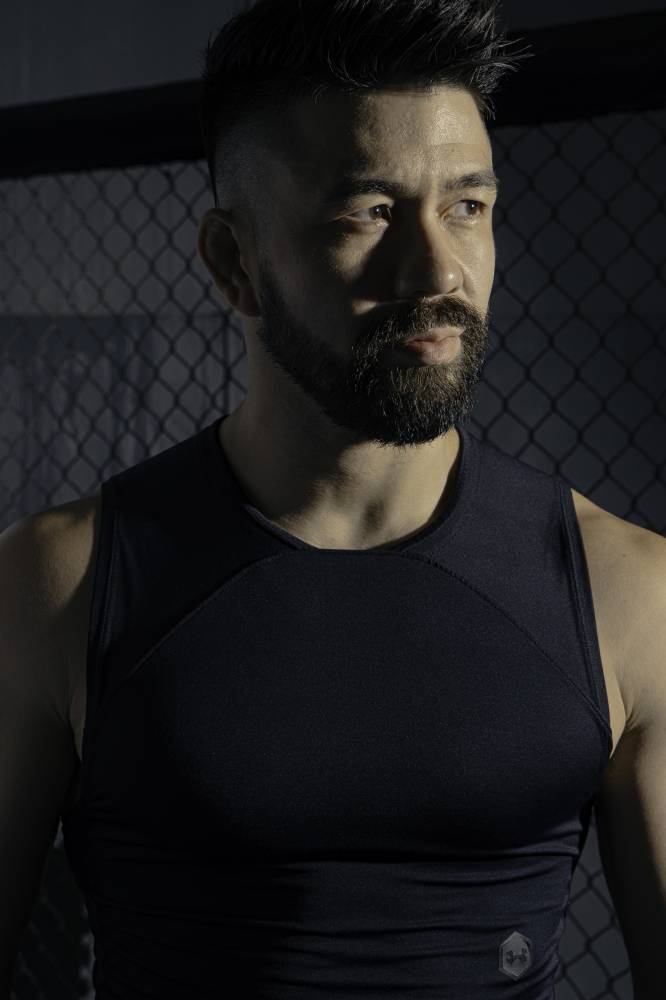
Being a fighter is not for the weak. It’s a high-risk, high-reward endeavor, with injuries representing the former, and fame and glory (and fortune, if the prize money is right), the latter. After all, behind every fight is a grueling training regimen, a strict diet, and the ever-present risk of injury at every grapple, throw, and takedown.
“One of the most common misconceptions is that MMA is barbaric or like a street fight,” Striegl explains over the sound of feet squeaking and coaches calling out drills. “But it’s really a technical game that involves so much training to combine all the different martial arts.”
“You have to train smart, but due to the nature of the sport, injuries come and go,” he continues. “Also, all high-level MMA fighters have to diet and lose weight before their fights. It takes a lot of discipline and focus. It’s not uncommon for MMA fighters to lose 10 to 15 kilograms over the course of one to two months. It takes a strong mind to train hard and go to sleep hungry throughout a fight camp.”
But all this never deterred the MMA fighter. “To be honest, I’ve never thought about walking away. I love martial arts, and I plan on competing for as long as my body holds up,” he says, noting that while the peak of an MMA career is often short, there are still ways to stay involved.
“Even if I stop MMA completely, I’ll continue with sambo and jiu-jitsu. Many competitions have master’s divisions now for older fighters, which is nice,” he says wistfully.
From solo athlete to team player
Once called into the ring, Striegl’s demeanor changes. From his easygoing self, he turns into a hardened fighter—every muscle coiled, every movement deliberate, intensity coming off in waves. In front of the camera, it was clear he knew his angles. He knew how to position himself. And he knew how to control his movements just as he controls the cage in his many matches, seen when he demonstrated a series of throwing and fighting techniques with a sparring partner—a glimpse of his persona the moment combat mode switches on.
Whether the spotlight is on him during a match or during a photo-op, the Filipino American fighter is no stranger to the two. Yes, he boasts a strong MMA record of 18 wins, five losses, and one no contest, but victories feel different when shared with a team, which is what he experienced two-fold.
“I was recruited to join the Philippine sambo team in 2018, and it was a dream come true,” he recalls. “Being part of the Philippine team is different from competing as an individual in MMA.”
From there, he represented the country at the 2019 Southeast Asian Games in the Philippines, securing the gold medal in the 74kg division final, and another gold at the 2023 Southeast Asian Championships in Kuala Lumpur, this time in the -79kg combat division. But as a fighter of many disciplines, he maintained his MMA career when he signed with the United Fighting Championship in 2020, went on hiatus in 2021, and returned to the ring in 2022.
As both a solo fighter and team player, the latter was tested during his stint in the Netflix series “Physical: Asia,” where he, along with rugby player Justin Coveney, CrossFit champion Lara Liwanag, strongman Ray Jefferson Querubin, and Olympic athlete Robyn Lauren Brown—initially led by boxing legend Manny Pacquiao (who was eventually replaced by CrossFit athlete Justin Hernandez)—represented the Philippines as they competed in a series of strength and endurance challenges against other athletes.
“‘Physical: Asia’ was an amazing experience that I’ll never forget,” Striegl says. “For me, it was similar to competing on the Philippine sambo national team because we travel overseas with teammates. MMA is still an individual sport, so when you carry the flag with teammates and travel overseas as we did in ‘Physical: Asia,’ it’s a different feeling.”

Ready for the takedown
Inside the ring, Striegl is a force to be reckoned with. But outside it, he is a family man and a funny man—with social media posts dotted with videos that show a lighter, goofier side, whether it’s videos that hop on trends, poke fun at himself, or show fight culture in a different light. He even cheekily admits to knowing his way around the kitchen—a little-known fact about him. “I like to cook and can make a really good lasagna,” he says with a laugh.
And unsurprisingly, it’s a duality you’d expect from him.
“I think everything is about balance, as I view myself as a fighter and role model,” he continues. “I try my best to carry myself in a positive manner, especially now that I have two children. I want to set a good example for them.”
But Striegl sets a clear divide between his role as sportsman and father. “When I train, I always train hard. But I view it as gym time and try to keep it separate from family time. I think it’s important to be balanced and separate the two,” he says.
With eyes on the next round, Striegl shows no signs of slowing down. Endorsements, guest appearances, and other upcoming projects are just some of the things he’s gearing up for—not to mention a few competitions down the line. “I’ll be competing next year with the Philippine team at the Asian/Oceania sambo championships, which we are hosting in Manila,” he says. “I also plan to have another MMA fight in 2026, but I can’t share the details just yet.”
Despite his busy schedule, his love for the sport remains strong. “I still enjoy competing in martial arts, and I think I’ll always compete as I get older—just in different age divisions,” he says with a laugh. “It’s a part of my lifestyle, so I just want to keep enjoying and pushing myself.”
Produced and written by Diane Nicole Go
Photos by JT Fernandez
Art Direction by Ella Lambio
Shot at location Valiant MMA Fitness
Special thanks to Jerry Legazpi
This story was originally published in the December 2025 issue of Multisport