

Senate panel pushes fuel rationing, other crisis measures

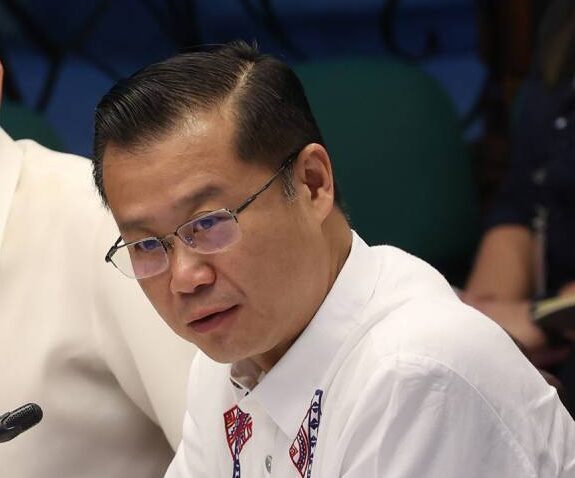
The head of the ad hoc Senate committee formed in the wake of the Middle East conflict said the panel had recommended several measures to help Filipinos cope with the war’s economic impact, such fuel rationing, price caps and a monthly financial aid for minimum wage earners, among others.
Quoting the panel’s preliminary report, Sen. Sherwin Gatchalian said short-term solutions were proposed to ease uncertainties about the country’s fuel supply coming from the Middle East, after Iran seized control of the Strait of Hormuz and allowed only select oil tankers to pass through.
“The exorbitant pump prices being experienced during this energy crisis may necessitate the implementation of extraordinary measures to provide immediate relief to ordinary consumers and fuel-intensive economic sectors before the situation worsens,” the lawmaker said in a press briefing on Wednesday.
Gatchalian spoke as chair of the Senate proactive response and oversight for timely and effective crisis strategy (Protect) committee that convened on March 24.
“Thus, public interest requires the Department of Energy (DOE) to study the imposition of a temporary price cap or ceiling on petroleum products within their respective jurisdictions for the duration of the national energy emergency,” he added.
Powers granted by law
Gatchalian said President Marcos’ declaration of a state of national energy emergency allows the DOE to use powers granted by several laws, such as the Downstream Oil Industry Deregulation Act of 1998.
The law, for instance, allows the DOE to “impose retail price caps on petroleum products during times of national emergency.”
“This power was invoked under (Executive Order) No. 839, series of 2009, which required oil industry players to retain a certain retail price level during a state of emergency. The delegation of this power to the DOE was upheld as constitutional by the Supreme Court in Mendoza v. Pilipinas Shell,” Gatchalian explained.
Another law, the Department of Energy Act of 1992, allows the energy secretary to “formulate and implement fuel rationing programs during the present national energy emergency,” he added.
“Considering the uncertainty of the country’s fuel supply in the medium-term, the DOE may want to consider implementing a fuel rationing plan to extend the country’s existing supply and prevent hoarding. This policy could be implemented until such time that the country’s projected fuel supply becomes more secure,” the senator said.
“Estimates suggest that fuel rationing could significantly extend the country’s fuel run-out date in worst-case scenarios where fuel shipments to the country and domestic refining of petroleum products cease,” he added.
The Philippine government resorted to fuel rationing during the 1973 oil crisis.
Other relief measures
Gatchalian said the committee also pushed for a P1,500 monthly aid for minimum wage earners, instead of an across-the-board wage hike that can hurt companies that are already struggling.
An estimated five million workers may benefit from this new aid, which would cost the government around P7.5 billion in total, he added.
“Higher inflation is expected to erode household incomes across the board, but poor families will suffer the most because they have little savings and already devote a large part of their budget to food, transport, and utilities. Estimates indicate that poor households could lose as much as P1,151 in purchasing power per month,” he said.
The committee also recommended a P1,500 temporary increase in the cash grants received by beneficiaries of the government’s conditional cash transfer program, or the Pantawid Pamilyang Pilipino Program (4Ps), he said.
It also called on the government to continue granting discounts to commuters on the Metro Rail Transit Line 3 (MRT 3) and the Light Rail Transit Line 2 (LRT 2).

New increases
With another round of price increases on Tuesday—the fourth-consecutive week of big-time hikes—diesel prices spiked to around P140 per liter while gasoline was now between P95 and P105 per liter.
Critics have called out the government for its slow response to the fuel price crisis, prompting both the Senate and the House of Representatives to discuss measures to address issues.
Malacañang previously announced that a crisis committee was being finalized to address concerns with supply of fuel and goods.
On March 25, Mr. Marcos signed a bill that will allow him to suspend collection of excise on fuel, amounting to P10 per liter of gasoline and P6 per liter of diesel.
However, the earliest date the law can be implemented is on April 12, as the signed bill states that the President can only suspend excise taxes if the economic cluster and the energy secretary recommend it and only once average Dubai crude oil price, based on the Mean of Platts Singapore, exceeds $80 per barrel for one month.
There have been talk also about crafting a new version of the Bayanihan laws implemented during the COVID-19 pandemic, and a possible supplemental budget to address losses and inflationary impact brought by high fuel costs.
******
Get real-time news updates: inqnews.net/inqviber