


Zucchini: The body’s cooling system in the summer heat


Zucchini (also known as “courgette” in British English) is one of those vegetables so familiar that it’s almost invisible. We slice it into pasta, shred it into bread, and grill it as a side without a second thought. But beneath its modest appearance lies a remarkable food: it’s rich in vitamins, low in calories, gentle on the gut, and celebrated for centuries across the globe’s oldest healing systems.
Zucchini belongs to the Cucurbita pepospecies and is technically a fruit—though culinarily, we treat it as a vegetable. It originated in the Americas and was brought to Europe in the 19th century, where Italian growers cultivated the form we know today.
Now, it thrives in kitchens and gardens worldwide, prized as much for its versatility as for its health benefits.
Nutritionally dense food
One of zucchini’s greatest gifts is its nutritional value: a single cup of sliced raw zucchini contains just 20 calories, making it an ideal food for anyone managing their weight without sacrificing volume or satisfaction.
But don’t let the low calorie count fool you—zucchini is nutritionally dense in ways that matter.
Zucchini is an excellent source of vitamin C, a powerful antioxidant that supports immune function, collagen production, and cellular repair. It also provides meaningful amounts of vitamin B6, which plays a crucial role in brain health and protein metabolism.
Its potassium content supports healthy blood pressure, while manganese aids bone formation and blood sugar regulation. The vegetable also contains lutein and zeaxanthin—carotenoids specifically linked to eye health and the prevention of age-related macular degeneration.
Its high water content (over 90 percent) makes it naturally hydrating, and its soluble and insoluble fiber supports healthy digestion, feeds beneficial gut bacteria, and helps maintain stable blood sugar levels after meals.
Versatile and adaptable in cooking
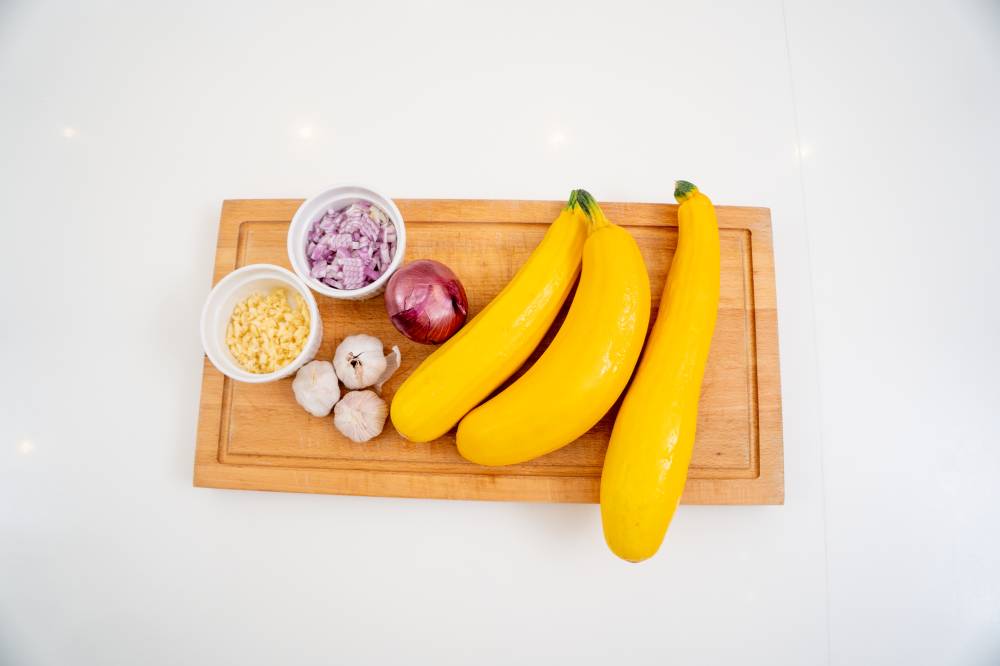
In the Philippines, zucchini has found a natural home alongside the country’s beloved native gourds and squashes. It makes an abundant appearance in the spring when temperatures start to rise, with yellow zucchini making its way down from Benguet into Manila’s markets and groceries.
While Filipinos have long cooked with upo (bottle gourd) and kalabasa (squash), zucchini has become an increasingly common and welcome substitute—prized for its similar texture and mild flavor, and for how effortlessly it absorbs the bold, aromatic profiles of Filipino cooking.
Zucchini appears in ginisang gulay almost unnoticed. Sliced into half-moons and cooked quickly over high heat, zucchini turns tender without losing its shape, making it ideal for a fast, nourishing weekday meal. It pairs naturally with shrimp, pork, or tofu, adapting to whatever protein is on hand—a quality deeply valued in Filipino kitchen culture, where resourcefulness and flavor go hand in hand.
Zucchini also finds its way into Korean cooking, often added as a “filler” vegetable for japchae or as a side dish. Still, the seemingly bland vegetable has a history of medicinal properties.
Cooling and soothing properties
In Traditional Chinese Medicine (TCM), foods are understood not merely by their chemical composition but by their energetic qualities—their thermal nature, taste, and the organ systems they affect. Zucchini and its close relatives in the gourd family are classified as having a cooling thermal nature, making them particularly valuable during hot seasons and for individuals with excess heat in the body.
TCM practitioners associate zucchini with the spleen and stomach meridians—organs central to digestion and the transformation of food into vital energy or “qi.” It is used to tonify the spleen, resolve dampness, and promote the smooth flow of fluids through the body. Its mild, sweet taste is thought to nourish without overwhelming, making it appropriate for those with sensitive or weakened digestive systems.
And during summer—a season of yang excess—cooling foods like zucchini help restore internal balance and prevent heat-related ailments such as inflammation, irritability, and restlessness.

Balanced, gentle, and therapeutic
Ayurveda, the 5,000-year-old Indian system of medicine, organizes all matter—including food—according to three fundamental energies called doshas: vata (air and space), pitta (fire and water), and kapha (earth and water). Most health conditions, from digestion to mood, are seen as imbalances among these forces.
Zucchini is considered highly beneficial in Ayurvedic practice, particularly for pacifying pitta dosha. Its light, cool, and moist qualities counter the heat, intensity, and inflammation associated with pitta imbalance—conditions that may manifest as acid reflux, skin irritation, or anger.
It is also considered gentle for vata when well-cooked, as its soft texture and mild nature soothe the dry, erratic qualities of that dosha. Kapha types benefit from zucchini’s lightness and low density, which do not add to the heaviness and congestion characteristic of kapha excess.
Ayurvedic cooks traditionally prepare zucchini with digestive spices like cumin, coriander, and turmeric—not merely for flavor, but to enhance the vegetable’s therapeutic action on the gut and reduce any gas-producing tendencies.
A vegetable that belongs on your plate
Modern nutrition science and ancient healing wisdom rarely align so neatly, but with zucchini, the agreement is striking.
Whether you’re drawn to the clinical precision of a vitamin panel or the holistic insight of Ayurvedic diagnosis, the conclusion is the same: This vegetable belongs on your plate. It supports healthy digestion, reduces inflammation, nourishes the eyes, stabilizes blood sugar, and does all of this at a caloric cost so low it borders on generous.
Eat it raw in salads, spiralize it into noodles, roast it until golden, or stir-fry it with ginger and garlic. And however you prepare it, you are participating in a tradition of nourishment that stretches back centuries.

Easy zucchini soup
Ingredients
3 whole zucchini, diced

3 cups broth
Spice mix (create your own)
• Fennel and cardamom for digestion
• Garlic and onion for anti-inflammatory
• Or add all of the above for a potent healing soup
Procedure
1. Combine the zucchini and broth in a pot and simmer for 3 minutes.
2. In a pan, toast the spice mix with a little olive oil to bring out the flavors.
3. Combine the spice mix, zucchini, and broth in a blender. Puree it. You will notice the zucchini will turn watery very fast.
5. Add the soup back into a pot and simmer for 5 more minutes.
5. Add salt to taste, and serve.
******
Get real-time news updates: inqnews.net/inqviber