








Renewables top Jan-Feb investment approvals

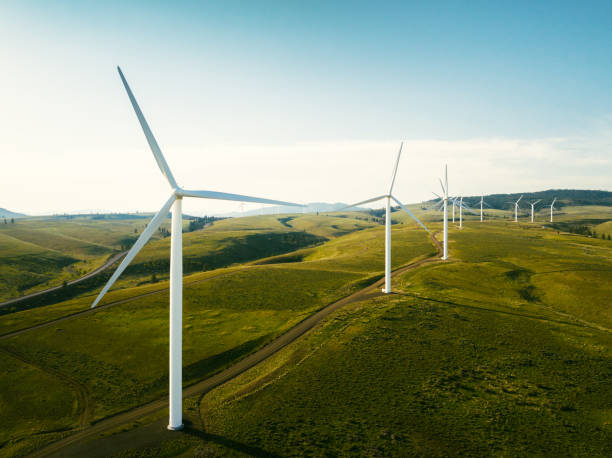
Energy projects, led by renewables, accounted for almost half of investments approved by the Board of Investments (BOI) in the first two months of 2026, a trend that is seen to boost the country’s energy security as the Middle East war continues to disrupt global fuel supply.
Of the P47 billion in outlay approved by the board from January to February, P22.4 billion were in the energy sector, representing 47.7 percent of total approvals.
The BOI did not give a timeline for the implementation of these renewable energy (RE) projects. But Trade Secretary Cristina Roque said they would be crucial, considering the “current challenges” the Philippines faces.
“The significant investments in renewable energy will play a crucial role in strengthening our energy security amid current challenges, while accelerating the country’s transition to a more sustainable and resilient energy future,” said Roque, who also chairs the BOI’s management committee.
Solar ventures
On March 24, President Marcos signed Executive Order No. 110 declaring a yearlong state of national energy emergency and allowing him to implement measures to address the oil supply crunch triggered by the Iran war which broke out on Feb. 28.
The energy sector’s share dwarfed other major segments such as accommodation and food service activities at P7.6 billion (16.1 percent), real estate at P6.4 billion (13.7 percent), manufacturing at P5.3 billion (11.4 percent) and transportation and storage at P3 billion (6.4 percent).
The major ventures the BOI approved during the period include a P16.4-billion solar power project by Cleanenergy 2 Power Inc. and a P1.7-billion pledge by Singaporean-owned Intramuros Solar Energy Corp.
This strong showing of renewables comes despite expectations that BOI approvals would tilt toward sectors such as mineral processing, infrastructure and high-value manufacturing.
In February, the Department of Trade and Industry lowered the BOI’s 2026 approval target to P1 trillion, down from P1.75 trillion in 2025 and P1.56 trillion in actual approvals last year, citing an anticipated recalibration toward those sectors.
RE also tops 2025 projects
Renewable energy has been the BOI’s leading investment segment for the past three years, driven by the capital-intensive nature of projects that tend to jack up overall approval figures.
It also dominates the agency’s “green lane” program, which fast-tracks permits for strategic investments.
Of the P6.11 trillion worth of projects under the program as of end-2025, P5.21 trillion—or 85.27 percent—were in renewable energy, covering 179 projects expected to generate 249,801 jobs.
However, most of the BOI’s green lane projects remain in early stages, with 163 projects worth P5.48 trillion in predevelopment, 47 under construction, six in pre-operation and 16 already operational.
Emerging segments
The BOI approved 35 projects in the January-to-February period, up sharply from eight a year earlier.
Central Luzon captured the largest share of approved investments at P21.5 billion, followed by Central Visayas (P8.2 billion), National Capital Region (P4.5 billion), Ilocos Region (P3.7 billion) and Mimaropa (P2.9 billion).
Foreign investments surged 943.4 percent to P3.1 billion from P300 million a year earlier, with Singapore emerging as the top source at P1.8 billion, followed by China at P500 million, and Canada, Australia and the United States at about P200 million each.

In February alone, the BOI approved P36.5 billion worth of investments across 21 projects, up 27.2 percent from P28.7 billion a year earlier.
Renewable energy again led approvals, accounting for P20.4 billion, or 55.9 percent of the total.
“The strong increase in BOI-approved projects reflects growing investor confidence in the Philippines and the continued inflow of high-value investments that support our economic priorities,” Roque said.
While renewables and other energy projects continue to dominate its investment mix, the BOI noted that it is also seeing momentum build across other emerging segments.
“This momentum is evident in emerging and priority sectors such as electric vehicles, smart manufacturing, semiconductors, renewable energy, high‑tech agriculture, and data center infrastructure,” it added.
******
Get real-time news updates: inqnews.net/inqviber