


Muay Thai and mental health

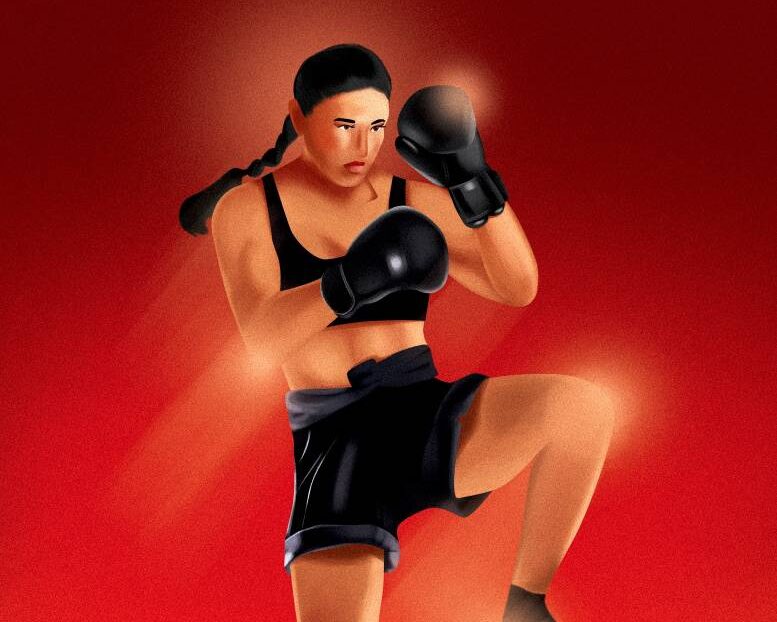
This year has proved the most difficult in my lifetime. When hardship knocked on my door, I didn’t have the right tools to cope. It was a slow grind of self-discovery and perseverance that required constant grace and nurturing.
Mental health is the subject of much discussion in today’s world, with the youth bringing it to the forefront of popular culture and transcending what was originally a matter of public health. Social media has provided the vehicle through which it has collectively cultivated this modern agenda of mental betterment. It is exciting that these topics are spoken about with such importance, as it was not long ago that they were stigmatized and characterized as weaknesses.
However, with such an amount of coverage and so many viewpoints, it can be easy to get lost on the path to improvement. The truth is there is no universal fix for mental health. Everyone’s needs and capabilities are different, which is why it is important not to give up in the pursuit of betterment, even if it may be a game of trial and error.
Finding peace in combat
For me, I found my peace in martial arts—more specifically Muay Thai (the art of eight limbs). Some might find it curious that you can find peace in an inherently aggressive discipline. And it is true that Muay Thai’s roots are in combat, as the art of eight limbs utilizes the eight points of contact from the fists and elbows to the knees and legs (shin and foot).
The history of the sport dates back to the 13th century during the Sukhothai Dynasty in Thailand. The Thai army developed this self-defense style of utilizing eight limbs out of necessity to defend the kingdom. This style would go on to become what would be known as Muay Boran and was later modernized and altered to become the global sport of Muay Thai we know today.
The mental aspect of Muay Thai
There are many obvious benefits to training in Muay Thai. It is a great calorie burner for those who find running, walking, or lifting weights not stimulating enough. It is also an excellent form of self-defense, as the fundamentals of Muay Thai are straightforward in their approach, with no need for theatrical spins or flips.
It is this reason especially that makes the discipline highly accessible to a wide range of ages and physical abilities.
For myself, the mental side of Muay Thai has become the most important aspect. Stepping into my Muay Thai gym has become a way to turn off the noise inside my head. Pushing my physical capabilities to the point of exhaustion forces my mind to focus on the here and now and forget the past and future. It is also pretty hard to give any attention to your anxiety when your sparring partner is finding new and creative ways to hit you. It is essentially problem-solving with a level of physical consequence.
It is important to understand that respect is deeply rooted within the sport and Thai culture. The gym is not a fight club to beat up on people. Thai-style sparring is approached with an element of play; you are going to be sparring with a wide variety of experience levels, sizes, and weights. Ego does not belong in the gym, as there will most likely always be someone better than you.
I’ve learned it is important to match your sparring partner’s level of intensity and let each other work. There may come a day when you don’t respect the rules of engagement in sparring, and that person quickly corrects you with a teep across the mat or a leg sweep that puts you on your ass. This level of respect extends to the amateur and professional levels of fighting, with the ritual dance of Wai Kru Ram Muay—a pre-fight ceremony paying respect to all aspects of Muay Thai that have brought the fighter to the present moment, including their teachers, ancestors, and the martial art itself.
Mindfulness in movement
Mindfulness is ingrained within the fabric of Muay Thai, whether you are preparing yourself to fight through a pre-fight ceremonial dance or simply focusing on your breathing while practicing your techniques. Muay Thai forces you to flow not only in your movement but also in your mind. It mirrors the hardships of greater life.
If you focus too much on your previous inadequacies and failures, you will remain rigid, tense, and resentful. Much like in meditative practices, acknowledging negative energy, such as frustration, and letting it pass without attachment, provides a path for change and improvement.

Self-esteem and confidence are things you benefit greatly from through Muay Thai training. Not only is it a great way to achieve fitness goals, but it also facilitates a healthy body image. I have found that the way in which I carry myself has changed. There is more lightness in each step, frustration and anger hold less power, and there is greater comfort in different public settings.
And the great part about all this is that you aren’t doing it alone. The Muay Thai community is vast in its reach, with many different types of people stepping into the gym. You are all bonded by a desire for betterment, and you can use each other to inspire and improve.
Mental fortitude is a muscle you will employ just as much as the ones making up your physical body. What started as a hobby became essential to my mental health as an act of self-love. My advocacy for Muay Thai was born out of personal hardship, and consequently, it is the hardship I experience in my training that subdues the hurt.
This story was originally published in the December 2025 issue of Multisport
******
Get real-time news updates: inqnews.net/inqviber