






PH fuel imports fell 4% in March

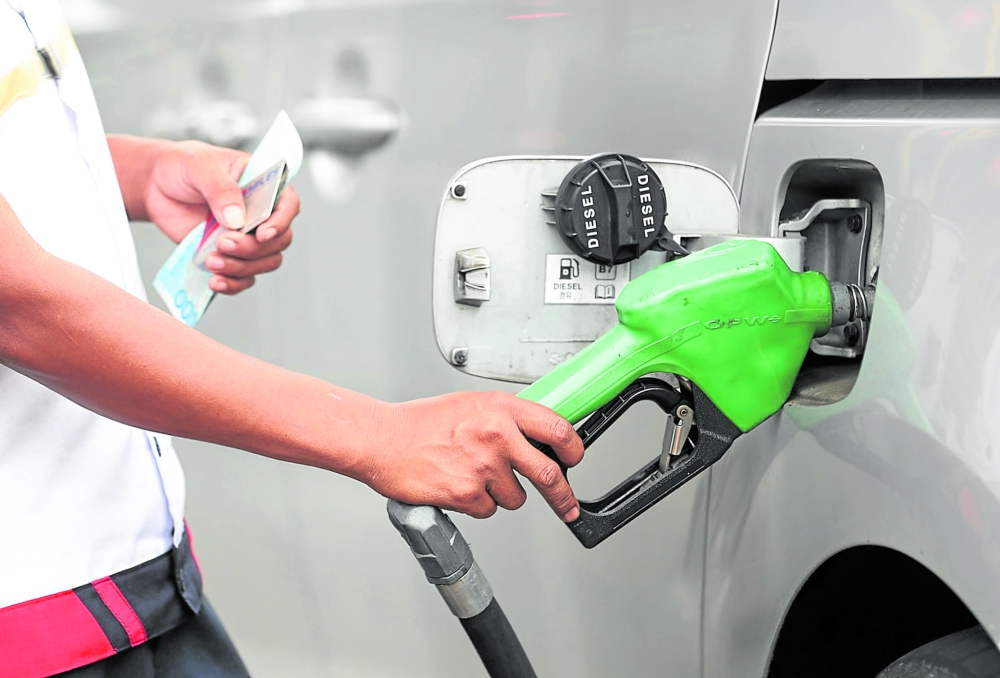
The Philippines’ fuel imports fell by 4 percent in March as the Middle East conflict constrained a key waterway for global energy supply.
Despite the decline in volume, however, fuel duties and taxes collected by the Bureau of Customs (BOC) jumped nearly 20 percent as oil prices skyrocketed while the peso depreciated to record lows against the US dollar.
Data obtained by the Inquirer showed that duties and taxes collected by the BOC from oil product imports had reached P30.6 billion in March, 19.3 percent higher than the P25.6 billion collected in the same month last year.
Total fuel import volume, meanwhile, fell to 2.35 million metric tons (MT) from about 2.46 million MT a year earlier.
“Total import volume declined marginally, primarily attributable to reductions in crude oil (‑26 percent), jet fuel (‑43 percent) and avgas (‑36 percent), partially offset by increased volumes of diesel, gasoline and LPG,” the BOC said.
“Despite the lower overall volume, total duties and tax collections increased, reflecting higher import values and stronger revenue performance during the month,” it added.
The country imports 98 percent of its oil from the Middle East, raising its vulnerability to energy shocks. Iran has blocked the Strait of Hormuz, through which about 20 percent of the world’s oil supply passes, in retaliation to joint attacks by the United States and Israel.
The latest March data showed that four countries from the war-torn region made up four of the country’s top 10 oil origins, with Saudi Arabia topping the list with 540,019.36 metric tons of oil imports, generating P3.8 billion in duties and taxes.
Other major sources included Iraq, the United Arab Emirates and Qatar, ranking second, fifth and eighth, respectively.
Jonathan Ravelas, senior adviser at Reyes Tacandong & Co., explained that, regardless of lower import volumes, higher oil prices drive up duties and taxes.
“Even if we are importing less, it’s still expensive. The weaker peso and higher oil prices can generate a twin deficit—the budget deficit and a trade deficit,” he said.
Duties and taxes are computed based on the total landed costs, which include dutiable value in pesos, customs duty, excise, brokerage fees, import processing charges, customs documentary stamps and Bureau of Internal Revenue documentary stamp taxes.
The 12 percent value-added tax (VAT) collection will then be computed from the total landed cost.
Excise in limbo
Asked about the impact of the war on the agency’s revenues, BOC Commissioner Ariel Nepomuceno told the Inquirer that import volumes were not the issue, but rather whether excise on fuel would be suspended or reduced.
Should excise be suspended starting May, the government faces a potential revenue shortfall of P136 billion to P121.4 billion from excise and P14.6 billion from lower VAT collections.

“We will do our best to still be able to hit our collection target by ensuring the accurate assessment and payments for all imports,” Nepomuceno said.
Fuel purchase breakdown
Breaking down March’s oil import data, diesel was the most imported fuel with 951,669.89 metric tons, equivalent to P13.8 billion in duties and taxes.
Crude oil accounted for 710,062.97 metric tons (P2.97 billion); gasoline totaled 557,452.69 metric tons (P12.4 billion); and LPG made up 77,057.40 metric tons (P590.4 million).
Further, jet fuel imports amounted to 48,954.87 metric tons (P650.2 million), kerosene totaled 6,447.57 metric tons (P105.7 million) and aviation gas stood at 311.73 metric tons (P5.2 million).
Notably, Nepomuceno said the report included Russian crude oil imports, with Petron as consignee, which arrived on March 22, March 26 and March 31.
Gas oil procured by the Philippine National Oil Company Exploration Corp. (PNOC-EC) from Japan arrived on March 25 and March 26.
Both the BOC and the BIR have released separate memos to expedite the emergency imports by PNOC-EC to stabilize the country’s supply and mitigate the escalating oil prices.