



Over 200 defects, concerns found at Chinese nuclear plants

Chinese authorities found at least 200 cases of defective construction or trouble at the country’s nuclear plants between 2011 and 2024, prompting them to instruct the industry to boost safety measures, according to their reports.
These cases include issues with the piping design of the AP1000, a next-generation reactor developed by major US nuclear firm Westinghouse Electric Co., which has been adopted at two complexes in China.
The revelations come as China rapidly expands its atomic power generation capacity, which is expected to become the world’s largest by 2030.
A Japanese nuclear power expert warned that serious accidents could have occurred if the plants were operated without the problems being noticed, saying that some issues are “beyond common sense.”
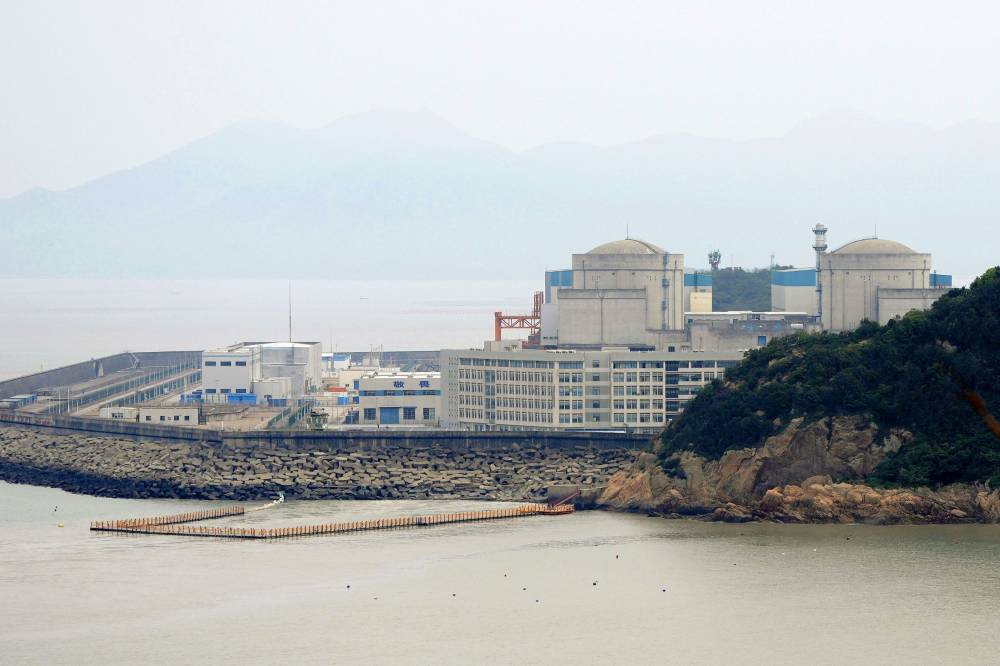
According to reports by China’s National Nuclear Safety Administration, defects in the thickness and curvature of main piping systems were discovered at the Sanmen nuclear plant in Zhejiang Province and the Haiyang plant in Shandong Province, both of which have introduced the AP1000 pressurized water reactors.
The start of operations at the Sanmen plant was pushed back from 2013 to 2018 and the start of operations at the Haiyang plant was delayed from 2014 to 2018.
Abnormal deformation
In February 2013, workers at the Hongyanhe nuclear plant in the northeastern Liaoning Province found an abnormal deformation of a spare tank containing reactor cooling water.
Noting that operations at the facility did not follow the blueprint, the nuclear safety body criticized its administrator, saying its “lack of safety awareness” caused the problem.
At the Ningde nuclear plant in the southeastern Fujian Province, leaks from heat transfer tubes in steam generators were detected during water pressure tests conducted between September and November in 2011.
Similar problems were later discovered at four other Chinese nuclear complexes. The regulatory body maintained the operators “lacked experience and technical ability,” condemning them for “wasting massive labor force and materials” required for probes and repairs.

The reports also revealed that the strength of concrete used for a facility in the Taishan nuclear plant in the southern Guangdong Province did not meet the standards.
At the Fuqing complex in Fujian, a foreign object was left inside a nuclear reactor. Workers also ignored operation manuals and damaged important equipment in a separate case.
Following the 2011 Fukushima nuclear crisis in Japan, triggered by the devastating earthquake and tsunami, the Chinese government halted the construction of new nuclear facilities and reviewed safety measures.
With the building of new plants resumed in 2012, China had 59 operational nuclear units as of late 2025. Its total power generation capacity ranked third in the world, following the United States and France.
Including those under construction and approved by the government, China will have more than 100 nuclear reactors in the future.