









US, Iran agree to 2-week ceasefire

The United States and Iran agreed to a two-week ceasefire, though with some conditions, on Tuesday shortly before President Donald Trump’s deadline for Tehran to reopen the Strait of Hormuz was due to pass.
Trump said the United States will refrain from attacking Iran for two weeks on condition that Tehran immediately and completely allows commercial shipping to safely pass through the strait, where about 20 percent of the world’s oil supply flows.
In a social media post, Trump said that he made the decision after speaking with Pakistani Prime Minister Shehbaz Sharif, who earlier in the day, as a mediator between the United States and Iran, urged all warring parties to observe a ceasefire for that period.
Sharif wrote on the social media platform X that the two countries, along with their allies, have agreed to an immediate ceasefire across the region, including Lebanon. He said officials from both sides were invited to Islamabad on Friday to work toward a “conclusive agreement to settle all disputes.”
Iran also confirmed its acceptance of the agreement, with Foreign Minister Abbas Araghchi saying the country’s armed forces will “cease their defensive operations” if attacks against it are stopped.
“For a period of two weeks, safe passage through the Strait of Hormuz will be possible via coordination with Iran’s Armed Forces and with due consideration of technical limitations,” Araghchi wrote on the social media platform.
Vital waterway
Trump, who had insisted the war’s objective was to ensure Iran would not possess nuclear weapons, said he believes Tehran’s 10-point peace plan is a “workable basis” for negotiations to end the conflict between the two countries.
The plan was delivered through Pakistan after Iran, seeking a permanent end to the war, rejected a US 15-point proposal aimed at paving the way for a ceasefire.
The Iranian plan reportedly includes lifting all primary sanctions on Tehran and a framework to halt regional hostilities.
Their announcements came less than two hours before Trump’s 8 p.m. Tuesday deadline for Iran to reopen the vital waterway or face the destruction of its critical infrastructure.
On Monday, Trump told a press conference, “We have to have a deal that’s acceptable to me, and part of that deal is going to be we want free traffic of oil and everything.”
Otherwise, he said, “We have a plan, because of the power of our military, where every bridge in Iran will be decimated by 12 o’clock tomorrow night, where every power plant in Iran will be out of business, burning, exploding, and never to be used again.”
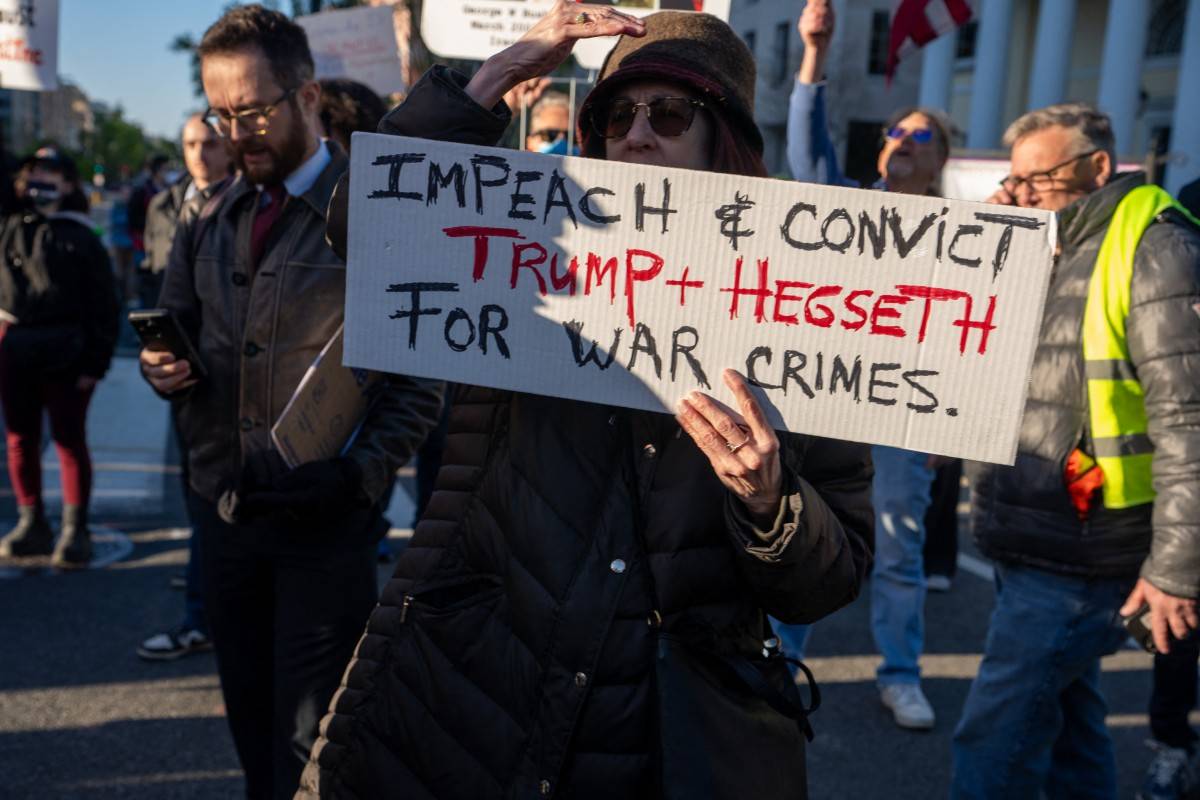
Earlier Tuesday, with gas prices surging throughout the United States and his job rating falling, Trump threatened to wipe out Iran’s “whole civilization” if it refused to reopen the shipping lane.
Since the US-Israeli attacks began on Feb. 28, Trump has repeatedly backed down just before deadlines expire.

‘Big money’
According to a White House official, Israel is part of the ceasefire deal.
In his 11th-hour ceasefire announcement, Trump claimed that the US had exceeded all military goals. White House spokesperson Karoline Leavitt also asserted on Tuesday night that this is a “victory” for the US and Trump, who projected “four to six weeks” to complete the military campaign, dubbed Operation Epic Fury.
“Almost all of the various points of past contention have been agreed to between the United States and Iran, but a two-week period will allow the Agreement to be finalized and consummated,” Trump wrote in a Truth Social post following his conversations with Sharif and Pakistan’s powerful army chief, Gen. Asim Munir.
Posting another message just past midnight, Trump said the United States will help increase the traffic in the Strait of Hormuz, and “big money” will be made.
“Iran can start the reconstruction process. We’ll be loading up with supplies of all kinds, and just ‘(hanging) around’ in order to make sure that everything goes well,” he said.
******
Get real-time news updates: inqnews.net/inqviber