





Cagayan de Oro’s park upgrade: From firebreak to green oasis

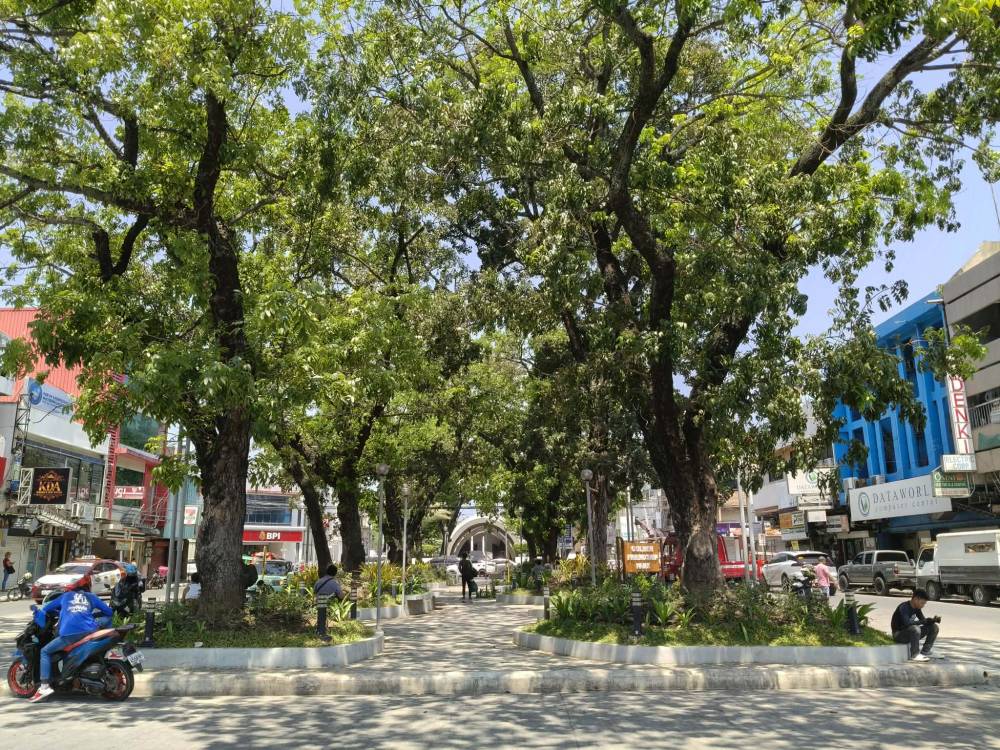
Over a century ago, a devastating fire nearly wiped the old town of Cagayan de Misamis off the map. To prevent a repeat of the inferno, local leaders carved out a massive, trench-like firebreak to physically divide the town center.
That dividing line—composed of seven parks or “islands,” traditionally known collectively as Plaza Divisoria—has become hallowed ground, resting atop the bones of the city’s earliest freedom fighters.
Today, the local government is meticulously landscaping this historic area through the ambitious “Lunhaw Project,” which seeks to transform the city’s oldest commercial and historical nerve center into a network of inclusive, climate-resilient urban parks.
Lunhaw is a Bisaya word meaning green or verdant.
Primary commercial district
Established in the early 1900s by then Mayor Tirso Neri, the Divisoria area—centered on the functional dirt strip meant to stop the spread of fires—rapidly evolved into the city’s primary commercial district by the 1920s.
Now renamed Golden Friendship Park, it remains the beating heart of Cagayan de Oro, hosting civic events at the Kiosko Kagawasan or Freedom Kiosk and serving as a vital public gathering space.
Spearheaded by the office of City Mayor Rolando Uy since its formal launch in 2022, the project is progressively developing the city’s core green spaces.
The initiative traces its beginnings to a collaboration with UN-Habitat in 2018.
“UN-Habitat helped design and render the Lunhaw Project and conducted the prefeasibility study. They also hosted an investors’ forum for the project,” project lead Patrick Gabutina told the Inquirer.
UN-Habitat also trained the core team that developed the city’s Local Climate Change Adaptation Program, some members of which are now part of the Lunhaw Project, Gabutina added.
The initial phase of work took about six months and cost roughly P50 million, setting the benchmark for the sprawling urban revival.
Heritage preservation
Balancing modern urban mobility with heritage preservation is at the core of the Lunhaw initiative. Divisoria is not just a park; it is a repository of local memory, with each “island” anchored by a monument dedicated to a pivotal figure.
Ongoing renovations are particularly sensitive around the El Pueblo A Sus Héroes monument. Erected in 1931, its base serves as an actual burial vault containing the skeletal remains of local Katipuneros—the 1st Company, El Mindanao Battalion, led by Capt. Vicente Roa—who died resisting American forces during the Battle of Agusan Hill on May 14, 1900.
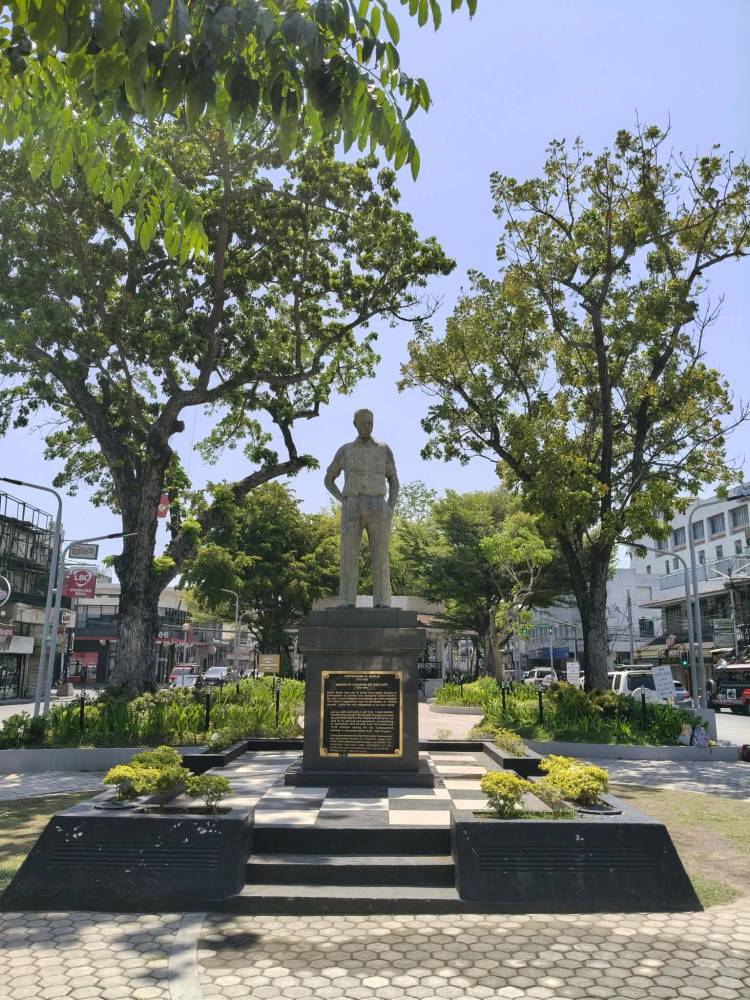
Sharing this hallowed corridor are monuments dedicated to national hero Dr. Jose Rizal; President Ramon Magsaysay, whose “man of the masses” legacy resonated deeply in Mindanao; and Mayor Justiniano Romulo “JR” Borja, regarded as one of the city’s greatest leaders who spurred its postwar economic boom.
His statue, sculpted by National Artist Napoleon Abueva, immortalizes the benchmark of uncompromising public service in the city.
Gabutina confirmed that Phase 1, centered on Magsaysay Park, is already complete, with Phase 2 at Bonifacio Park slated for completion this April.
Subsequent phases will target JR Borja Park and Rizal Park.
Focus on accessibility
“I cannot remember exactly how many months, but Phase 1 was finished on time, in less than a year. The fountain island took us over a year to complete. The fountain is done; only the landscaping and comfort rooms remain,” Gabutina said.
A major focus of the central Lunhaw area—spanning from Divisoria to the Cagayan River—is accessibility. This is highlighted by the installation of public toilets designed for men, women, persons with disabilities (PWDs), senior citizens, and all-gender users.
In all parks, concrete flooring was removed and replaced with a mix of ecobricks and grass cover. This allows trees room to breathe and lets rainwater seep naturally into the ground.
The floor level was also lowered from a meter to just 20 centimeters, with PWD ramps on every side. Additional benches were also installed.
Gabutina, an artist who advocates urban renewal and community development, said the upgrades make the parks truly inclusive.
Challenges ahead
Despite steady progress inland, the project faces hurdles as it expands toward the Cagayan River. The proposed Acacia Development Project—which envisions a mini-jetty for river taxis and a two-way bike lane along the riverbank—is currently suspended.

“Hopefully, we can start implementing the riverside development plan this year,” Gabutina said.
One challenge is harmonizing the planned structures with the retrofitting of the Ysalina Bridge, the first bridge connecting the eastern and western sections of the old Cagayan de Misamis.
The project must also consider its impact on the river wall near the cathedral, the seat of the local Catholic faith for more than three centuries.
From the old commercial district, future development of public spaces is likely to expand toward emerging business hubs.
Gabutina noted preliminary concepts envisioning the nine-hectare Rotonda area transformed into a multifunctional park with sports courts and bike lanes. This area connects with the Divisoria parks via the river wall, which was constructed with Japanese aid to protect the city from flooding, such as during Typhoon “Sendong” (Washi) in December 2011.
Another forward-looking initiative is the Eco Park in Zayaz, Carmen Village. This green space sits on a redeveloped dumpsite near the planned City Hall relocation site and could serve families in nearby subdivisions.
Sustaining momentum
Urban revitalization in Cagayan de Oro runs parallel to vital infrastructure upgrades. Just as the original Divisoria was built to mitigate disasters, its modern iteration addresses today’s climate challenges.
Alongside park beautification is a P120-million drainage improvement project along RN Abejuela and Tirso Neri Streets. Begun in May 2025, this massive upgrade aims to solve the persistent flooding that plagues the downtown area.
To sustain momentum and protect the city’s public-space investments, Gabutina hopes the city council will pass legislation creating a dedicated office at City Hall to maintain parks and public areas.
“It would be better to have an office whose mandate is focused on our parks so that what this project has started will last,” he said.
For now, the work continues—island by island, monument by monument—ensuring that the firebreak that once saved Cagayan de Oro continues to safeguard its future.