

Breathe, exhale—join a tree walk in the metro

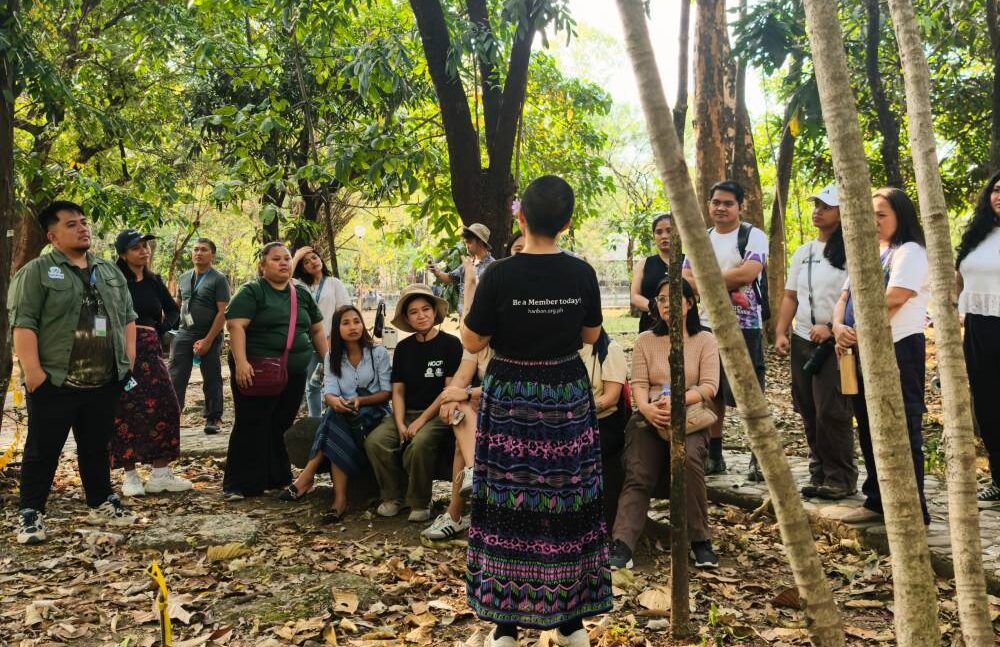
A number of city dwellers recently escaped the heat by gathering under the shade of trees in one of the few green spaces in Metro Manila.
On the International Day of Forests on March 21, participants joined a native tree walk led by Haribon Foundation at the Ninoy Aquino Parks and Wildlife Center in Quezon City.
The event, guided by forester and GIS (Geographic Information System) Specialist Ralph Guzman, served as a practical classroom for urbanites looking to reconnect with the country’s shrinking biodiversity.
The walk is part of a series of initiatives aimed at addressing the disconnect between urban residents and the natural environment.
While the Philippines is recognized globally for its high level of endemicity, with approximately 50 percent of its plant species found nowhere else on earth, this richness often goes unnoticed in the concrete landscape of Metro Manila.
A hurdle in environmental conservation is what experts call “plant blindness.”
Diwa Castillo, Strategic Partnership Specialist at Haribon, observed that many people struggle to distinguish between different types of vegetation.
“It’s a phenomenon where people have a tendency to see all plants as just a ‘green blob,’” Castillo said during the session. “All plants seem the same, which is a shame because we have incredible plant biodiversity. Many Filipinos simply don’t know what we have.”
This inability to recognize specific species makes it harder to advocate for their protection. When a forest is viewed merely as a blur of green, the loss of a specific, culturally significant tree like the katmon (Dillenia philippinensis)—known for its edible fruit used as a souring agent in sinigang—would be felt less acutely by the public. It is considered Near Threatened on the IUCN Red List.
Shrinking green spaces
The urgency of these walks is backed by a stark reality revealed in recent geospatial analyses. A 2025 study found that 90 percent of the City of Manila’s land cover remained stagnant between 2018 and 2024, with less than 2 percent of the area transitioning as new green areas.
While the Department of Environment and Natural Resources-National Capital Region reported a 47-percent increase in green space cover from 2021 to 2024 based on satellite assessments, these figures still require ground verification to determine if the growth represents high-quality, accessible public space.
In Quezon City, for instance, a 2026 GIS-based analysis revealed a significant “usability gap”: While 16.25 percent of the city’s land is officially allocated for parks and open spaces, only 2.25 percent is actually usable for the general public.
One of these places is where Haribon conducts its tree walks: the Ninoy Aquino Parks and Wildlife Center.
This lack of accessible green space directly threatens urban livability and public health. Without prioritized urban greening, it is estimated that 11 million Filipinos will be exposed to “danger” level heat indices—exceeding 42 degrees Celsius—by 2030, a number that could surge to 74 million by 2050, according to the National Adaptation Plan of the Philippines.
To combat the Surface Urban Heat Island (UHI) effect, conservationists are advocating for the “3-30-300” rule: a standard ensuring that every resident can see three trees from their window, lives in a neighborhood with 30 percent canopy cover, and is within 300 meters of a quality park.
Biological cooling systems
Native trees are the backbone of this resilience; they do more than provide shade—they act as biological cooling systems and noise buffers that are vital for a city’s long-term survival.
Participants in the walk learned to identify trees that carry deep cultural and ecological significance. Trivia shared during the sessions highlighted the alagaw tree (Premna odorata) which has long been used by Manobo communities in Agusan del Sur to treat colds.
It can also be found on a menu, served as a vegetable wrap in restaurants like Crescent Moon Cafe in Antipolo.

Participants also got to know the ilang-ilang tree (Cananga odorata), whose yellow flowers have long been used as ingredients for international luxury perfumes such as Chanel No. 5.
Another memorable tree is the colorful bagras, known as the “rainbow tree” (Eucalyptus deglupta). After a fresh rain, its peeling bark can reveal various colors including green, orange, and violet.
Walk for conservation
It is native to Mindanao, but possibly because of its visual appeal it can be found in other areas such as the Ayala Triangle Gardens in Makati and inside the Ninoy Aquino Parks and Wildlife Center.
For Haribon, the tree walk is a bridge.
By teaching people how to identify species and understand their “cultural why,” it hopes to turn passive observers into active stewards. The process is simple: Identify, understand the ecological benefit, and recognize the trees’ role in the larger Philippine forest, which has dwindled from 70 percent cover a century ago to just 24 percent today.
“Hopefully, this bridge between the person and the trees helps them appreciate native plants in their wilder habitats,” said Castillo. “It starts here in the city, but it leads back to the watersheds and protected areas we are trying to conserve.”
As Metro Manila continues to expand, the need for informed, nature-conscious citizens is greater than ever. Haribon invites the public to step out of the “concrete jungle” and join their regular activities.
Whether it is a native tree walk in a local park, or urban birdwatching activities, there are numerous ways to contribute to a city’s resilience. By learning to see past the “green blob,” residents can play a direct role in protecting the future of the Philippines’ natural heritage.
For schedules and registration details, interested participants can visit the Haribon Foundation’s official website (haribon.org.ph) or follow its social media channels (@goharibon).