


Shipping exec: Choked Hormuz affecting flow of PH goods

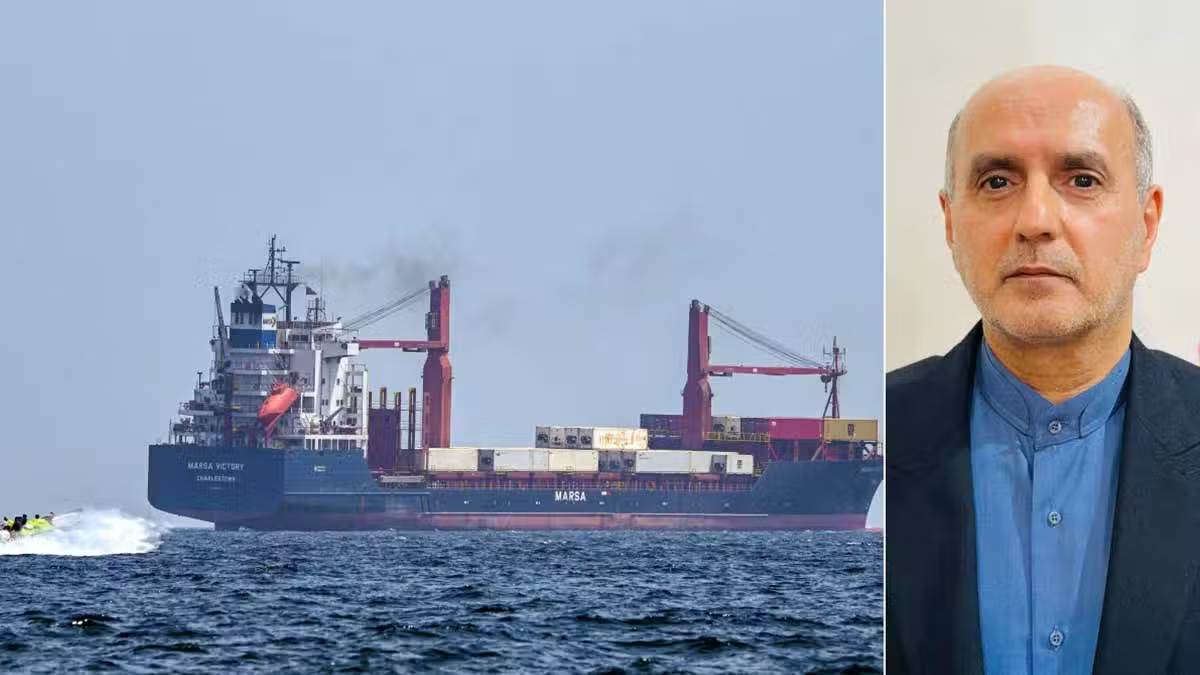
More than 100 container vessels, including ships bound for the Philippines, remained stuck in the Strait of Hormuz since the start of the Middle East conflict, affecting the flow of goods, an executive representing foreign container shipping lines operating in the country told a Senate panel on Wednesday.
“Currently, there are about 130 container vessels that are actually trapped inside the Strait [of Hormuz]. There have been a few ships that have been able to get out, but so far there are hundreds of container vessels that are still inside,” Association of International Shipping Lines (AISL) president Patrick Ronas said at a hearing of the Senate committee on agriculture, food and agrarian reform.
“Aside from that, you also have your general cargo ships and a few tankers that will have to maneuver or find a way as to how they get out of that strait,” he added.
Exports
Ronas said AISL, which has 36 member companies, recently met with the Department of Trade and Industry to discuss the impact of the Middle East war on their businesses.
“Their main issue is actually for exports, considering that we export some of the products […] like canned tuna and a lot of Filipino products for our overseas Filipino workers. So they are very much concerned on how their products will get there considering that all carriers were not moving or carrying cargo because of the risk,” Ronas said.
According to Ronas, cargo ships carrying Philippine exports are discharged just before the Strait in Khor Fakkan, United Arab Emirates. “Once containers are dropped to the area, they will now have to be trucked to the destinations all over the Middle East,” he said.

‘Diversion of services’
“Basically, not only [is] fuel causing a lot of challenges for shipping lines or international shipping lines, but because of the vessels being trapped in the strait, a diversion of services is being done, reassessment of the network is also being done, as well as containers [are] being offloaded to other ports,” he said.
Ronas lamented that ships bound for Europe now have to go through the Cape of Good Hope as an alternative to the Strait of Hormuz.
“Movement to Europe [has] now gone back to 100 percent moving through the Cape of Good Hope, which adds about 10 to 14 days transit time, which means vessels are taking a little bit longer before they get to their destination in Europe,” he said.