

Palace meets biz groups on supply chain concerns

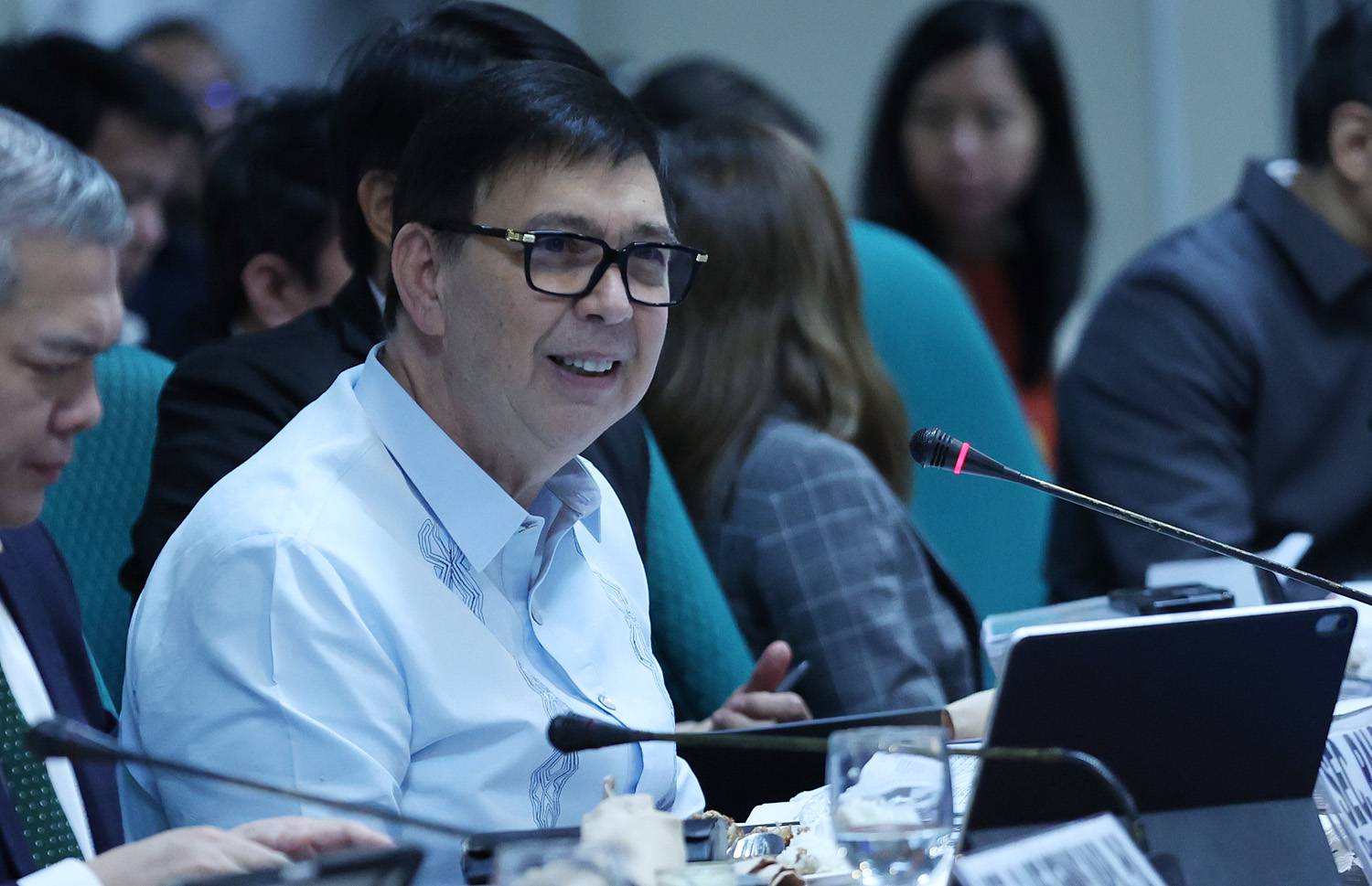
Executive Secretary Ralph Recto has assured business executives that the government would eliminate “unnecessary checkpoints” and decongest ports to minimize the cost of transporting goods across the country amid the soaring prices of fuel.
Recto met with business associations in Malacañang on Monday to map out mitigation measures, with one of the 22 executives present pointing out that diesel accounts for about 70 percent of the cost of moving cargoes in container vans from the ports to the countryside.
“[Any] delay [in transport of fuel and essential goods] is cost passed on to the consumers,” the executive secretary said in a statement on Wednesday.
Before the United States and Israel attacked Iran on Feb. 28, diesel was being sold in Metro Manila at only P48 to P73.61 per liter. Pump prices soon surged to as high as P172 a liter.
Gasoline prices ranged from P50 to P77.03 per liter before the war. They have since climbed to up to P120 per liter.
The past month has seen the country open supply chains with nontraditional partners like Russia to secure desperately needed oil, while instituting measures ranging from cash handouts for transport workers to a four-day workweek for civil servants.
‘Friction costs’
Inflation jumped dramatically in March, hitting a nearly two-year high of 4.1 percent on the back of historically high fuel prices driven by the Middle East war.
The spike—the highest since July 2024 and well up from 2.4 percent in February—came as the import-dependent archipelago struggles with a declared “national energy emergency.”
“With or without this conflict, we should be removing friction costs across the supply chain. This includes unnecessary checkpoints, especially those affecting the transport of perishable goods,” Recto said on Wednesday.
Recto also took note of the business industry’s proposal to open container yards outside the capital to decongest ports, saying he had referred this to the Bureau of Customs “for immediate action.”
50 days of oil inventory
In late March, the Metropolitan Manila Development Authority resolved to exempt trucks and other vehicles transporting fuel and essential goods from the truck ban on major roads in the metropolis.
Recto and the business executives later sat down for another meeting with 25 representatives from 14 oil companies to discuss supply, inventory, and cost concerns.
In that meeting, Energy Secretary Sharon Garin said the country’s oil inventory was adequate for the next 50 days or until late May.

“And we are hopeful that oil diplomacy should not only keep our stocks replenished, but build them up,” Recto said.
In both meetings, Recto said he had assured business leaders “of an open line of communication not only with Malacañang but with all government agencies.”
“That is why since Day One of this conflict, the President’s instruction was to reach out to business, civic leaders, local government executives and get their views, and many, in fact, have been inputted in our response” he added.
The business industry, for its part, called for more efficient online transactions of documents.
Recto also asked the private sector to adopt energy-saving measures, implement flexible work arrangements, and prevent unfair pricing practices. “This is a time for partnership of all, and not profiteering of the few,” he said.
Among the business groups present were the Semiconductor and Electronics Industries in the Philippines Foundation Inc.; the Philippine Chamber of Commerce and Industry; the Management Association of the Philippines; the Federation of Filipino-Chinese Chambers of Commerce and Industry Inc.; the IT and Business Process Association of the Philippines; the Makati Business Club; and the Ease of Doing Business Foundation Inc. —WITH A REPORT FROM AFP