
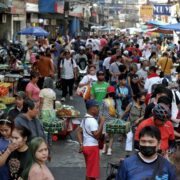

Living through a crisis


How do we live our lives while the world is in an ongoing crisis?
Sadly, this is not the first time our generation has had to survive chaos. Just six years ago, the COVID-19 pandemic upended our lives as we knew it. We were forced to stay at home and forced to work and study remotely. Our family and social life required a much-longer pivot, as we realized the value of in-person interactions and that, indeed, no man is an island. During this ongoing oil crisis (and the fear of a possible world war), some have pointed out that the sacrifices and changes we have to make were eerily similar to the 2020 pandemic, sans face masks (though the recent concerns about air quality in Metro Manila might bring that back, too).
High gas prices have changed our traveling and commuting habits. My parents, for example, have put a pause on their plans for international travel not only due to increased cost but also for fear of being stranded, lest the ongoing conflict in the Middle East force closures of airspace. Domestic travel now requires more thought, as a full tank of gas becomes much more painful on the wallet. Frequent transport strikes have forced schools to return to remote learning. Workplaces have adopted work-from-home arrangements. All this disruption is starting to increase basic living costs. People are more hesitant to spend, which in turn causes problems for vendors and farmers, with smaller businesses taking the biggest hit.
When in crisis, here are some things we can be mindful of:
Do not panic. Do not rush into big life decisions. Resist impulsive urges. As counterintuitive as it sounds, we lose nothing by taking things slow. In panic, our emotions become the overriding force for our actions. Focusing on our calm allows all our cognitive resources to be available, meaning that we can use both emotion and reasoning to aid us in problem-solving. We can think both in the short-term and the long-term, increasing the likelihood that we will come up with a good plan. While it may be tempting to empty your life savings toward solar panels or an electric vehicle, slow down and think if you can afford to be without any life savings at a time of uncertainty.
Focus on what’s important. A crisis can overwhelm us and make us think that every decision and action is important. When everything is changing around us, our instinct is to resist change and keep everything the same. We cannot fight multiple battles at once and expect success in all. We have to prioritize what is worth fighting to preserve. For example, if family is your value, then you can prioritize family time or togetherness, even if it means spending on gas to visit them. We can also fashion quality time at home so that a tighter budget doesn’t have to be at the family’s expense. Things like friendship, rest and recreation, and social impact can also be important for others.
When problems are globalized, such as thinking that the world is in peril or that our life is a mess, it feels impossible to think of solutions. But when we narrow our focus and specify our problems, it becomes easier to solve them. Fewer problems, fewer crises.
Strip it back to basics. A lighter bag is more portable. The same goes for life. When we have fewer attachments and complications, it is easier to be flexible and ride the waves of change. Simplify your life, however you can. Keep your expectations—of yourself and others—realistic. Give yourself grace and pause the goals that only add to your stress at this phase in your life. For example, perhaps now is not the time to go on a severe diet that will negatively affect your mood. Manage the pace of your work and career to sustainable levels. Now is not the time to risk fatigue and burnout. Be selective with your social commitments; your social battery is a precious commodity.
Always find the joy. I emphasize this because a lot of people think that joy is not important. It is usually the first thing thrown out the window when scheduling our calendar. But the only way to get through a protracted crisis is joy. What helps us endure is to find the joy in each moment. I like to think of joy as an adverb more than as an emotion. We work joyfully. We rest joyfully. We debate joyfully. We wait joyfully. We budget joyfully. This allows joy to be possible, no matter the situation. This should not be mistaken for toxic positivity, where joy is imposed and forced. Joy is not meant to replace or mask other experiences, especially those of frustration, suffering, or struggle. Seemingly conflicting emotions can coexist. Isn’t that a joy to know?
Unfortunately, no global conflict resolves itself within days. The impact will be felt for a long time, years after any peace treaty. Endurance, then, becomes our goal. We need to figure out how to live our lives as best we can, even through a crisis.

—————-
******
Get real-time news updates: inqnews.net/inqviber