




Cordillera braces for worst as fuel shocks hike inflation


BAGUIO CITY—The huge spike in diesel prices triggered by the war launched by the United States and Israel against Iran had pushed inflation to 4.5 percent in March across the Cordillera region.
This comes as the region also reels from the slowdown of tourist arrivals, a major driver of the local economy.
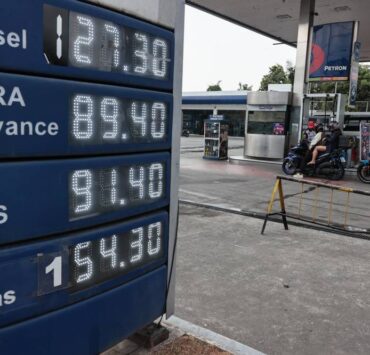
Summer tourists still drive or commute to Baguio, where inflation climbed to 6.2 percent last month from 4.8 percent in February. Historically, the summer capital has endured high pump prices compared to its closest neighbors which has been the subject of congressional inquiries. Diesel here shot up to a high of P164.70 as of April 7, and fell to P139.50 due to the publicly announced industry-wide rollback on April 14.
High fuel costs increased the price of food and other commodities which contributed to high inflation in the Cordillera provinces.
Apayao hit hardest
Ifugao sustained 3.7 percent of inflation in February and March; Benguet, 3.2 percent in March from 2 percent in February; Kalinga, 1.9 percent following a deflation of -0.2 percent in February; Abra, 4.2 percent from the previous 2.3 percent; and Mountain Province, 3.8 percent from the previous 3.3 percent.
Aldrin Frederico Bahit Jr., chief statistician of the Philippine Statistics Authority (PSA) in the Cordillera, told an economic briefing on Thursday that Apayao province bore the brunt of highland inflation with a staggering 8 percent last month—up from 4.3 percent in February.
Benguet produces 80 percent of Manila’s daily salad vegetables while Kalinga is the region’s rice granary.
Bahit said economists are watching how Cordillera inflation would behave this month amid a two-week ceasefire that allows a window for peace talks between Iran and the United States to permanently end their hostilities that had destabilized world oil markets.
Supply chain disruptions
Food and other commodities will always be impacted by the cost of fuel although its full effect on manufacturing and other industries would only become evident in the near future, he explained.
Bahit noted that the country also suffered from supply chain disruptions when the global coronavirus pandemic broke out in 2020, as well as the Russian war on Ukraine that has now reached four years, and the country survived.
But the giant leap in diesel prices for the food-producing mountain region was not anticipated, Bahit said.
Overall, diesel posted a 55.3-percent inflation rate in March from only 0.1 percent in February, while gasoline reflected a 26.8-percent jump last month from a -3.6-percent rate earlier throughout the Cordillera.

Food inflation
In Benguet, diesel inflation measured 49.3 percent in March from 0.1 percent in February. In Baguio, diesel posted a 66.7-percent inflation in March from -0.9 percent in February. In Ifugao, diesel inflation last month was 43.3 percent from -53 percent.
Apayao recorded a 33.7-percent spike in inflation for diesel last month from -0.4 percent rate in February. But what dramatically pulled up Apayao inflation was food, particularly rice, Bahit said.
The Cordillera reflected a growth in inflation for palay from -3.6-percent rate in February to -1.3 percent in March. However, inflation for rice in Apayao—a producer of the staple grain as well as corn— suddenly increase to 13 percent in March from -2 percent the previous month, Bahit said.
The inflation for diesel and that of vegetables like red onions—from 22.8 percent in February to 32.6 percent in March—“propelled Apayao’s steep inflation,” he explained.
Standby funds
Apayao has farmlands spanning 33,910 hectares which are devoted to growing rice, corn, pineapples, bananas, yams and sweet potatoes. To sustain the flow of high-value crops, the Department of Agriculture is pooling standby funds for Benguet, Mountain Province and Ifugao, following an April 1 dialogue with farmers by Agriculture Secretary Francisco Tiu Laurel Jr., said lawyer Jennilyn Dawayan, the agency’s Cordillera director.
Was the fuel shock in March the worst to affect the Cordillera in recent years? Bahit said the PSA needs to study inflation behavior until the end of 2026 to properly compare the oil shocks this year with other crises like the pandemic. Current data makes 2022 the biggest inflation year for transport in the Philippines due to Russia’s invasion of Ukraine, he said.