








Fortun on ‘Negros 19’: ‘Hear the version of the dead’

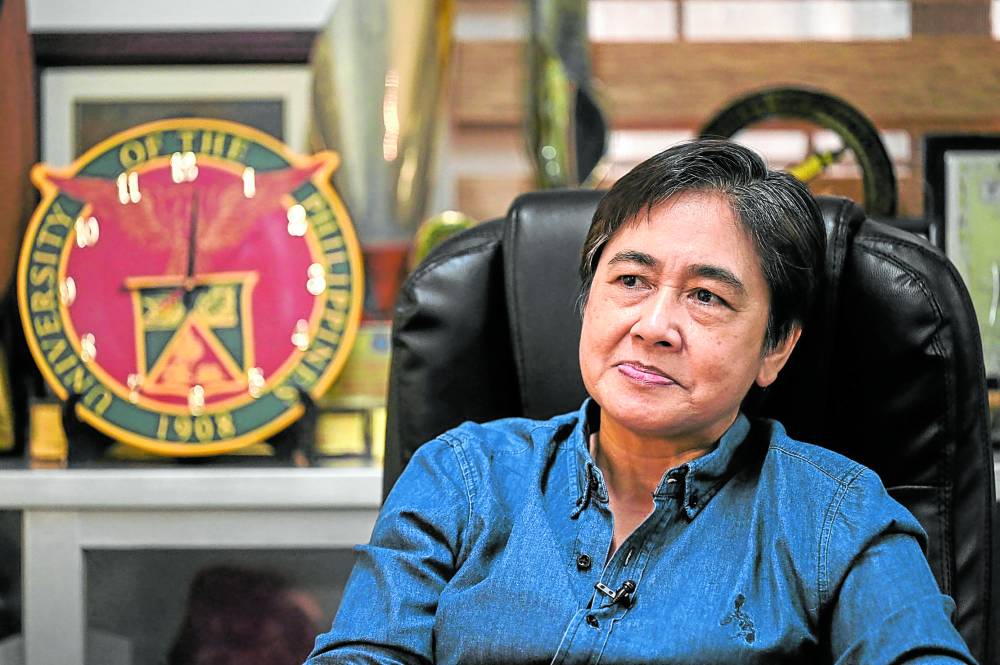
One of the country’s most recognized forensic pathologists, Raquel Fortun, on Thursday said she conducted an autopsy on five of the 19 people who were killed by government troops in Negros Occidental last month and that she did not find any indication that they were shot at close range.
She said she was requested to do the autopsies by the families of two females and three males as an independent nongovernment forensic examiner as controversy surrounded the April 19 clash between Army soldiers and New People’s Army (NPA) rebels that resulted in one of the biggest number of deaths in a single encounter in recent years.
Speaking during a media briefing at the University of the Philippines Diliman, Fortun said the five bodies were flown from Negros Occidental and examined between April 25 and April 29.
Based on her initial findings, Fortun said that if the five had been shot at “close range or contact fire … sometimes there’s an imprint muzzle, which I did not see.”
“I don’t think they were fired close range or contact,” she said.
No gunpowder tattooing
She also said she did not observe any stippling, or gunpowder tattooing on gunshot victims, although she noted that clothing could affect whether such marks appear on the skin.
X-rays were first conducted before any autopsy procedures to determine the presence and location of bullets.
“Without X-rays, I wouldn’t be able to find the bullet. I wouldn’t even know there was a bullet,” she said.
According to Fortun, the first body from the “mass or multiple casualty incident” arrived and autopsied on April 25, almost a week after the clash.
The four others were examined in the following days. The five were aged 22 to 40 years old.
She lamented the fact that the bodies were already decomposing when she started her autopsy, complicating the examination.
“I’m told, I don’t know if this is true, but some bodies were found in water,” she said, adding that under that condition, “the preservation is ugly.”
Don’t cremate yet
Fortun stressed the importance of “proper recovery handling disposition of bodies” as they were crucial evidence themselves.
“The bodies are evidence. You must hear the version of the dead,” she said.
“Routine should be, as I keep saying, basic homicide investigation. That should have been done.”
Fortun urged families not to immediately cremate the bodies of loved ones, stressing that further examinations may still help establish identities and determine additional forensic findings.
She also raised concerns over the misidentification of one of the male fatalities, referring to an “unidentified adult male” who was initially reported missing. The family immediately noticed inconsistencies after being shown his clothing. One of his siblings said he didn’t wear those kinds of clothes.
Also, she said, the physical features didn’t match the description of a tall person as the body was that of a short person.
The forensic pathologist appealed to authorities to help families verify the identities of those they had buried, saying that the uncertainty and possible errors in identification would take a toll on them.

Military vs NPA version
The military said it suffered no casualties and all of the 19 dead were NPA guerrillas, but the NPA owned only 10 of them. The nine others were civilians, including community journalist RJ Nichole Ledesma; UP students Alyssa Alano and Maureen Keil Santuyo; community researcher Errol Wendel; Filipino American activists Kai Dana-Rene Sorem and Lyle Prijoles; local resident Roel Sabillo; and two minors.
The Commission on Human Rights said it would investigate the circumstances surrounding the reported clash.
Fortun called out people on social media for referring to those killed in gun battles “corned beef,” saying that they “don’t look anything like corned beef.”
“Take it from me, because I see a lot of dead bodies. You know what they look like? Human beings. People. People with injuries, people who were killed,” said Fortun, who also examined the remains of victims of the drug war of the Duterte administration.
Continuing concerns
Fortun raised concerns over the handling and examination of ballistic evidence in the Philippines, saying that while bullets and bullet fragments recovered from bodies can be scientifically traced to specific firearms, the process depends heavily on whether access will be given to data on weapons.
“Three of the cases had bullets and bullet fragments,” she said. “Again, this is forensic science. They can be traced to the firearm, but do you have access to the firearm, will you be given access?”
She said she has been trying to push forensic pathology in the Philippines for 30 years. During that time, she said she kept getting bullets but had no reference data on all guns of all the state agencies in the country to compare them with.
“When I was talking to the relatives, I told them, don’t keep your hopes up,” she said. “Unfortunately, that’s it. This is the Philippines, and you get away with murder here.”


