





Holding space for queer lives


On a humid Saturday afternoon in Quezon City, the second floor of Sikat Events Studio along Tomas Morato slowly filled with familiar hopefulness. People arrived in groups or alone, carrying tote bags and rainbow merch. The setup was intimate, arranged to encourage dialogue and community.
The gathering, held on May 23, marked the International Day Against Homophobia, Biphobia, Intersexphobia, and Transphobia (IDAHOBIT) 2026. Organized by the ASEAN SOGIE Caucus (ASC)—a regional network founded in 2011 to advocate for LGBTQIA+ rights across Southeast Asia—alongside regional human rights groups, the event targeted a critical question: Who gets to fully belong in public life?
Under this year’s theme, “At the Heart of Democracy,” the program braided discussions, photography, and live performance. Human rights discourse unfolded alongside raw stories of loneliness, chosen family, and finding everyday joy despite systemic hostility.
An enduring journey
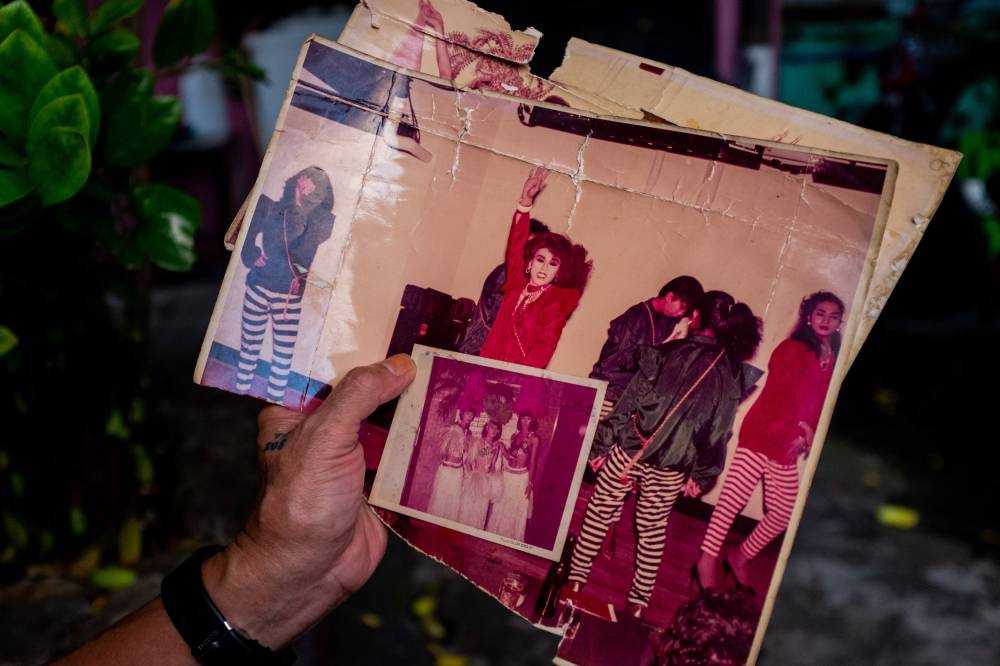
In one corner, excerpts from photographer Shirin Bhandari’s ongoing project, “This Is My Life,” anchored the room. The exhibit follows Rey Ravago, a 64-year-old who has spent four decades performing drag while working as a massage therapist, hairstylist, and street sweeper to survive. Ravago’s story is inseparable from the unfinished struggle for LGBTQIA+ rights in the Philippines, where a national anti-discrimination law has remained stalled in Congress for more than two decades.
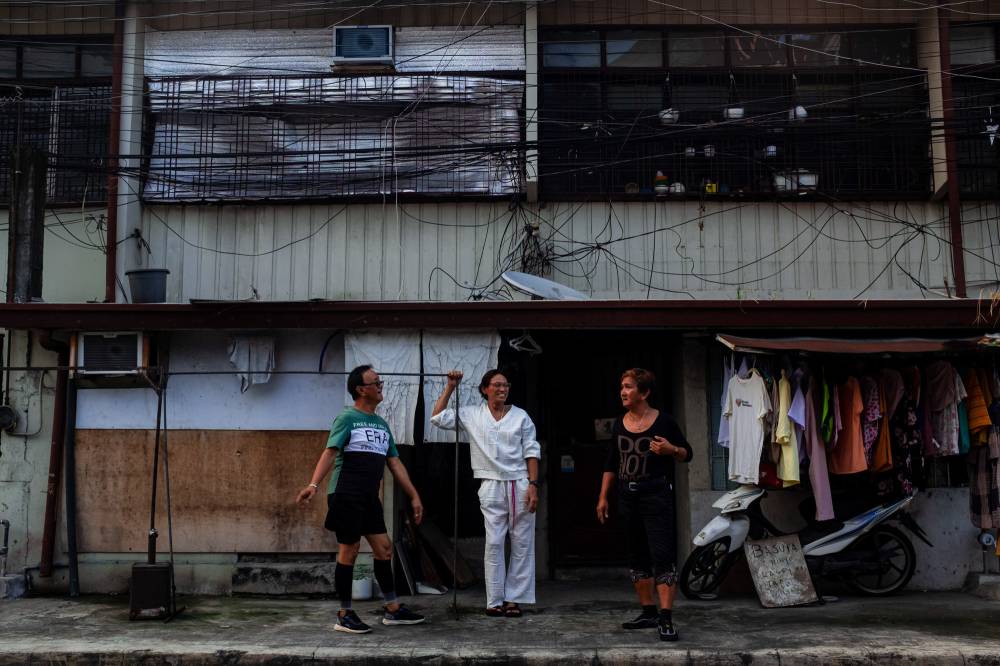
Bhandari’s photographs documented Ravago’s life with honesty and tenderness: backstage with fellow drag queens, commuting, resting at home, and lighting a candle inside a church. The images reflected the realities many elderly LGBTQIA+ Filipinos face: aging without institutional protections, financial security, or healthcare, and often relying instead on chosen families for support.
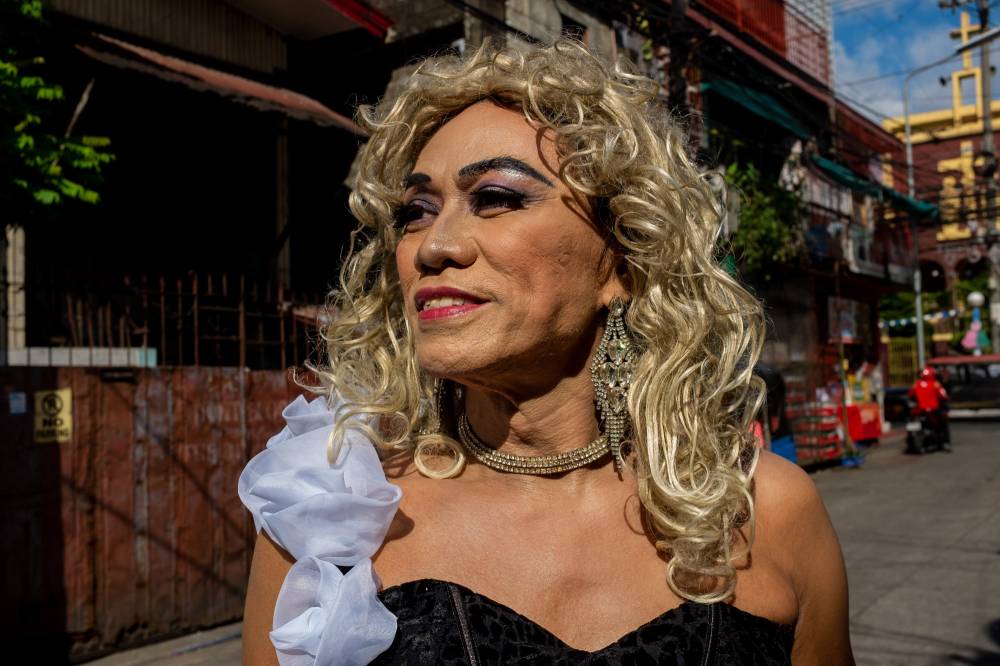
In a country where poverty, misogyny, and political conservatism continue to shape everyday life, aging queer Filipinos navigate layered forms of invisibility and vulnerability. Even in supposedly progressive spaces, acceptance can remain conditional: celebratory when queer people are fashionable or entertaining, but far less visible when they are elderly, poor, disabled, grieving, or struggling economically.
Yet, the event resisted framing the community solely through the lens of suffering.
Participants repeatedly returned to the idea that democracy is not merely electoral participation; it is the ability to exist publicly without fear. To create, dissent, gather, and speak honestly. As censorship laws and restrictions on LGBTQIA+-related media tighten across Southeast Asia, the organizers positioned queer visibility not as a separate issue but as central to public life itself.
Defining true allyship
To process these heavy realities, a facilitator from Mindcare Club, a queer-safe and affirmative mental health telehealth company, led a grounding session focused on collective care and mental well-being. Participants were invited to pause, breathe, and ask themselves: “What am I here for?”
As a straight attendee and ally, that question lingered with me. What does meaningful allyship look like beyond social media posts and Pride marches?
The conversations throughout the evening reminded me that queer rights are often reduced to the versions most visible in pop culture: the glamorous drag queen, the young creator on TikTok, the articulate spokesperson invited into mainstream spaces. But queer life in the Philippines is also carried by people who remain largely unseen.
Perhaps true allyship begins when we stop limiting empathy to the queer stories easiest to celebrate, and start making space for the complicated realities beyond hashtags and performance stages.
I asked Ryan Silverio, regional coordinator of the ASEAN SOGIE Caucus.
“Allyship is about holding spaces for queer and marginalized folks to be themselves devoid of judgment, while celebrating their authenticity,” Silverio shared. “By holding space, straight allies let go of power and control, allowing queer imaginations to blossom whenever and wherever they intend to be.”
Filipino academic activist Joel Barredo described this redistribution of power in even more direct terms.
“I think the ideal ally is one who passes the mic and holds the ladder for people like us,” Barredo said, noting how exhausting it is for marginalized communities to constantly fight for room inside heteronormative systems. “The occupation of these spaces has been disastrous for many of us.”

Passing the mic
There was no attempt by the organizers to pretend that the work ahead is simple. The participants spoke openly about burnout, policy fatigue, and the danger of human rights regressions in the Philippines.
But there was also humor and warmth. The room was alive with old friends checking on one another, celebrating small wins in local government policies—particularly in Quezon City—and documenting the evening with laughter.
The emotional climax of the night belonged to Ravago. Without the distance of a formal stage, Ravago stood at the center of the room and commanded it entirely. Witnessing a drag performance from someone who has survived four decades of cultural shifts, precarity, and social stigma was profound.
Democracy is often discussed in abstract terms. But events like this narrow the distance between theory and real life. They force us to ask: Who gets protected? Who gets heard? Who gets to age with dignity, and who is allowed complexity without punishment?
Democracy is not only tested in elections or speeches. It is tested in hospital rooms, classrooms, family homes, workplaces, and the mundane daily interactions where people either encounter dignity or humiliation.
As the organizers aptly noted in their closing statement: “At the heart of democracy is the freedom to exist without fear.”
******
Get real-time news updates: inqnews.net/inqviber


