







50 firms keen on PH ‘Pax Silica’ hub


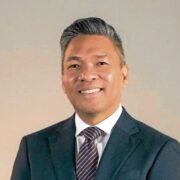
More than 50 companies, including trillion-dollar tech titans, are keen on investing at the first site tipped to be developed for the United States-led Pax Silica initiative at New Clark City in Pampanga, according to Joshua Bingcang, president and CEO of the Bases Conversion and Development Authority (BCDA).
Bingcang told Inquirer officers, editors and reporters during a roundtable discussion on Tuesday that he would be heading to Washington next week to work on how this planned “economic security zone”—as the United States described it—would be realized.
A 4,000-acre, or 1,600-hectare, portion of Clark has been identified as the site of various high-tech industries and support businesses that would serve as a hub of the supply chain for artificial intelligence or AI technology.
Bingcang said the BCDA and the US Department of State are working on a framework agreement that would deal with the legal, commercial and other issues related to developing the industrial enclave.
The framework agreement is expected to lead to a definitive agreement, which Bingcang hopes to be finalized “in the next two months.”
He said the BCDA was in talks with the state department as counterpart to Pax Silica’s lead agency and “as the landlord” of the companies Washington and its partners would bring in to set up shop in Clark, which was once one of the largest American air force bases outside mainland US.
Supply chain
According to the US Mission to Asean (Association of Southeast Asian Nations), Pax Silica is a “strategic initiative to build a secure, prosperous, and innovation-driven silicon supply chain.”
Such a supply chain spans areas from critical minerals and energy inputs to advanced manufacturing, semiconductors, AI infrastructure and logistics.
Pax Silica is seen as a boon to the local mining industry as the country is endowed with abundant reserves of copper, nickel, chromite and cobalt. These “critical minerals” could be processed in-country and used in the manufacture of higher value technology products such as semiconductors at Clark.
Currently, local mining companies merely export these minerals in the form of low value unrefined ores—and the major destination of their shipments is China, a major US trade and miitary rival.
Pax Silica was launched in December 2025 as a coalition of seven countries—the United States, Australia, Israel, Japan, South Korea, Singapore and the United Kingdom.
Seven more countries signed the Pax Silica Declaration over the following five months, including Finland, Greece, India, Qatar, Sweden, the United Arab Emirates and the Philippines. Manila joined on April 17.
Analysts point out that Pax Silica is an answer to China’s dominance in terms of reserves and production of minerals that are critical to commercial and military technology, and thus poses a threat to American national and economic security.
Washington “needs to announce, by next week, a breakthrough. They want this contract to stand the test of time, beyond the Trump administration,” Bingcang said.
First tenant
Last May, Jacob Helberg, US Undersecretary of State for Economic Growth, Energy and the Environment and Washington’s point person for Pax Silica, visited Pampanga. Helberg brought along representatives of 20 companies to sound out opportunities.
“One of them is now in an advanced stage of due diligence, including site evaluation,” Bingcang said.
In fact, he described the company as Pax Silica’s “first tenant.” When asked to identify the company, Bingcang declined but he told his Inquirer hosts to “check [the brand] of your smartphones.”
The BCDA chief said that Washington’s main concern was “to protect” American companies that would locate at Clark.
“They are asking about security, source of power and water,” Bingcang said, adding that for electricity alone, the industrial zone is expected to need 5,000 megawatts of generating capacity. “That already represents $5 billion in investments.”
Bingcang said that global infrastructure investment management company I Squared Capital was already looking into this matter.
He said the BCDA was considering embedded or dedicated power plants, which could be built either in Subic, Zambales, or within Clark itself.

“We want it [the partnership with the US state department for Pax Silica] to be on a commercial level, a business transaction or commercial contract,” Bingcang said.
He emphasized that the collaboration among the United States and other countries participating in Pax Silica would be commercial, not military, in character. Thus, as a business engagement, there would be no need for Senate ratification which a bilateral treaty would require.
When asked to address concerns that Pax Silica would serve and involve American military purposes, Bingcang said the Pax Silica development in Pampanga was but part of the bigger Luzon Economic Corridor or LEC.
The LEC is also being developed in cooperation not only with the United States, but also with Japan, to make the Philippines’ largest island as “a premier and global supply chain and manufacturing hub.” This corridor covers major economic and urban zones that link Subic Bay, Clark, Metro Manila and Batangas.
Bingcang said that last April, while waiting for the formal signing ceremony when the Philippines was to formally join the Pax Silica initiative, the Philippine Ambassador to the US Jose Manuel Romualdez asked Helberg, “will you be doing military and defense-related activities there (in Clark)?”
“Helberg said ‘No, no, it’s only [for] commercial [activities],” the BCDA chief said.
Thus, for the meeting in Washington next week, Bingcang said discussions would cover legal, commercial, contractual and labor matters. “They [Americans] said that in terms of criminal and civil matters, they will follow Philippine laws,” he said.
In another development, Bingcang said the BCDA “finally signed” a contract with aircraft maintenance service provider Lufthansa Technik Philippines (LTP) on the lease of a 157,000-square-meter facility at Clark International Airport. This will be outside the Pax Silica area.
LTP has long been looking at expanding in Central Luzon as congestion at the Ninoy Aquino International Airport continues to constrain the company’s growth.
In 2023, LTP—a joint venture of the Lucio Tan-led MacroAsia Corp. and Germany-based Lufthansa Technik AG—said it planned to invest P15 billion in a two-phase expansion at Clark by 2026.