




G7 leaders vow increased sanctions on Russia’s oil, gas

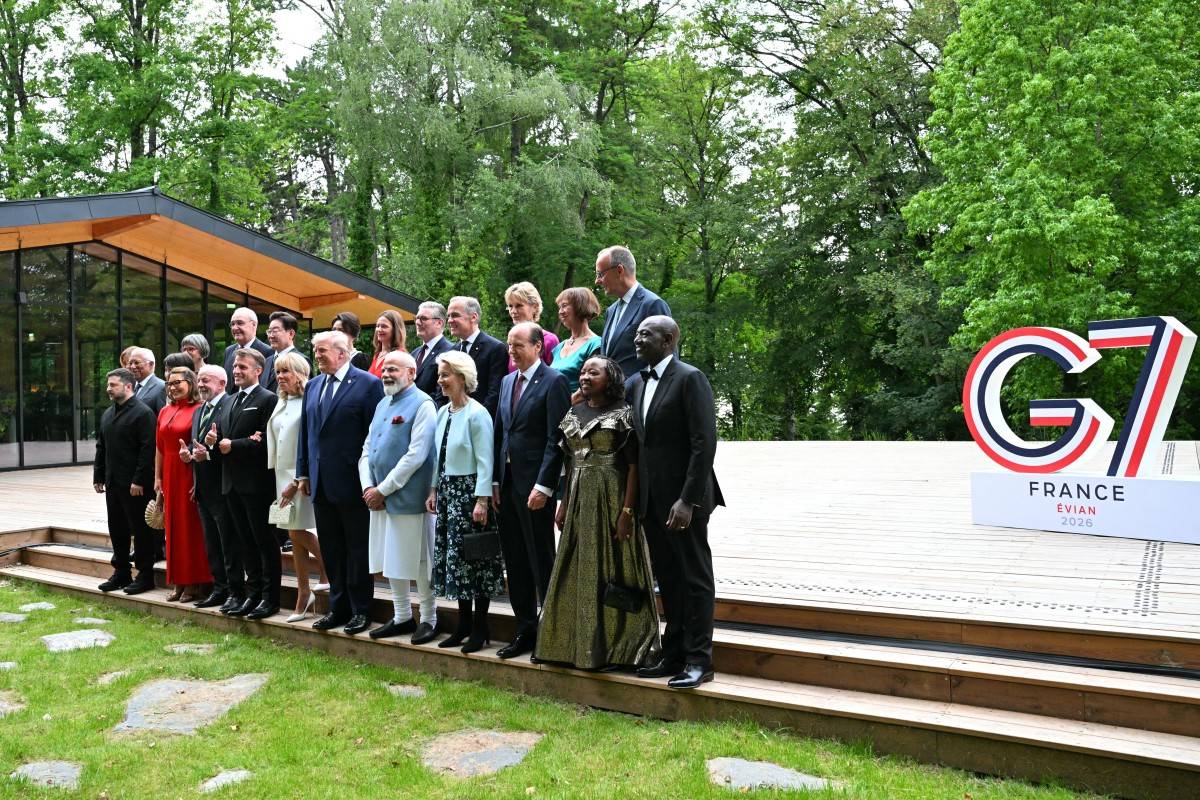
Leaders of the Group of Seven (G7) countries, gathered in France for their annual summit, released a joint statement early Wednesday saying they will strengthen sanctions on Russia, including on its oil and gas sectors.
They said it is “the right moment” to take additional measures against Russia, which is continuing its attacks on Ukraine, and expressed support for a deal US President Donald Trump has struck with Iran that will reopen the Strait of Hormuz, a chokepoint for global oil shipments.
The statement was issued after Trump urged Russia to negotiate a peace deal.
The G7 leaders agreed to continue working together for a “just and lasting peace” in Ukraine, after hearing directly from Ukrainian President Volodymyr Zelenskyy on the country’s current situation, according to a Japanese official.
The consensus came despite increasingly strained ties between Trump and European powers over a range of issues, from trade and Nato to his push to take over Greenland and, most recently, the US-Israeli war against Iran.
‘Oil now flowing’
“Russia should make a deal. Russia has lost tremendous amounts of people, and so has Ukraine,” Trump told reporters after attending a session with the other G7 leaders in the French spa town near the Swiss border on the shores of Lake Geneva.
Trump said he will do whatever he can to end the conflict, suggesting the United States could end the temporary lifting of some sanctions on Russia, introduced to lower oil prices in the wake of the Iran war.
“Soon we’ll be able to do that because the oil is now flowing,” he insisted, referring to the reopening of the strait, which is expected to begin gradually as early as Friday.
Zelenskyy wrote on social media the focus of his meeting with the G7 leaders was “to strengthen air defense for Ukraine and advance diplomacy” as part of efforts “to make Russia end its war,” adding, “Peace is needed.”
Amid heightened international attention on Iran, the exclusive session on Ukraine took place at a time when Kyiv has strengthened its position on the battlefield by working more closely with European countries than with the United States.
Free, open Indo-Pacific
On Tuesday, the second day of the three-day summit, the situation in the Middle East and reform of international development partnerships were also high on the agenda.
In the joint statement, the leaders said they see “the breakthrough and the opportunity that currently exist” in the Middle East, adding that Iran can never obtain a nuclear weapon.
The document on geopolitical issues also stressed the importance of “a free and open Indo-Pacific based on the rule of law,” which they addressed during a working dinner on Monday night.
“We reaffirm our opposition to any unilateral attempts to change the status quo, in particular by force or coercion, in the East and South China Seas and across the Taiwan Strait, which should only be resolved peacefully through dialogue,” it said, without naming China.