






From classrooms to climate action


The Earth continues to send clear signals about the need for urgent climate action through rising seas, higher temperatures, and increasingly frequent extreme weather.
As these global challenges are debated in international summits, a quiet but critical response is also emerging in classrooms along Philippine coasts.
Through the Junior Sea Guardian Project (JSGP), Haribon Foundation is demonstrating that long-term climate resilience can be built early, by translating environmental awareness into community action.
JSGP is moving environmental education out of textbooks and into the hands of children by implementing climate awareness lessons across vulnerable coastal schools in Aklan, Antique, Quezon, and nearby areas.
“One of the most memorable experiences for me and my students was participating in a sea turtle conservation activity,” said Abigael Dimalaluan, a teacher-facilitator at Lipata-Lamputong Integrated School in Antique province.
“During our field activity, we unexpectedly encountered live sea turtles, which made the experience even more meaningful. The students immediately showed concern for wildlife and became eager to learn about their protection.”
Living laboratories
Franz Geradila, a student, said, “I enjoyed the activity so much because we saw a sea turtle. I also learned sea turtles are born on land yet live in the sea.”
For participating schools, the project has turned local ecosystems into living laboratories through hands-on coastal cleanups, habitat exploration, and student-led campaigns.
“Through the program, our learners are taught to become responsible stewards of the environment, especially our oceans and marine life,” said Norma Basquiñas Gamboa, faculty member of Dinahican Elementary School in Infanta, Quezon.
“We conducted activities on waste segregation, tree planting, and discussions on the harmful effects of improper waste disposal. As a result, I observed that the learners became more disciplined in disposing of waste properly.”
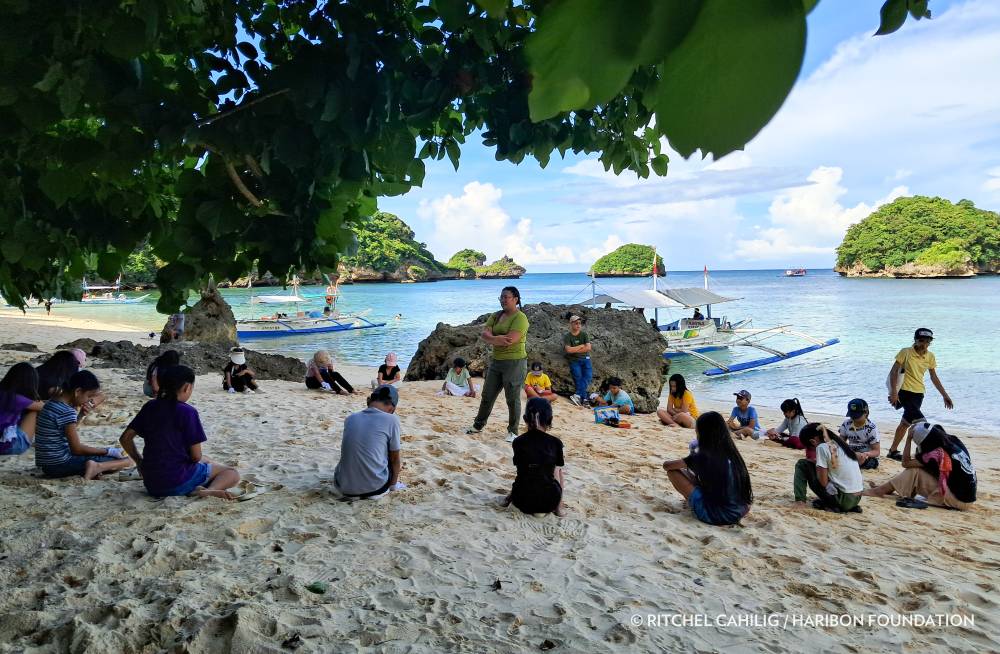
A core approach of the JSGP project is to transition students from basic environmental literacy to action. By exploring nearby coastlines, students confront real-world environmental challenges firsthand.
“One of the most memorable activities for our learners was the beach exploration,” said Kit Magdaluyo of Manocmanoc Elementary School in Malay, Aklan.
“Many of them initially knew only a few marine species such as fish and hermit crabs, but through the activity, they discovered the rich diversity of life found along our coastlines. Another impactful activity was the mangrove ecosystem exploration, where learners saw pollution issues firsthand.”
He added, “This experience helped them realize the importance of becoming sea guardians not only as individuals but also as members of a community.”
Similarly, Kristel May Salomon of Capalong Elementary School in Real, Quezon, observed how these outdoor activities built essential character traits.

“Our students showed great enthusiasm during the JSGP activities, especially those conducted outdoors. They actively participated in waste management and marine conservation efforts and demonstrated responsibility, cooperation, and teamwork throughout the activities.”
Building character
The success of the initiative highlights a core Environmental, Social, and Governance (ESG) principle: Environmental action is most effective when it is collective, sustained, and locally rooted.
The impact of the project extends well beyond the student body, reshaping relationships between families, schools, and local governments.
“One of my biggest realizations from the project was the importance of the partnership among parents, the school, and the community,” said Reshel Durano Escareses of Alitas Elementary School in Infanta.
“Their support played a vital role in the successful implementation of our environmental activities. I also observed positive changes among our learners, particularly in their discipline and ability to apply what they learned both at home and in school.”
Looking ahead, Haribon aims to build this proof of concept into a nationwide movement, with the ultimate goal of supporting the Department of Education in institutionalizing marine conservation principles and learning materials into the regular school curriculum.
The implementation and ongoing success of the JSGP is made possible through the vital support of LifeBank Foundation, whose shared commitment to community empowerment and conservation education helps safeguard both coastal ecosystems and the livelihoods of the next generation.