



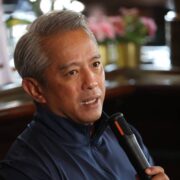



BARMM chief forms Cabinet


COTABATO CITY—Six days after being elected to lead the Bangsamoro Autonomous Region in Muslim Mindanao (BARMM), Chief Minister Abdulraof Macacua on Thursday announced the composition of his Cabinet that he expects will sustain the moral governance agenda put in place upon the establishment of the regional government in 2019.
The 19 officials appointed on Thursday include 17 ministers and two heads of major offices. They are among some 50 people who responded to Macacua’s call for applications so he can choose from a pool of individuals to fill the Cabinet posts.
Of the 19 officials, only two are women. Eight of them are lawyers and two engineers. Nine of the appointees are members of the Parliament (MPs).
“These people will help me run the affairs of the Bangsamoro Government anchored on moral governance as originally pushed by former (interim) Chief Minister, brother Ahod Balawag Ebrahim,” Macacua said after reading the names of the 19 appointees.
Appointees
Ebrahim, chair of the Moro Islamic Liberation Front (MILF), is also an MP, representing the United Bangsamoro Justice Party (UBJP) which he leads.
Also known as Al Haj Murad, Ebrahim served as interim chief minister from 2019 to 2025, espousing moral governance during his term, an Islamic-rooted and values-based approach to public administration.
Topping the appointees is MP Abunawas Maslamama, a key figure of the Bangsamoro Federalist Party (BFP), as snior minister. A veteran Moro revolutionary, Maslamama served in various capacities of the MILF armed wing, the Bangsamoro Islamic Armed Forces (BIAF).
Another key appointee is MP Naguib Sinarimbo as minister for basic, higher and technical education. Sinarimbo played a key role in the formation of the BFP after they split from the UBJP. He was also among those who provided legal advice to the MILF during its political negotiations with the government leading to the 2014 peace deal.
Jordan Bayam was chosen to head the powerful Ministry of the Interior and Local Government. Bayam used to be with the Office of the Presidential Adviser on Peace, Reconciliation and Unity but was prevailed upon by Macacua to join the Cabinet of the interim regional government when he was appointed in March last year to replace Ebrahim as chief minister.
MP Akmad Brahim, a BFP stalwart and longtime Macacua associate in the BIAF, takes the Ministry of Environment and Natural Resources, and Energy, an agency he led during the transition government.
MP Rashdi Adiong, a cousin of Lanao del Sur Gov. Mamintal Alonto Adiong Jr., heads the Ministry of Human Settlement and Development. Adiong won a parliamentary district seat in Lanao del Sur under the Serbisyong Inklusibo-Alyansang Progresibo Party that allied with the BFP to form a majority in the parliament.
MP Ishak Mastura, scion of one of the powerful political clans in Maguindanao del Norte, takes the Ministry of Agriculture, Fisheries and Agrarian Reform. Mastura also provided legal advice to the MILF during the Malaysian-facilitated peace negotiations.

MP Jo Genna Jover, a Teduray tribal leader, heads the Ministry of Indigenous People’s Affairs. She is a veteran in social development work and in the promotion of women and non-Moro indigenous people’s rights.
Other appointees are Abdullah Cusain as Cabinet secretary; Duque Kadatuan as Bangsamoro attorney general; Alirakim Munder as minister of social services and development; MP Jimael Salam Salliman as minister of health; Datu Jomar Midtimbang as minister of public order and safety; MP Kitem Kadatuan Jr. as minister of labor and employment; Faizal Padate as minister of trade, investment and tourism; Ubaida Pacasem as minister of finance, and budget and management; MP Hanie Bud as minister of science and technology; Termizie Masahud as minister of transportation and communication; and Basir Ibrahim as minister of public works.
Lawyer Laisa Alamia, a former MP under the Bangsamoro Transition Authority, will head the Bangsamoro Planning and Development Authority.
Vetting process
The appointments followed a vetting process in which a search and screening committee evaluated 50 applicants for the Cabinet posts.
The screening process was intended to ensure that those appointed possess the competence, integrity, professional experience and leadership capabilities needed to serve the region.
Bayam, who headed the panel, said they also considered every individual’s “alignment with the Government of the Day’s agenda under the elected Chief Minister, as well as their commitment to implementing moral governance.”