











Ground zero for scam hubs

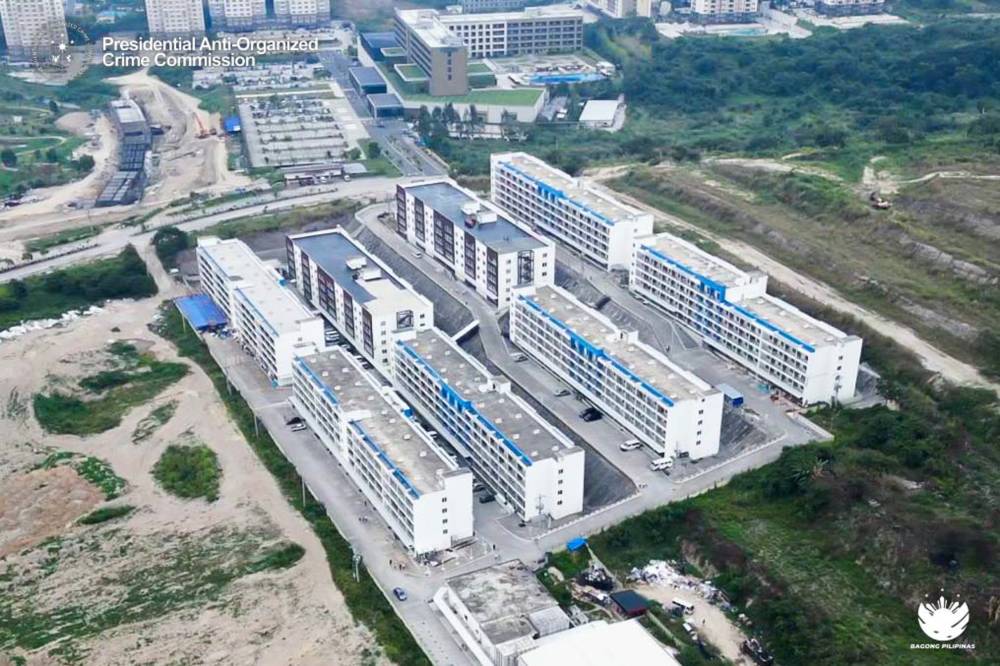
Southeast Asia is ground zero for the global scamming industry,” said a report this year by the United Nations Office on Drugs and Crime. And part of that ground zero has been the Philippines, which has continued to grapple with the spread of scam farms despite the blanket government ban imposed on Pogos, or Philippine Online Gaming Operators. As the UN report noted, these scam hubs “often operated alongside legal gambling businesses,” whose compounds housed formally registered businesses in front while tucking illicit enterprises inside more discreet structures.
When the Pogo ban went into effect and many a Pogo firm’s sprawling headquarters were officially decommissioned, the scam operations simply went underground. Scores of such criminal lairs are apparently still around, to go by the frequent raids being conducted by authorities.
In October, for instance, the National Bureau of Investigation (NBI) raided a facility in Subic, Olongapo City, and rescued around 200 to 230 individuals, mostly Vietnamese nationals. The NBI also seized high-tech communication devices, cellphones, and computers used to target victims in the United States, Vietnam, the Philippines, and other countries.
Cybercrime hub
In May last year, the Bureau of Immigration arrested 31 foreign nationals suspected of engaging in online scams. Their base of operations was not some remote, hidden compound but the 11th floor of a commercial building in Ayala Avenue, Makati City, the country’s central business district. That detail indicated just how confident the criminal syndicates behind the cybercrime hub had felt about doing business in the country with impunity.
And just last Nov. 3, authorities raided a parcel scam enterprise in Pasay City, where 166 foreign nationals—138 Indonesians, 16 Vietnamese, 10 Chinese, and two Malaysians—were arrested, along with two Malaysians and one Chinese national who were the alleged masterminds. The modus of the Pasay facility was just as audacious: Scammers posed as police officers and used fake police uniforms, handcuffs, and a staged police station during video calls to tell overseas victims their packages contained illegal drugs. The victims were then threatened with criminal investigations, frozen bank accounts, and asset seizures unless they sent over money.
“Recovered from the compound were Indonesian and Vietnamese police uniforms, as well as photographs and tarpaulins of Indonesian and Vietnamese police officials allegedly used to intimidate victims and make the scheme appear legitimate,” according to a Philippine News Agency report.
Growing menace
The scale and reach of these transnational criminal operations could be gleaned from a closer look at both the alleged perpetrators and their victims—those trafficked across borders and forced to work in these rackets, as well as the networks’ unsuspecting targets across the globe, victimized through cyberfraud, catfishing, and other illegal activities. Take the foreign nationals netted in the Pasay City operations—citizens of Indonesia, Vietnam, Malaysia, and China. The sheer range of nationalities represented in just one busted scam hub supports the UN’s assessment that this growing menace poses a particularly serious problem for Southeast Asia.
The Association of Southeast Asian Nations’ (Asean) Ministerial Meeting on Transnational Crime held in October in Manila was an attempt to jointly address this concern. Cooperation and coordination between the member states are crucial, because the entire region faces enormous risk. Regional economic losses from cybercrime operations are estimated at $114 billion annually, threatening the bloc’s digital and wider economy.
Cross-border law enforcement
Southeast Asians also make up the bulk of the trafficked workforce, with citizens from the Philippines, Vietnam, Indonesia, Malaysia, and Thailand routinely trafficked into neighboring countries like Myanmar and Cambodia, leading to diplomatic and repatriation crises.
The ongoing Asean summit should build on that ministerial meeting by firming up commitments for more robust cooperation and cross-border law enforcement activities among the bloc’s governments. Asean partners Japan, China, and South Korea have not been spared either, because as an Arab News report noted, they “have also been affected by the activity of Southeast Asia’s fraud hubs.”

As recently as last Friday, the Philippine National Police said it was looking into reports that up to 1,500 Filipinos were forcibly working in scam hubs in Myanmar. Former Presidential Anti-Organized Crime Commission official Winston Casio, who said he received the initial pleas for assistance from civil society organizations in Myanmar and Thailand, claimed that seven Filipinos were “beaten black and blue for trying to escape,” and that they were being held hostage for $10,000.
The Philippines and its fellow Asean members must act—and act fast—on what the UN calls the “criminal service providers” proliferating in their midst.
******
Get real-time news updates: inqnews.net/inqviber



Growth recovery is not transformation