




Campaign vs smoking, vaping seeks to tap LGU funds

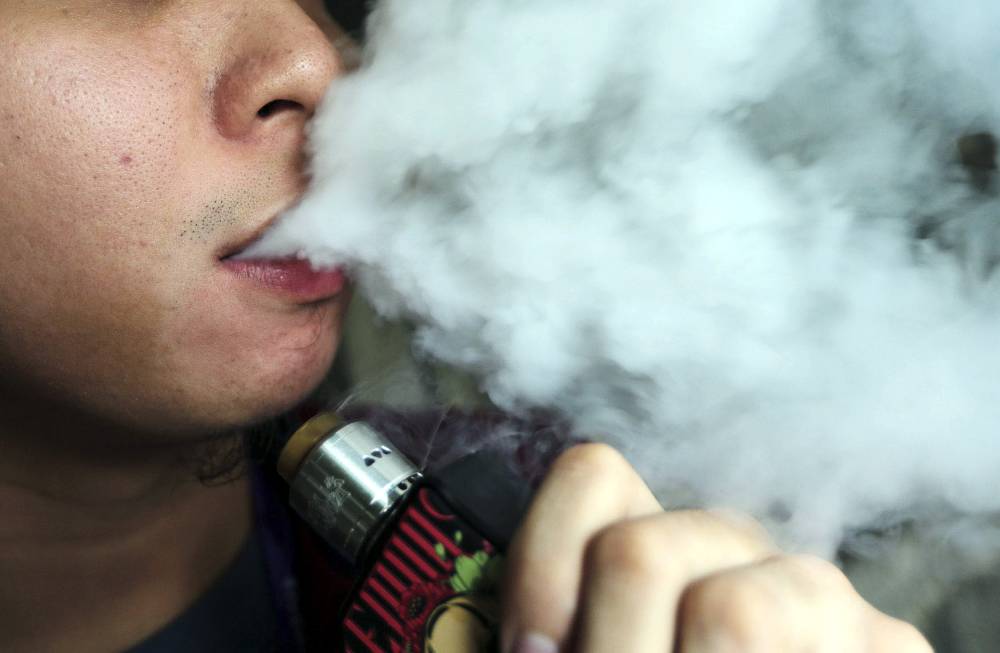
Health advocates are urging lawmakers to retain dedicated funding for local government units (LGUs) in a proposed measure establishing smoke-free and vape-free environments.
They warned that weak enforcement could leave Filipino families burdened with the mounting costs of chronic diseases.
Social Watch Philippines (SWP) said House Bill No. 9603, or the proposed Smoke-Free and Vape-Free Environment Act, must provide LGUs with sufficient resources to enforce tobacco-control policies and prevent smoking- and vaping-related illnesses.
“Laws to protect Filipinos from cigarette smoke and vape aerosols will only work if local governments have the budget to enforce them,” SWP coconvener Ma. Victoria Raquiza said in a statement.
“Every peso spent on stopping young people from starting to smoke or vape saves Filipino families from draining their savings on hospital bills,” added Raquiza, a professor at the University of the Philippines’ National College of Public Administration.
Funding sources
The bill proposes earmarking 3 percent of local health budgets for the operations of a Smoke-Free and Vape-Free Task Force, including research, benchmarking, smoking cessation programs and public awareness campaigns.
SWP said LGUs could tap existing funding mechanisms to implement the proposed programs instead of creating entirely new budget allocations.
These include funds for noncommunicable disease programs, the Special Health Fund under the Universal Health Care Act and the 20-percent Development Fund available to lower-income LGUs.
The group also proposed using funds allocated for Sustainable Development Goal programs under Republic Act No. 11467, particularly those supporting SDG Target 3a, which seeks to strengthen implementation of the World Health Organization’s Framework Convention on Tobacco Control.
SWP welcomed the House committee on health’s approval of HB 9603 on Nov. 11, under the leadership of Manila Rep. Giselle Maceda.
Health costs
Raquiza urged lawmakers to preserve its funding provisions as the measure moves to plenary deliberations and eventual Senate consideration.
The group’s appeal comes as Philippine Statistics Authority data showed that health spending reached P1.87 trillion in 2025, with about half going to chronic illnesses such as heart disease, cancer and lung diseases that require prolonged treatment.
Filipino households paid 41.2 percent of these medical expenses out of their pockets, underscoring the financial burden of illnesses that could be prevented or reduced through stronger public health measures.
The Department of Health has identified smoking, vaping and exposure to secondhand smoke and vape aerosols among the preventable risk factors for costly chronic diseases.

HB 9603 seeks to build on existing local ordinances guided by the “Relate” principles: removal of indoor smoking and vaping areas, expansion of smoke-free and vape-free zones, local health budget allocations, LGU awards, creation of enforcement task forces and stiffer penalties.
It would mandate smoke-free and vape-free environments in public places and workplaces by amending the Tobacco Regulation Act of 2003 and the Vaporized Nicotine and Non-Nicotine Products Regulation Act, with particular emphasis on protecting minors from nicotine addiction and secondhand exposure.
Stiffer penalties
Under the proposed measure, individuals caught smoking or vaping in prohibited areas would face fines of P5,000 for a first offense, P10,000 for a second offense and P20,000 for a third and subsequent offenses.
The same penalties would apply to persons in charge of establishments that allow or tolerate violations or fail to comply with their obligations under the law. Businesses and other juridical entities could also face suspension or revocation of their permits or licenses.
Establishments that construct or maintain designated smoking and vaping areas that fail to meet the proposed requirements would face fines ranging from P10,000 to P20,000. Noncompliant structures would have to be removed or demolished, while business permits could be suspended, canceled or revoked.
The bill would also require LGUs to order the closure of establishments selling tobacco and vape products without the necessary licenses, or impose appropriate penalties under existing local revenue and regulatory ordinances.


