









Advocates push to hasten RE transition in Mindanao

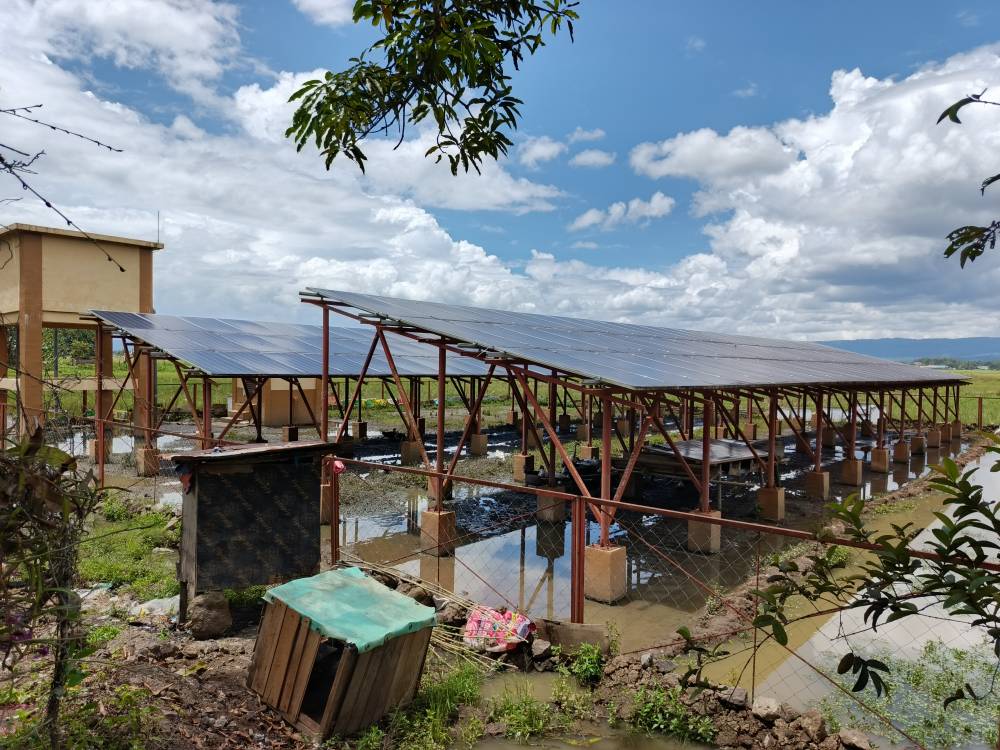
Government officials and climate campaigners in Mindanao are optimistic that the conflict-torn region, which used to be regarded as a national backwater, could be a trailblazer in the country’s shift to renewable energy (RE).
The national energy roadmap looks at achieving a 50-50 mix of RE to fossil fuel by 2040, part of the Nationally Determined Contribution to decarbonization under the 2015 Paris Climate Deal. Based on this, the country’s energy mix should be 35 percent RE and 65 percent fossil fuel by 2030.
For Mindanao, the target is by 2030—10 years earlier or within the next five years. The current RE to fossil ratio in the Mindanao grid is 33-67.
“Mindanao is aiming to move even faster toward a balanced renewable energy and fossil fuel mix. This move underpins industrialization, job creation, and resilience. To achieve this, we need to mobilize, to tap billions of pesos of investments,” said Mindanao Development Authority (MinDA) Chair Leo Tereso Magno.
Practical goal
For engineer Cerael Donggay, a former senior executive of the National Power Corp., the goal is a practical one. It will ensure that, in a few years, the cost of power in the region will be significantly lower.
“That means we can become more competitive as a location for industrial investments which, in turn, generate much-needed jobs. That was an advantage lost to us when we became dependent on coal,” Donggay explained.
Donggay noted that given the leaps in RE technology, the power that these capacities produce are way cheaper than from coal-fed capacities.
But several policy issues need to be surmounted in order to support the region’s aggressive RE transition.
During the 3rd Mindanao Clean Energy Forum in November last year, RE advocates outlined several issues for the Department of Energy (DOE) to address.
Topmost are strengthening the coal moratorium, with the view of expanding it to cover brownfield or expansion of coal plants whose applications were done before the coal moratorium took effect in 2020, and the rehabilitation of the Agus-Pulangi hydroelectric power complex (APHC).
MinDA Deputy Executive Director Romeo Montenegro stressed that for the Mindanao grid to attain its RE goal, there should no longer be new construction of coal-fired power plants, and expansion of existing ones should no longer be allowed.
He called for the decommissioning of the aging Steag Mindanao Coal-fired Power Plant in Villanueva, Misamis Oriental, whose Build-Operate-Transfer contract is set to expire in 2031. The plant, however, has been a candidate for early retirement under the Asian Development Bank’s Early Transition Mechanism.
‘Business as usual’
The pronouncement of Energy Secretary Sharon Garin about relaxing the coal moratorium has drawn criticism from Mindanao’s RE advocates.
“The declaration of the DOE further waters down the already nebulous coal moratorium. Why is the DOE undermining its own policies?” said BenCyrus Ellorin of the Consumers for Renewable Energy Action in Mindanao.
Ellorin noted that the current national government target of 35:65 in 2030 “is business-as-usual, and not ambitious enough.”
In order to attract RE investments, Montenegro urged Mindanao power consumers to help “create the demand for renewable energy.”
“The DOE should send the right market signals that renewable energy is the way forward in Mindanao. It should be sensitive and responsive to the aspirations of Mindanaoans to have clean, affordable, and secure energy in the short term,” said Montenegro.
Engineer Darwin Daymiel, general manager of Agusan del Norte Electric Cooperative (Aneco), said that investments in RE have become cheaper and more stable.

“RE prices are not volatile like coal, and building RE plants enjoys tax exemptions and other incentives,” he said. The current RE share of Aneco’s energy mix is already at 56 percent.
Hydro’s key role
Mindanao needs at least 1,400 megawatts of new renewable energy capacity by 2030 to attain parity with fossil fuels. The projected peak demand in 2030 is 5,800 MW, while the current installed RE capacity is around 1,500 MW.
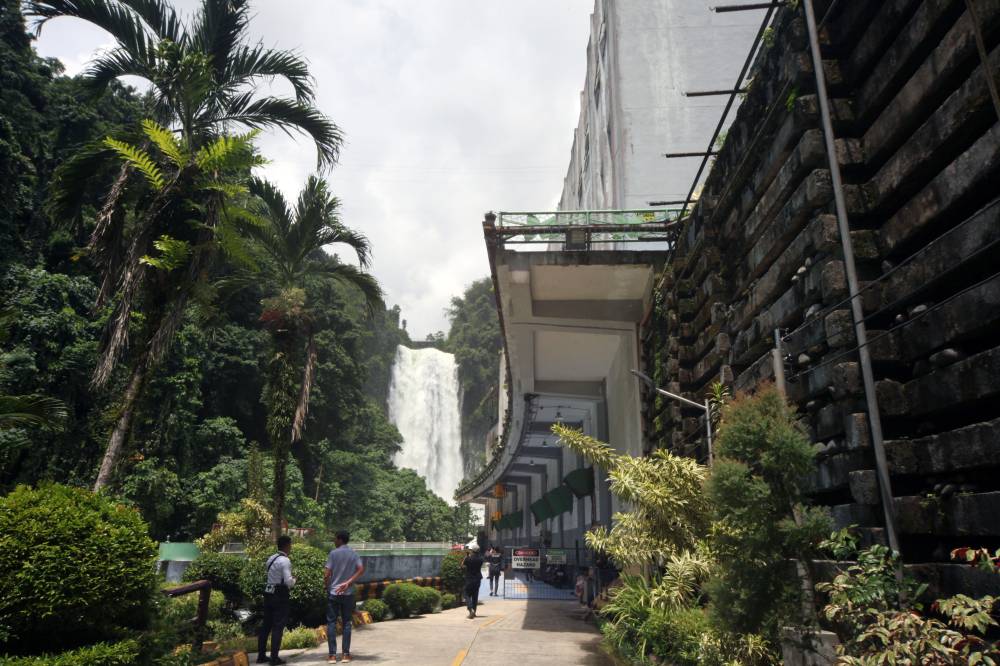
The rehabilitation of the 1,001-MW Agus-Pulangi complex, dubbed as Mindanao’s crown jewel, is another crucial piece in reaching the 50:50 target.
The APHC is Mindanao’s largest power asset, and its rehabilitation would provide stability to the grid and compensate for the retirement of the 232-MW Steag-Mindanao coal-fired power plant, said Montenegro.
A Mindanao-based company, Greenergy Development Corp., has submitted an unsolicited proposal to undertake the phased rehabilitation, operation, and maintenance of the APHC under a public-private partnership (PPP) modality.
The proposal is undergoing review by the PPP Center before the Power Sector Assets and Liabilities Management Corp. undertakes the next steps.
To ensure greater focus on the RE transition, advocates have called on the DOE to reconstitute the Mindanao Power Monitoring Committee (MPMC) that was organized in 2012 to address the energy crisis in the region.
Today, the MPMC can take on the role of orchestrating the formulation and implementation of development policies and measures that will accelerate Mindanao’s energy transition, said Ellorin.