






After the corruption shock: PH economy poised for rebound

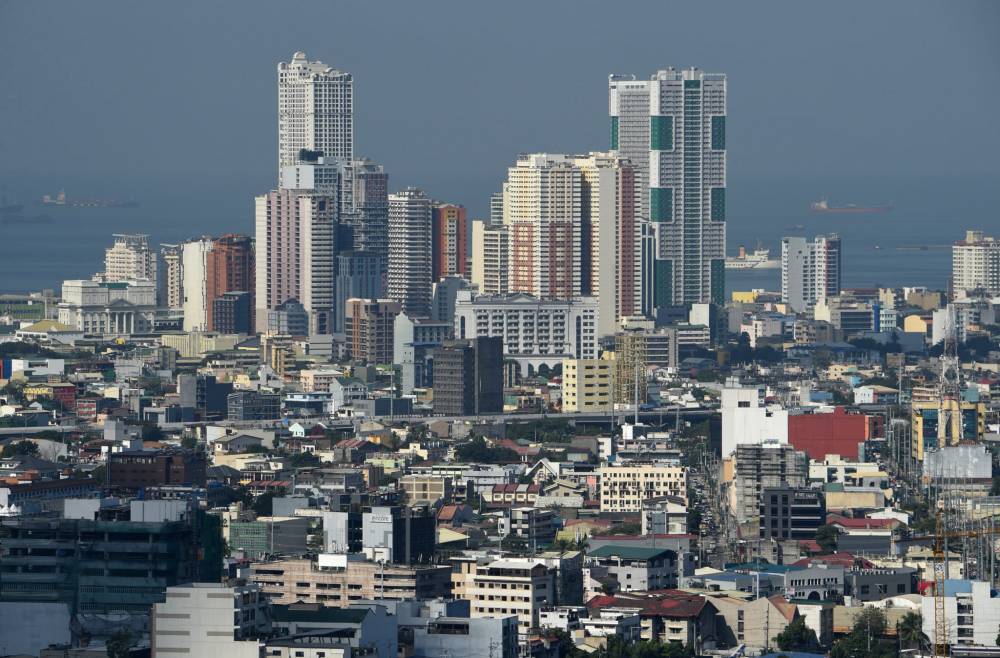
Multilateral institutions believe the Philippine economy is poised for a comeback this year. This, amid a bruising corruption scandal that rattled investors and froze much-needed public works.
The rebound is expected to be real but restrained—enough to hit the government’s newly lowered growth target.
Yet, it might still fall short of the economy’s underlying potential of a 6-percent expansion.
This, as domestic setbacks have compounded the drag from an increasingly uncertain global environment.
The World Bank (WB) has offered a visual shorthand for that outlook: a “Nike swoosh.” A recovery that bends upward only gradually rather than snapping back sharply.
In its Philippine Economic Update released in December, the Washington-based lender cut its 2025 growth outlook to 5.1 percent. That was a scale down from an earlier estimate of 5.3 percent.
If realized, the projection would mark a deceleration from the 5.7 percent average expansion in 2024. It would also fall short of the Marcos administration’s 5.5- to 6.5-percent growth target for last year.
The WB also trimmed its 2026 forecast to 5.3 percent, from 5.4 percent. It said growth was likely to edge up only slightly to 5.4 percent in 2027.
Taken together, the projections suggest the economy may still land within the revised 5 to 6 percent goal for this year, but is likely to fall short of the higher 5.5 to 6.5 percent target set for next year.
“Growth is expected to recover over the next two years, driven by strong domestic demand,” the WB said. “Private consumption is projected to strengthen as inflation stays low, employment remains robust, and monetary easing lowers interest rates, making it easier for businesses and households to borrow.”
“Investment is expected to strengthen as public infrastructure projects regain momentum and recent investment liberalization reforms in telecoms, transport, logistics, and renewable energy begin to improve the business environment for firms,” it added.
Already, the graft scandal involving state-funded flood control projects has dented public confidence. It slowed public infrastructure spending and undermined the country’s climate-adaptation efforts.
Economic output grew at a four-year low of 4 percent in the third quarter of 2025, according to government data.
Benchmark rate
To help offset the drag, the Bangko Sentral ng Pilipinas cut its benchmark interest rate by a quarter point to 4.5 percent at its meeting last December. That brought total reductions since the easing cycle began in August 2024 to two percentage points.
Manila-based Asian Development Bank (ADB) estimated that the economy grew by 5 percent last year. That was down from its earlier projection of 5.6 percent, according to its updated forecasts released last month.
Even so, the Philippines would still tie with Indonesia—also seen growing by 5 percent. Southeast Asia’s second-fastest-growing economy in 2025, trailing only Vietnam’s 7.4 percent.
The ADB expected a mild recovery to 5.3 percent in 2026, though that, too, was weaker than its previous estimate of 5.7 percent.
“Growth projections were cut for the Philippines, largely due to weak public infrastructure investment,” the ADB said. “Uncertainties arising out of investigations of publicly funded infrastructure projects and weather-related disruptions pose downside risks.”
This month, the International Monetary Fund (IMF) was the latest to adjust its prediction. The Fund said the economy likely expanded by 5.1 percent in 2025, down from its previous estimate of 5.4 percent.
Growth in 2026 was estimated at 5.6 percent, down from the IMF’s old forecast of 5.8 percent.
A rebound to 5.8 percent is seen for next year, though weaker than the Fund’s previous projection of 6.1 percent.
The IMF said the Philippines may return to its estimated growth potential of about 6 percent only in 2028, when a new President is set to take office.
“Risks to the growth outlook are tilted to the downside,” the IMF said. “The main external downside risks include an escalation of trade restrictions and prolonged uncertainty, geopolitical tensions and disruptive financial market corrections.”
“On the upside, accelerated implementation of structural and governance reforms can boost investment and FDI (foreign direct investment), increase fiscal multipliers and boost potential growth,” it added.
******
Get real-time news updates: inqnews.net/inqviber