








Balisacan flags ‘costly’ infrastructure delays

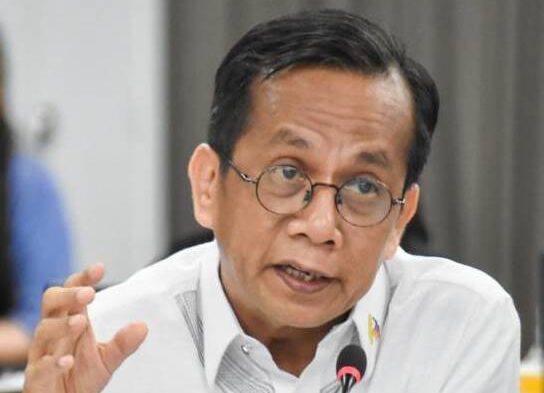
Delays in infrastructure flagship projects (IFPs) targeted for completion by 2028 have become a growing concern, as these could hamper the recovery in public investments that the government is counting on to prop up the weak economy, Socioeconomic Planning Secretary Arsenio Balisacan said.
Speaking to reporters on the sidelines of a Philippine Economic Society event, Balisacan said the government is putting greater focus on monitoring delayed projects.
“We are very concerned. Number one, you forego the benefits that they would have brought. If you postpone it, you lessen the benefits,” he said.
“Number two, it becomes more costly to complete the project. Because the project proponents would come back to us to ask for adjustment in the cost, it becomes so much more expensive to complete if delayed,” he added.
This comes as the Department of Economy, Planning, and Development (DepDev) said in a congressional hearing that only four out of 37 IFPs originally targeted for completion by 2028 are on track.
For 2026 alone, latest data from DepDev showed that only eight IFPs are targeted for completion, down from nine previously, after the long-delayed Metro Manila Flood Management Project had been removed from the list.
The government has a total of 201 IFPs in the pipeline from 2023 to beyond 2028, with a combined value of P10.3 trillion. As of the second quarter of this year, or four years into the Marcos administration, only eight IFPs worth P82.24 billion had been completed, including one in 2023, six in 2024, and one in 2025.
As it is, the Philippine economy has been struggling to regain momentum since the third quarter of 2025 following the fallout from the flood control corruption scandal, which has since caused infrastructure spending to contract.
Economic growth slowed further to 2.1 percent in the third quarter, with infrastructure spending contracting for a sixth consecutive quarter by 15.1 percent, although the decline was less severe than the previous quarter’s 33.4-percent contraction.

The Marcos administration is banking on a pickup in public investment in the fourth quarter to support economic recovery, targeting growth of 3.5 percent to 4.5 percent in 2026 and 5 to 6 percent in 2027.
Balisacan is also worried about the impact on the budget deficit.
“If we were assuming a high growth situation, and that growth did not materialize, and yet our spending was pegged on that assumption of high growth, then we will have a problem in our deficit,” he said.
“Since we are assuming 5 to 6 percent [growth] next year, hopefully it will not depart too much away from that. If public investments could recover, I’m expecting in the fourth quarter, at least we will be able to see some progress,” he added.