






BSP seen to cut interest rates one last time in early 2026

The Bangko Sentral ng Pilipinas (BSP) would likely deliver one more rate cut early next year before wrapping up its easing cycle, analysts said, citing the need to provide more support to a weakening economy as confidence took a hit from a widening corruption scandal.
Arindam Chakraborty and Sanjay Mathur, economists at ANZ Research, said subdued growth and inflation could give the central bank enough room to cut the policy interest rate by another quarter point to 4.25 percent in the first quarter.
External risks remain elevated, they added, with the absence of a trade agreement with the United States threatening to prolong headwinds and further cloud the outlook on the Philippines.
“Additional easing will be data dependent,” Chakraborty and Mathur said in a note.
Economists at Citi Research echoed the view, but flagged possible deeper easing ahead amid a “cooling” job market that could weigh down on consumption, a key growth driver. “We still expect a final 25-basis point (bp) cut in February 2026 to 4.25 percent, with still some (albeit reduced) risk of a further 25-bp cut,” they said.
At its final policy meeting for the year, the Monetary Board last week slashed the overnight borrowing rate, guiding bank lending costs by a quarter point to 4.5 percent, the lowest in more than three years. This brought the cumulative reductions since the easing cycle started in August last year to 2 percentage points.
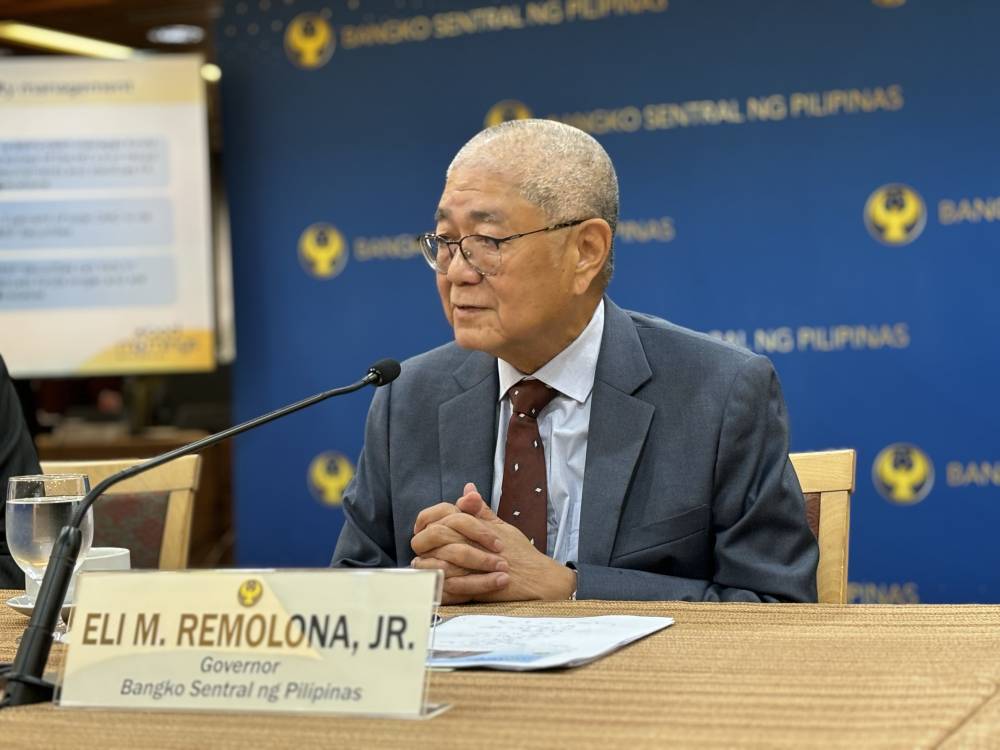
The move was widely expected by the market, including all 13 economists polled by the Inquirer. Remolona said the central bank may be nearing the end of its rate-cutting campaign, adding that any further rate easing next year—if they come at all—is likely to be limited to a single quarter-point cut.
The BSP chief also said the central bank would still avoid outsized cuts and off-cycle decisions that may stir market concerns about the economy.
Muted growth
The central bank now expects fourth-quarter growth to slow to 3.8 percent, from 4 percent in the previous quarter. Excluding the pandemic slump, that would mark the weakest expansion since the third quarter of 2011, when a sweeping corruption crackdown curbed government spending.

That estimate would also put the average growth this year at 4.7 percent, well below the Marcos administration’s target expansion of between 5.5 to 6.5 percent.
While Remolona recognized that the rate cuts cannot directly address the ongoing corruption scandal, the BSP boss said the easing moves could help “compensate” for the negative effects of the fallout, which has gutted business and consumer confidence and stalled government spending.
Looking ahead, Remolona said growth may rebound to 5.4 percent in 2026 before recovering to 6 percent in 2027.
“We expect further easing in the first quarter of 2026 as growth underperforms,” said Deepali Bhargava, economist at ING Bank. “Recent GDP data underscores the risk that weak government spending could remain a persistent drag, weighing on fiscal outlays and private sector confidence even through the current quarter.”