











BSP: Stronger reforms beat demonetization

More urgent institutional reforms—including lifting bank secrecy rules and strengthening safeguards against illicit financial flows—would be more effective in curbing corruption than demonetizing large-denomination bills, according to new research by the Bangko Sentral ng Pilipinas (BSP).
In a discussion paper released this month, researchers at the BSP said addressing systemic corruption in the Philippines requires stronger enforcement of existing antimoney laundering and counterterrorism financing safeguards through “rigorous compliance, enhanced financial intelligence and strict sanctions against noncompliant institutions.”
They also called for amendments to Republic Act No. 1405, or the Bank Secrecy Law, a measure that, they said, must be supported by adequate guardrails and technological infrastructure to enable the expedited buildup of prosecutable cases.
The paper was authored by central bank officials Eloisa Glindro, Mamerto Tangonan and Rodalee Ofiaza.
“The more urgent institutional reform agenda should focus on eradicating incentives for rent-seeking and corruption while adapting to fit the local context,” they said.
“Systemic corruption must be framed as a collective action problem,” they added. “Solutions, therefore, require shifting the equilibrium by making honesty feasible and corruption risky for all members of society simultaneously.”
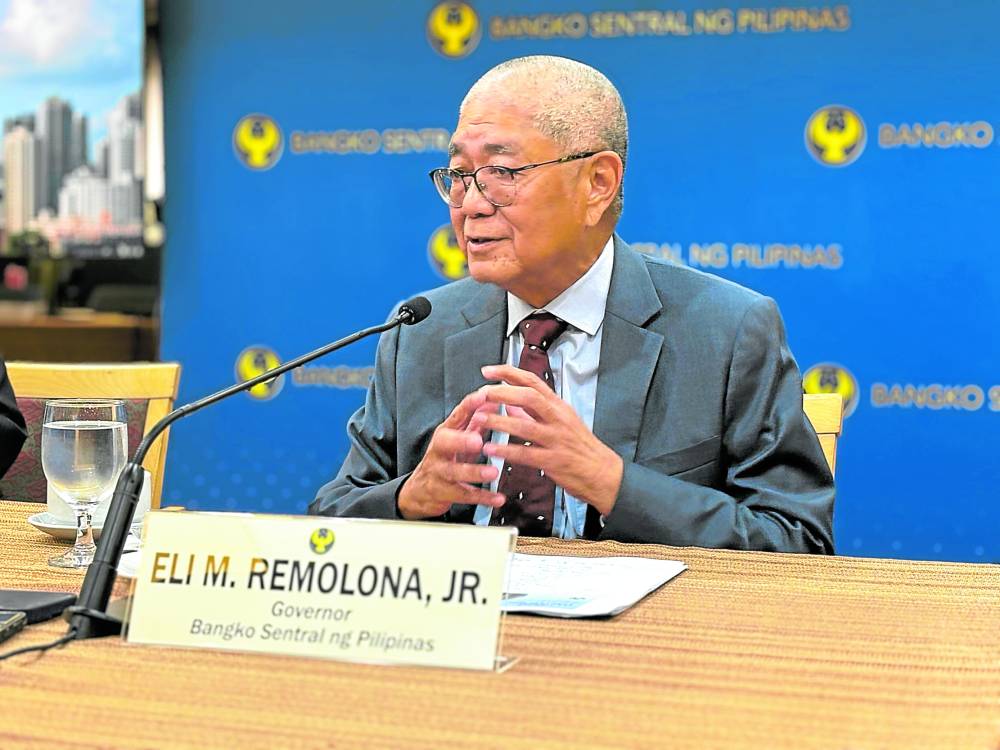
BSP Governor Eli Remolona Jr. earlier told reporters that the central bank was still weighing a proposal to demonetize the P1,000 and P500 bills, following congressional probes into anomalous flood control projects that allegedly showed some lawmakers receiving kickbacks in cash.
Cesar Purisima, finance secretary under the late President Benigno Aquino III, had suggested the move, arguing that smaller denominations would make it harder for corrupt officials to stash or move illicit funds.
Remolona, however, had said the measure could burden ordinary Filipinos who rely on cash transactions, creating only “a small inconvenience” for corrupt contractors and officials. The BSP has instead described reforms to the Bank Secrecy Law as a “sharper alternative.”

Central bank analysis found that replacing the P1,000 and P500 notes—about 2.5 billion pieces worth P2.2 trillion—would absorb 93 percent of the value and 51 percent of the volume of all currency in circulation, at a sunk printing cost of roughly P11.5 billion, excluding replacement, storage, transport and destruction expenses.
The move would also carry logistical challenges. Automated teller machines (ATMs) would need more frequent reloading, cash drawers could overflow and armored car operations would multiply. Banks and businesses would need additional vault space.
Researchers noted that criminal groups often launder money through real estate, jewelry, high-value goods, cryptocurrency and shell companies, bypassing cash entirely.
“Reducing high-denomination currency alone does not curtail large‑value transactions,” they said. “Parties’ intent on engaging unlawful activities may be temporarily inconvenienced, but they often ingeniously adapt by shifting to alternative channels, such as fragmenting transactions into smaller payment tranches.”