










Bukidnon remains No. 1 PH agri producer

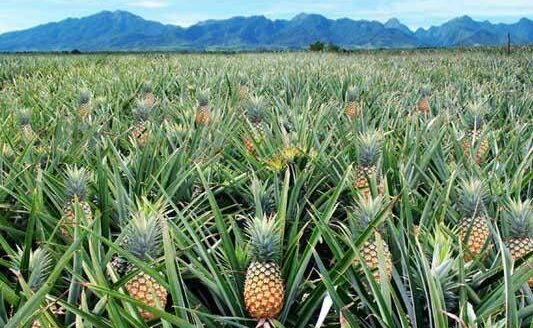
Bukidnon, known as the Food Basket of Mindanao, has retained its place as the powerhouse in Philippine agriculture, forestry and fishery.
Nestled at the heart of Mindanao, the landlocked province emerged as the largest contributor to the gross value added of agriculture, forestry and fishery (AFF) in 2024.
It captured P129.03 billion, or 7.3 percent, of the sector’s total output valued at P1.78 trillion, according to the Philippine Statistics Authority (PSA).
Bukidnon’s contribution to the AFF has been on the rise since 2022, surpassing 81 provinces and 33 highly urbanized cities across the archipelago.
According to the provincial government, Bukidnon is endowed with rolling uplands, deep canyons, valleys and natural attractions, and is typhoon-free.
It is among the country’s major producers of various agricultural commodities, including rice, corn, sugar, coffee, rubber, pineapple, tomato, flowers and cassava, as well as chicken, hogs and cattle.
The province is home to a vast pineapple plantation and a juicing plant of consumer giant Del Monte Philippines. The plantation was set up in 1926.
Bukidnon’s growth over the years stands in stark contrast to the 1.5-percent decrease posted by the sector in the previous year.
Michael Ricafort, Rizal Commercial Banking Corp. chief economist, says 2024 was the year of extreme weather conditions—primarily the El Niño phenomenon in the first half of last year, followed by the series of storms that affected farmlands in many regions in the second half.
“Though the normalization of rainfall and end of El Niño since July 2024 led to some improvement in agricultural production/output, [this was] offset by La Niña in the second half of 2024 that led to damage on crops and other agricultural production,” Ricafort says in a Viber message.
Despite the challenging weather conditions for much of 2024, Ricafort says local retail rice prices remained relatively low after President Marcos imposed a lower tariff on imported rice and global rice prices hit their lowest in more than 6.5 years or since April 2019.
Other big contributors
In addition to Bukidnon, the PSA says other contributors are Nueva Ecija, Pangasinan, Pampanga, Isabela, Batangas, Davao del Norte, Negros Occidental, Tarlac and Quezon.
Collectively, these provinces accounted for 36.3 percent of the overall AFF production, according to the statistics agency.
Among these provinces, three are located in Central Luzon: Nueva Ecija, Pampanga and Tarlac. A separate PSA data showed that Central Luzon recorded the largest share in the last year’s value of agriculture and fisheries in 2024 with 13.7 percent.
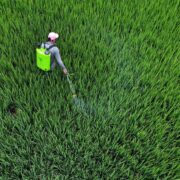
Nueva Ecija holds a share of 4.6 percent or P82.05 billion. The main industry in the province is agriculture. It is known as the rice granary and onion capital of the Philippines and an important supplier of other high-value farm commodities.
Pangasinan followed with P68.69 billion (3.9 percent). A predominantly agricultural province, its primary source of livelihood is salt, particularly for coastal communities along its shores. Pangasinan is also recognized for bangus (milkfish), bocayo (coconut caramel/toffee) and bagoong (fish sauce/paste).
Pampanga, with a contribution of P68.69 billion (3.7 percent), mainly produces rice, corn and sugarcane, along with other fruits and vegetables. The province, a central hub in the country’s duck industry, also houses postharvest facilities and farm equipment.
Isabela, dubbed the hybrid corn and rice champion of the Philippines, contributed P59.37 billion or 3.3 percent to the total output value.
Likewise, it houses Magat Dam, a major source of power and water supply for Northern Luzon and the largest corn processing facility in Southeast Asia.
Completing the list are: Batangas (with a share of 2.9 percent or P51.83 billion), Davao del Norte (2.9 percent or P51.82 billion), Negros Occidental (2.8 percent or P49.98 billion), Tarlac (2.5 percent or P44.97 billion) and Quezon (2.4 percent or P42.48 billion).