











Can the Philippines grow its way to coffee self-sufficiency?

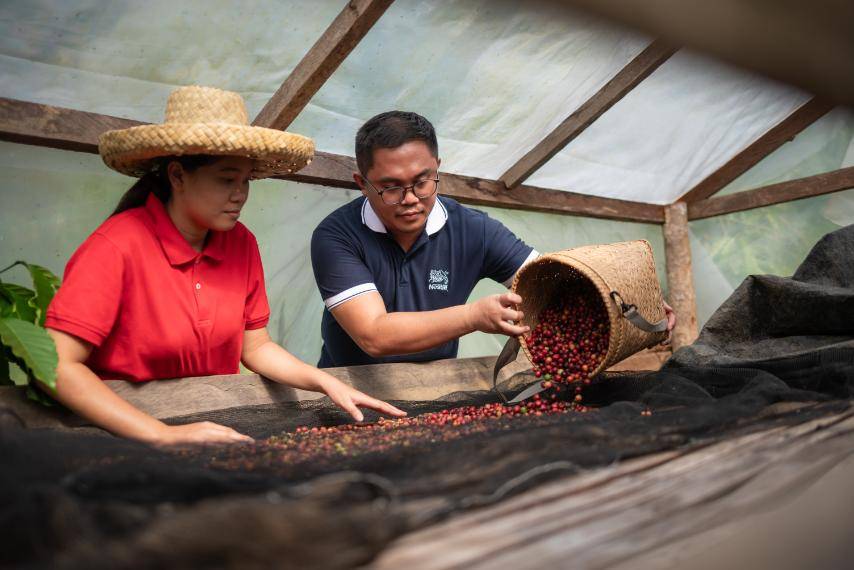
Coffee is a daily ritual for many Filipinos. But behind this steady demand is a supply chain that remains heavily reliant on beans grown overseas, leaving local producers exposed to global price swings and supply disruptions.
For Nestlé, maker of the Nescafé brand, that imbalance is becoming harder to ignore.
Only about 20 percent of the coffee used for its flagship Nescafé brand is sourced locally, leaving most of it dependent on imports, mainly from Vietnam and Indonesia.
“We want to reverse that,” Nestlé Philippines senior vice president Jose Uy III says in a recent interview. “That’s why we’re constantly focusing on growing coffee.”
Across the industry, domestic production meets only about 40 percent of demand.
The country’s green coffee bean output reached 35,650 metric tons in 2025, up 11.5 percent from 31,980 metric tons a year earlier, based on data from the Philippine Statistics Authority.
To boost local supply, Uy says Nestlé is working with the Department of Agriculture (DA) and lawmakers to strengthen support for coffee farming.
Sustainability and beyond
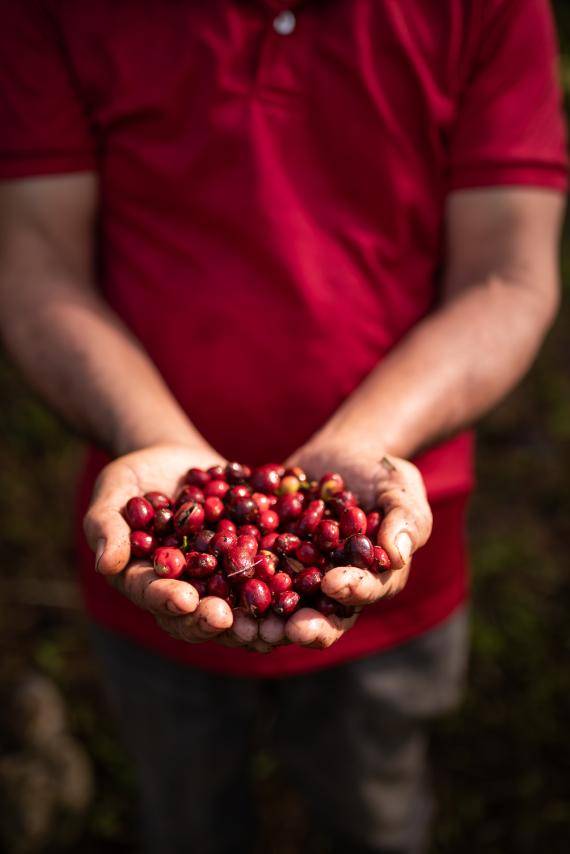
Beyond that, Nestlé is promoting “regenerative agriculture” under its Nescafé Plan 2030—an approach that goes beyond sustainability by improving soil health and long-term farm productivity.
Over the past five years, the company has trained more than 13,000 Filipino farmers in regenerative agriculture practices such as intercropping, composting, agroforestry and soil management.
These methods have helped lift yields per hectare from about 300 kilograms to as much as 900 kilograms to one ton, with some farms reaching up to two tons.
Beyond scaling supply, the company is also tightening sustainability standards across its coffee value chain. Uy says all Nescafé coffee is responsibly sourced, and adheres to good agricultural practices.
Sustainability efforts extend to manufacturing. For instance, Nestlé’s Cagayan de Oro coffee facility runs on renewable electricity and uses biomass boilers powered by agricultural waste such as coffee stems, rice husks and sawdust.
Uy says Nestlé is initially concentrating its efforts in key regions before expanding to other parts of the country.

Among the strategic locations identified are Sultan Kudarat and Bukidnon, while Mindanao in general is seen as a prime area for robusta coffee production. In these areas, Nescafé is implementing its Project Coffee+ program to help boost farmers’ yields and incomes.
Food security
Alongside private sector efforts, the DA itself has also moved to boost local coffee production.
In February, the agency created a Coffee Industry Development Office to address key challenges, including insufficient infrastructure, outdated farming practices, an aging farmer population and limited access to inputs.
For Nestlé, the Philippines remains a key market, with its local business generating $3.2 billion in revenues last year. This makes it the company’s sixth-largest market globally behind the United States, China, Brazil, Mexico and the United Kingdom.
The push toward local production, according to Uy, is about both growth and resilience, particularly as global logistics disruptions and currency volatility continue to pose risks.
“In terms of food security, we can address it and be self-reliant,” Uy says. “That’s how important it is that we grow locally.”