







Customs helping agriculture during Middle East crisis

During this Middle East crisis, the government and private sector must improve their communication and joint action. Here is an example of the Bureau of Customs (BOC) and the private sector doing exactly this. It should be replicated in many areas.
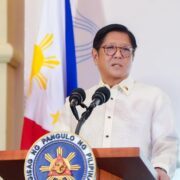
On the government side was Commissioner Ariel Nepomuceno, with his commendable openness to the private sector, wise judgment and swift action.
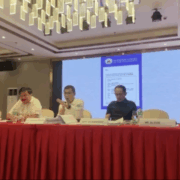
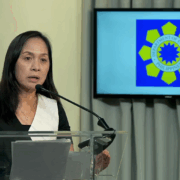
Those from the private sector who gave inputs included Tomas Medina, Ruben See and Imelda Madarang. All are participants in the public-private Philippine Council of Agriculture and Fisheries (PCAF).
In addressing this crisis, Agriculture Secretary Francisco Tiu Laurel Jr. moved decisively in critical areas, such as food hubs, solar irrigation, organic fertilizer and refrigeration facilities. In its March 23 quarterly meeting, PCAF’s Committee on International Trade (PCAF-CIT) cochair Agriculture Undersecretary Philip Young highlighted the crisis’ negative impact on our agriculture exports.
Exports
In 2025, Philippine exports increased by 22 percent, higher than Vietnam’s 14 percent and Thailand’s zero percent. But the crisis has stopped this momentum. This is when the BOC’s role in agriculture exports came up.
At the meeting, it was stated that the exporters’ containers had failed to reach their intended destinations because the regular routes were no longer passable. To retrieve their containers, the exporters had to follow the difficult import procedure that the BOC implements.
This procedure was adopted to deter smuggling. Unfortunately, this process sometimes takes four weeks to four months before the cargos are released. Also, it may cost from P200,000 to P500,000 per container per month.
On March 24, private-sector PCAF-CIT participants contacted Commissioner Nepomuceno. They wanted a change in the procedure for taking back their containers. Many had perishable food that would not survive the normal long import procedure.
Containers
These containers fall into four categories. The first includes the containers stranded at sea because the travel routes have been cut off. The second includes those stuck in transshipment ports like China, Korea, Taiwan and Singapore.
The third includes those diverted to India, but this new route through India does not work. The fourth includes those still at Philippine ports, which also have to go through the tedious import clearance process.
When Nepomuceno heard this, he took quick action. He noted that in the past, the BOC had focused on imports. Little was done on exports.
For the export containers coming back to Philippine territory, Nepomuceno would consider a procedure that would decrease the long release time for containers. This might even be as short as five days or even less.
Nepomuceno went much further. He wanted more ways for the BOC to support exporters. Since deserving imports get a faster green lane for import release, deserving exports should possibly get a similar lane for fast release. The private sector suggested priority export products like bananas, pineapple, coconut, tuna and other export winners.
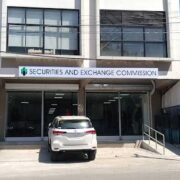
Another area identified was the very underutilized European Union (EU) Registered Exporter System. This is required for optimal exporting to the EU under preferential trade agreements.
Unfortunately, only one person takes care of this. As a result, the waiting time for registration sometimes takes more than two years. Adding people, as well as possibly streamlining the requirements, will be looked at immediately.
Agriculture experts
In the discussion with Nepomuceno, the most important point was that the imports needed for our buffer stock during this crisis may be purchased hurriedly without the necessary due diligence. Corruption may even seep in, resulting in poor quality and high prices.
To address this and respond to an ongoing concern on technical smuggling, Nepomuceno approved the installation of private-sector agriculture technical experts. They will be vetted and approved by the BOC, but nominated and paid by the private sector.
They will get access to the relevant BOC information, help evaluate the import documents, and even physically inspect the goods when appropriate. This system will deter the technical smuggling that might significantly increase during this crisis. This type of smuggling—which includes undervaluation, misdeclaration and misclassification—has amounted to as high as P150 billion to P250 billion during previous years.
The above example of the private sector joining hands with the government should be done in all areas now severely affected by the Middle East crisis. We can then emerge victorious, rather than defeated, at the end of this serious threat to our national and food security.



War-driven cost surge might hit PH packaging sector