






Daughter of Ifugao rises to lead major gold miner

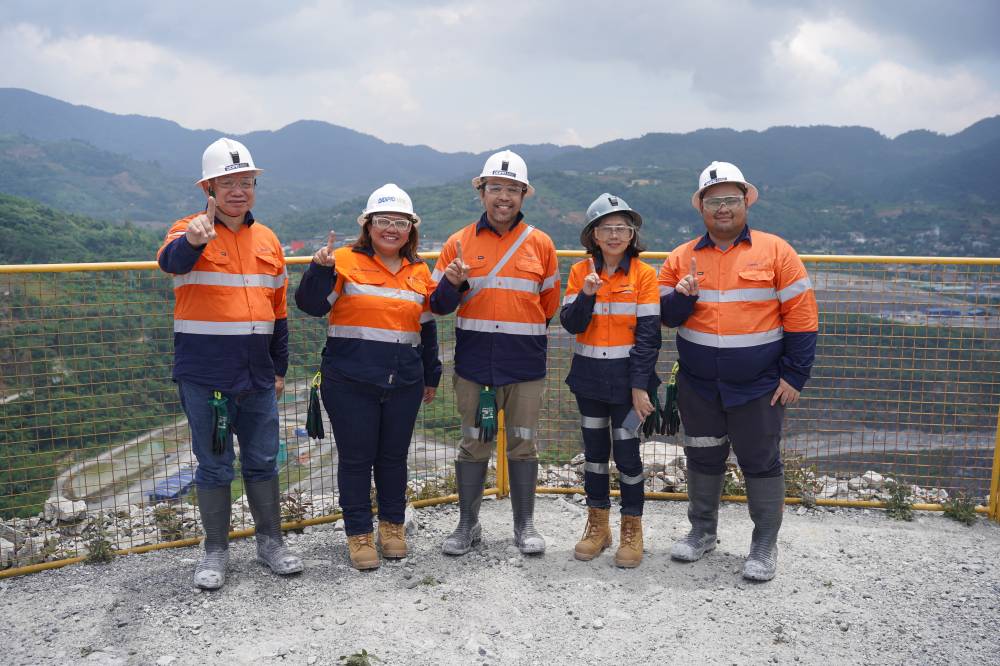
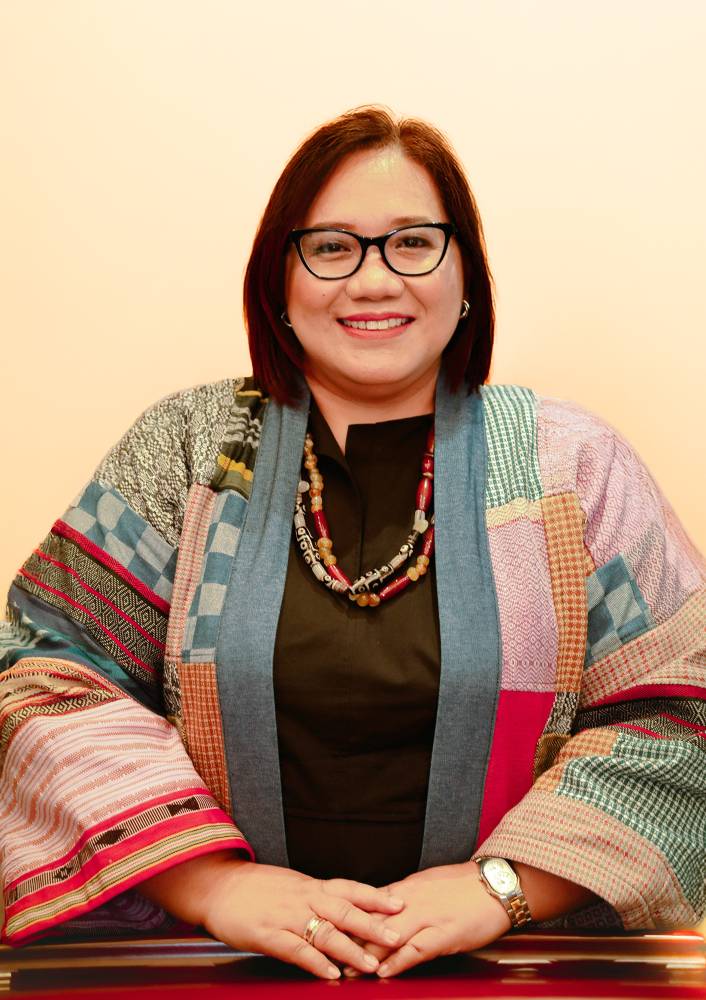
Joan Adaci-Cattiling, whose veins carry the bloodline of indigenous people (IP) who built and farmed on rice terraces, is no stranger to social inequality.
The lawyer-president of OceanaGold Philippines Inc. (OGP)—the country’s second largest producer of gold and copper, and the biggest gainer in the local stock market in 2025—grew up in the mountainous town of Kiangan, Ifugao province.
“I saw at a very young age the difference between those who have opportunities and those who do not,” she tells Sunday Biz.
Her mother, a grade school teacher, is part of Ifugao’s Tuwali tribe, while her father, who ran Ifugao State College, came from the Applai tribe of Mountain Province.
She deems herself among the lucky few to have had the means to pursue higher learning.
At the University of the Philippines, she majored in journalism and went to law school. She finished her law degree in 2000 and placed fifth in the bar examination.
She began her professional career at SyCipSalazar Hernandez & Gatmaitan Law Office.
After five years, she joined energy firm Mirant Philippines as part of the in-house counsel. The CEO then was businessman Joey Leviste, the man who later introduced her to the mining industry.
Going for gold
As a child, Cattiling heard about Didipio, which straddles Nueva Vizcaya and Quirino, from high school classmates who had hailed from this area. They told her stories about gold panning back home.
“These kids were being sent to their relatives in our province to study because of the hard life in Didipio. [There were] no schools … If they go to neighboring towns, they would have to walk for many hours,” she says.
In 2006, Mirant sold its Philippine assets. Around the same time, Canadian mining firm OceanaGold acquired the 6,957-hectare Didipio mining project
Leviste, who was helping OceanaGold develop the upstart mine, convinced Cattiling to join the core team.
Given her IP roots, he thought she would be a good fit as many households in the communities surrounding Didipio had come from Ifugao.
Cattiling joined OGP in 2007, first as senior vice president for legal and human resources. She eventually rose to become president in 2024.
“So beautiful,” is how she describes her first impression of Didipio, with its forested mountains and central valley.
“I’m just amazed. Who would have thought that in the middle of it all is gold? … Who would think that it would soon host a big mine?”
One with the community
Since commencing operations in 2013, OGP has become the biggest employer in Didipio.
The second biggest is Didipio Community Corp., which OGP also helped organize in 2011. Fully owned by residents, it handles support services like catering, housekeeping, road maintenance and transportation.
Her IP heritage has helped Cattiling work well with the host community.
“Language really is unbelievably a great connecting factor,” she says.
“I don’t impose my beliefs and my aspirations. But I think, definitely, it was easier for me to understand what they want for their communities, what they want for their families, what they want for their children,” she reckons.
OGP devotes 1 percent of its gross mining revenue to a Community Development Fund and another 0.5 percent to the Provincial Development Fund for the provinces of Quirino and Nueva Vizcaya.
One of the projects that Cattiling is very proud of is their IP revitalization program.
“Because they moved to this area, they don’t get to practice their culture, their tradition, because they’re far away from their relatives. So, we launched this program where we’re able to teach, especially the younger generation, beating of the gongs, the dances, the wedding dance, the community dance. We started that with the Tuwali, and hopefully, we do also [the same with] the other IP groups,” she explains.
Majority of people from the immediate community are Tuwalis, but other areas are also inhabited by people from the Kalanguyan, Ayangan and other tribes.
The program, which has been in place for the past three years, concludes with OGP hosting a competition in gong-beating and dancing. They also plan to open more categories.
For Cattiling, the best evidence that her company is doing it right is that wherever they go, the communities welcome them with open arms.
“I think they’ve seen that there is such a thing as responsible mining. They just have to see it to be able to believe it,” she says.
Safe haven
Mining is typically a male-dominated industry. But how does a woman-led mining company like OGP fare?
“In all our operations, we have very clear policies on inclusivity, on respect at work,” says Cattiling, who is also a wife and mother of three.
“We’re very clear on our values — respect, care and integrity being among them. And we have a code of conduct. So, there is already an expectation on each and every officer, employee, person or contractor of OceanaGold on how they would act,” she says.
OGP also keeps a “whistleblower” hotline, which Cattiling swears is very effective in empowering complainants.
“And they’re being investigated and addressed,” she says.
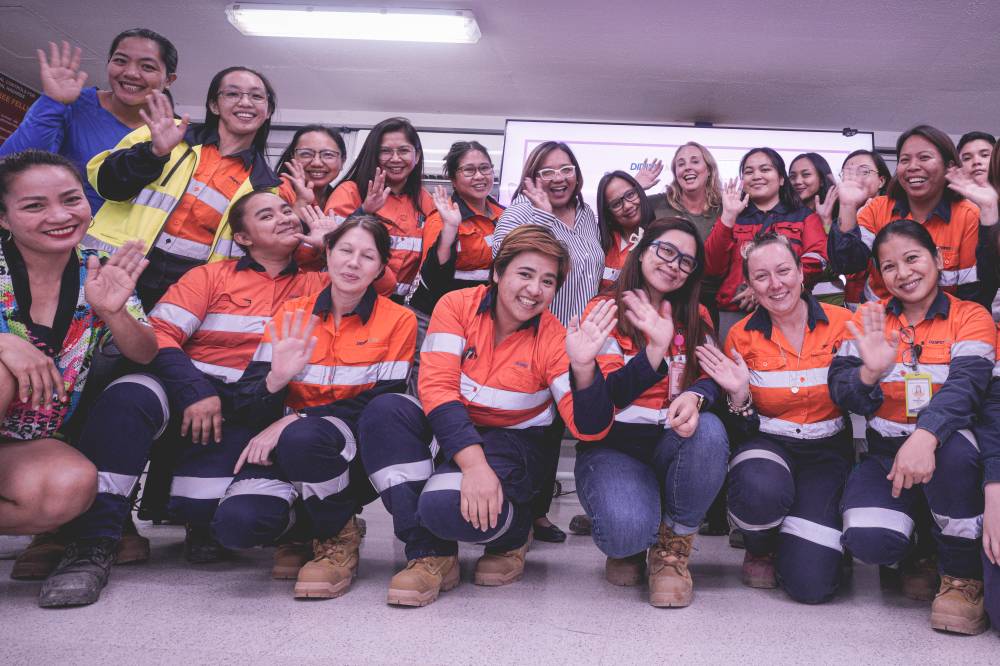
About 24 percent of more than 800 employees are women, some of whom take on underground work.
“Because we have 24/7 operations, it’s very important they feel safe; they feel secure, because they work, even in the evenings.”
She proudly notes that OGP employs women across different positions and levels — environment, community relations, commercial and even technical operations.
“We have women truck drivers who are loved very much kasi sobrang silang maingat sa mga sasakyan (because they are much more careful with the vehicles),” she says.
“They are definitely part of the decision-making teams. They have a seat at the table. They don’t have to fight.. they don’t have to raise their voice to get a seat at the table, or be heard — because yes, they are right there.”
“Having said that, of course we know as a practical matter, it is now up to us, the employer, to make sure that we provide also the facilities to make it comfortable for them. It’s making sure we have clean restrooms available and some areas where they can have some privacy. Part of the responsibility is also to provide them a good, safe, healthy working environment,” she adds.
Giving back
In 2025, OGP shares surged by 129.67 percent, in line with skyrocketing global gold prices.
“We are ecstatic about today’s metal price environment—it is a very good place to be in,” she says.
“While it is difficult to predict future movements, we remain cautiously confident that gold prices will persist at elevated levels given its role as a safe‑haven asset amid geopolitical uncertainties, ongoing central bank buying, concerns around stagflation and broader de‑dollarization trends.”
Historically, gold has indeed proven to be a steady, long‑term store of value.
“For us at OceanaGold, our focus for 2026 for the Didipio Mine is to safely and responsibly deliver on our guidance, and to take advantage of today’s record‑high gold prices to generate robust free cash flow and deliver meaningful dividends to our shareholders,” she adds
This year, OGP expects to produce 85,000 to 105,000 ounces of gold as well as 13,000 to 15,000 tons of copper at an all-in sustaining cost of $975 to $1,100 per ounce.
OGP’s gains are very much felt by the shareholders, in the form of dividends, and by the host communities.
These days, the children of Didipio no longer have to move to neighboring provinces to attend school. There are plenty right at home.
Nueva Vizcaya, as a whole, has become a rising province and continued to welcome mining when it amended its environment code, she notes.
“We would like to think that that means that they appreciate what we’re bringing in, the value that we’re bringing in — because it cannot be denied that we are contributing. Our host municipality of Kasibu, has been made first-class municipality,” Cattiling notes.
Looking back at the time that she first joined OGP, Cattiling says that she always wanted to find work in a way that will help people from the province.
“Now 18 years moving forward, I think it was the right decision for me to have joined the mining industry. And I think because OceanaGold was the right and continues to be the right company for me. I’m just grateful for the opportunity,” she says.
She’s also grateful to lead a company that has likewise created livelihoods for rural communities.
“You don’t solve all of everyone’s problems. But you could — one by one, in some other way, in some communities — work so that they can be able to have that opportunity.”
******
Get real-time news updates: inqnews.net/inqviber


Iran now, Taiwan later