









Fewer Filipinos are saying ‘I do’ and it’s not always about money

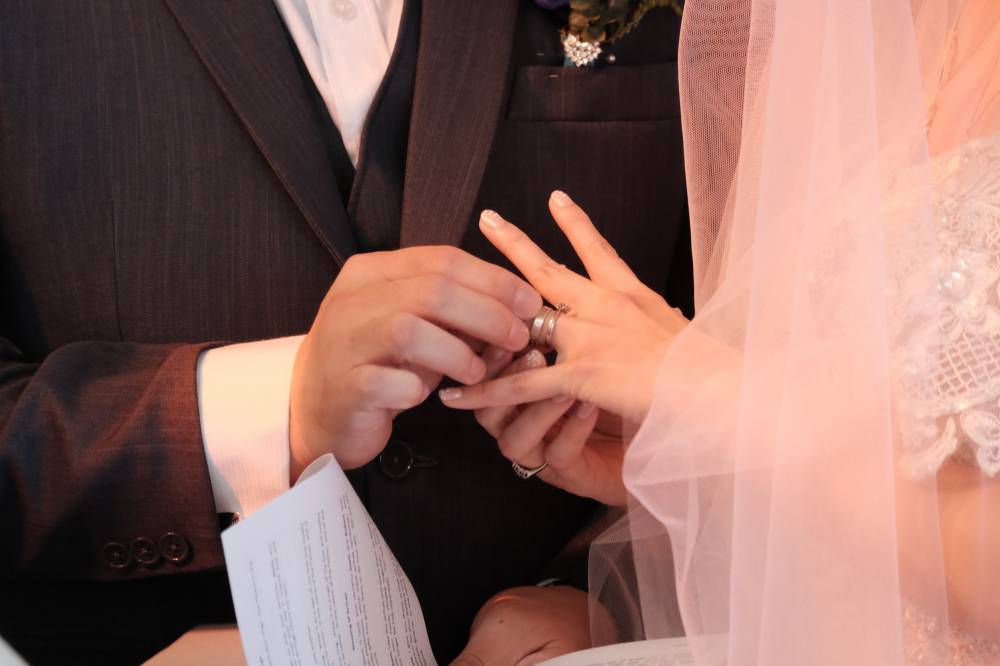
They say it’s easy to get married, but hard to stay married.
And in the Philippines, it seems harder just to say “I do” at the altar.
Latest data from the Philippine Statistics Authority (PSA) show that marriages declined for the second consecutive year in 2024, down 10.2 percent to 371,825 from 414,000 in 2023—well below prepandemic levels.
Many would say economic pressures, evolving social norms and the high cost of annulment—sometimes reaching half a million pesos—are keeping couples from tying the knot. Divorce is still off the table, making marriage a high-stakes gamble for many.
Or maybe, for some, it’s not economic in nature but purely philosophical.

What’s love gotta do with it?
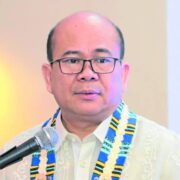
Enter Michael de Jesus, president of the Development Bank of the Philippines, and his partner, actress, Miss Universe 1969 Gloria Diaz. They’ve been together for 29 years. And no, they’re still not married—even though Diaz’s past marriage with Bong Daza had long been annulled.
“I was always scared. But, actually, when you’re not married, you work harder. The bonds are just as tight,” De Jesus says.
They met in 1996 when he was 37 with thick black hair. Now it’s mostly white and thinning, he notes in jest, while Diaz, eight years his senior, still looks far younger.
“We just evolved. We didn’t really discuss it,” he adds.
Still, this doesn’t mean marriage is completely off the table, De Jesus insists.
“You don’t put definitive things on—you’ll never get married or you will. It just kinda happens or doesn’t happen,” he says.
For the couple, commitment trumps ceremony. They navigate life together daily, sharing financial, emotional and spiritual support—proving that decades-long love doesn’t necessarily need a wedding certificate.
“Whether or not we’re married, we’ll always be there for each other—financially, spiritually, everything. Physically, financially, spiritually, everything,” he says.
In this economy?
Still, of course, economic realities play a major role in why many couples delay or skip marriage.
An earlier report by the Inquirer, citing the 2022 National Demographic and Health Survey, found that the proportion of women aged 15 to 49 who were cohabiting or living with their partners “as if married” quadrupled over three decades—from just 5 percent in 1993 to 19 percent in 2022.
Meanwhile, the 2021 Young Adult Fertility and Sexuality Study found that about 2.4 million Filipinos aged 15 to 24 were already living with a partner outside of marriage.
Weddings, household expenses and raising children can be financially daunting—especially in a country where divorce is not available, and annulment can often cost more than the wedding itself.
As it is, Facebook users have pointed out that the tedious and expensive annulment process, coupled with the absence of divorce laws, is a major reason many Filipinos hesitate to get married.

“If there’s no way out, why go in?” one Facebook user quips.
De Jesus himself says he has witnessed many of his friends get separated.
“A lot of marriages are breaking up. It’s very easy to get married. It’s hard to stay married,” he says.
Another reason cited by netizens is domestic violence. Some note that certain abuses may only surface after couples are legally married—situations they could more easily leave if they remain in a cohabiting arrangement.
“Call on our legislators to pass laws that will improve and simplify the annulment process and strengthen further our current laws on violence against women and children (VAWC),” a netizen comments.
As of writing, divorce is still illegal in the Philippines, making it one of the last two countries in the world, along with Vatican City, without a divorce statute.
On the other hand, same-sex marriage remains contentious, meaning LGBTQ+ couples are still legally barred from marrying in the Philippines.
Some netizens note that if civil partnerships or same-sex marriage were legalized, the number of formal unions in the country could rise.
In any case, today’s marriage statistics reflects a broader trend: more Filipinos are choosing cohabitation over formal marriage for practical reasons, balancing long-term commitment with economic realities and evolving social norms.