








Filipinos now opt to travel closer to home–Klook

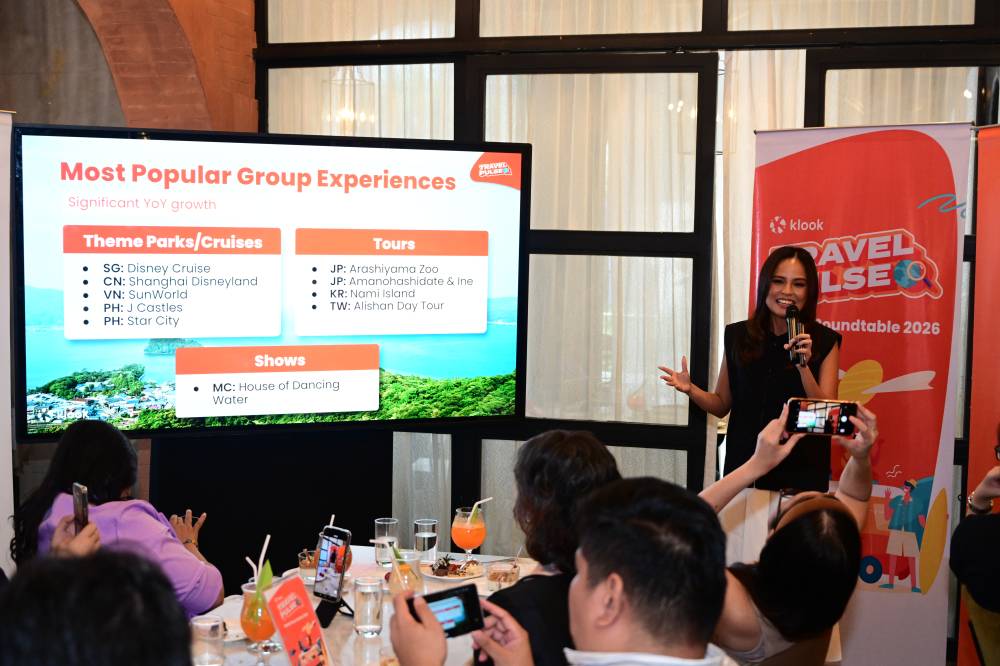
Filipino travelers are expected to favor destinations closer to home this 2026, in part due to uncertainty in the Middle East and its impact on air travel and volatile oil prices, according to travel platform Klook.
Data from Klook’s Travel Pulse 2026 study show that while overall travel intent remains intact, destination choices are shifting toward short- to medium-haul trips, particularly within Southeast and Northeast Asia.
“Because of the ongoing conflict in the Middle East, because of the oil price swings, we’re seeing that Filipinos are still traveling but choosing to travel closer to home,” Klook Philippines general manager Michelle Ho says.
For 2026, most Filipino travelers are setting their sights on destinations within Asia, with Northeast Asia accounting for 67 percent of preferences and Southeast Asia at 30 percent, based on a survey of 500 Filipinos.
South Asia and Oceania, including destinations such as India and Australia, account for the remaining 3 percent.
Klook says Vietnam and Taiwan continue to gain traction, with booking growth of 193 percent and 124.4 percent, respectively, in 2025. The numbers reflect sustained interest in destinations that offer value for money and are within closer reach.
Thailand also posted a 67.1-percent increase in bookings during the period.
Ho says nearby destinations are benefiting from more cautious travel behavior, particularly as uncertainty clouds long-haul trips.
Booking behavior also changing
“While a lot of people are cautious about traveling to long-haul destinations, we don’t see the same trend — as of today — for neighboring countries,” she says, citing that the crisis may also turn into an opportunity for the Philippines to grow domestic tourism.
Klook says affordability remains the top driver for Filipino travelers, alongside the desire for meaningful experiences and trips shared with family and friends.
Budget considerations ranked highest among travel factors at 42 percent, followed by building memories with companions (34.2 percent) and seeking experiences (33.9 percent).

Even as travelers’ spending on flights and accommodations remains relatively stable, Klook sees a growing willingness to allocate more budget to food, activities and experiences, signaling a shift away from shopping-driven trips.
Global jitters
At the same time, booking behavior is evolving amid global uncertainty.
Ho says travelers are becoming more cautious, moving away from booking trips that are six to eight months in advance. Instead, they are adopting a “wait-and-see” approach for travel later in the year, even as near-term plans proceed as scheduled.
“Intent for travel has not wavered,” Ho says. “But their (travelers’) choices — where they travel and how they spend their money — those are evolving.”
Klook’s Travel Pulse study covered 11,000 consumers globally, including 500 Filipino Gen Z and millennial respondents.