












Global rice prices drop to lowest since April 2017

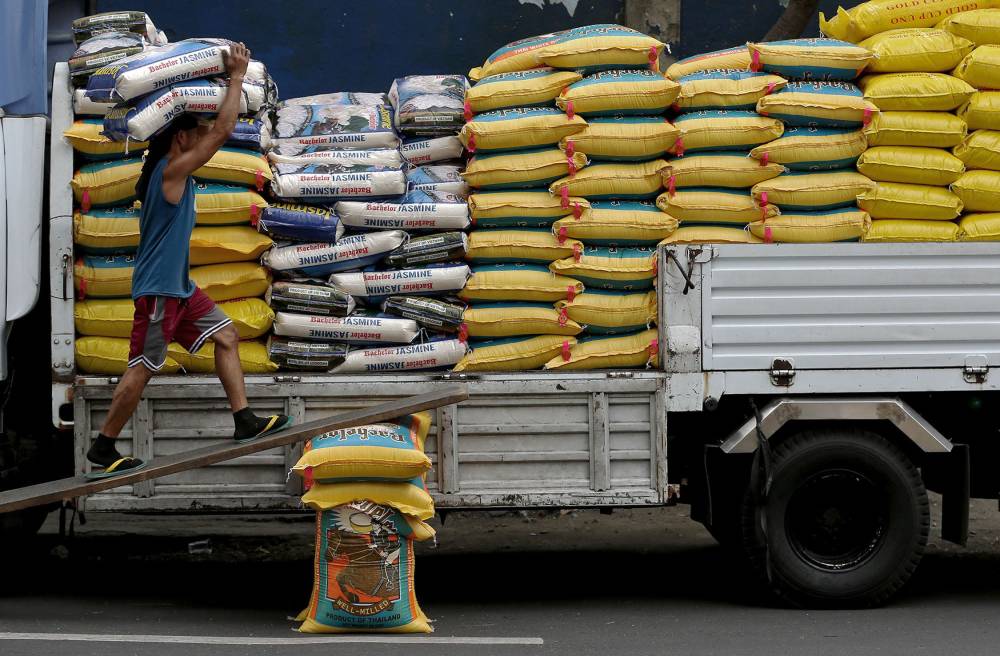
Global rice prices have dropped to their lowest since April 2017 as countries sought to shore up their local output, thus lessening demand for foreign supply, according to the Food and Agriculture Organization of the United Nations (FAO).
The FAO All Rice Price Index averaged 96.9 points in November, down from 98.4 points the previous month.
The index has been on a downtrend since August and is at its lowest for this year, which should, in turn, help keep local rice prices stable.
The UN agency attributed the rice price index’s continuing decline to softer prices of Indica or long-grain rice and Aromatic rice varieties that include basmati and jasmine.
“At that level, the [rice price index] stood 19.7 percent below its value a year earlier and at its lowest level since April 2017,” the FAO said.
Indica quotations declined to 98.5 points, while fragrant prices fell to 92.5 points.
By contrast, Japonica prices rose to 92.7 points. Improved Chinese demand boosted Glutinous or sticky rice quotations to 95.7 points.
Price quotations
The FAO said November price quotations of Indica rice were mixed in major Asian countries, driven by government measures to stabilize local rice supply and prices.
In Thailand, prices recovered because of its additional price stabilization measures, including adjustments to schemes encouraging storage of supplies and public domestic purchases.
News about Thai officials entering into government-to-government agreements with China and Singapore fueled Indica prices in the country.
Prices in Pakistan, meanwhile, climbed on stronger demand, supported by previous deals with African buyers and import tenders by Bangladesh for Indian parboiled rice.
Indian white rice price quotations went down as new crop arrivals gained momentum, even as government domestic procurement progressed at a robust pace.
Vietnam prices decreased as traders sought greater clarity on the Philippine government’s import policies.
Vietnam is the Philippines’ top supplier of imported rice.
Last week, the Department of Agriculture (DA) said the government was poised to lift the four-month import moratorium in early January.
At the same time, the DA is working on an adjusted import matrix designed to protect farm-gate prices and prevent “predatory” import practices.
Agriculture Secretary Francisco Tiu Laurel Jr. had encouraged private traders to diversify their sources and pursue partnerships that prioritize stable pricing and long-term cooperation.
The agriculture chief made this appeal amid “mounting speculation” about the Philippines’ reentry into the global market.
He noted that some suppliers appear to be positioning for higher price quotes on assumptions of resuming large-volume purchases.


Iran now, Taiwan later