









IMF backs easing of bank secrecy rule

Amending the bank secrecy law could help prevent the Philippines from again coming under heightened scrutiny by global financial watchdogs, the International Monetary Fund (IMF) said, urging authorities to step up efforts to curb money laundering and the financing of terrorism.
In a recent country report, the Washington-based institution said that keeping pace with evolving international standards to combat illicit financial flows would be critical as the Philippines approaches its next mutual evaluation by the Paris-based Financial Action Task Force (FATF), scheduled for 2027.
As of September 2025, proposed amendments to the Bank Secrecy Law have been filed in the Senate under Bills Nos. 10476, 2327, 1508 and 389.
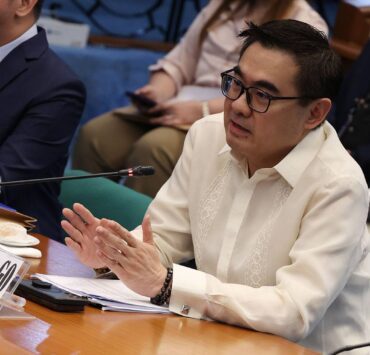
A counterpart measure was also introduced in the House of Representatives, authorizing the Bangko Sentral ng Pilipinas (BSP) to examine bank deposits—including foreign currency accounts—under strict and limited conditions when there is reasonable suspicion of unlawful activity. The House version recently passed third reading.
“Amendments to the Bank Deposits Secrecy Laws in line with international good practices should be pursued to enhance the BSP’s supervisory powers and strengthen AML/CFT (antimoney laundering/countering the financing of terrorism) supervisory effectiveness,” the IMF said.
“The authorities should continue pursuing CFT improvements, especially in the identification and prosecution of terrorist financing cases, enhance capacity to investigate cases involving crypto assets, and adopt an updated national AML/CFT strategy upon completion of the ongoing National Risk Assessment,” it added.

This comes nearly a year after the country was removed from the FATF’s watch list of jurisdictions under increased monitoring, known as the gray list.
The 2016 cyberheist of $81 million from the Bangladesh central bank and the subsequent laundering of the criminal proceeds in casinos in the Philippines triggered the country’s return to the gray list in June 2021.
That development pushed the country to the brink of being “blacklisted,” which would have resulted in failed cross-border transactions, delays and higher costs of remittances, which is a major lifeline for many Filipinos.